The quiet details in a living room reveal far more about family values and resilience than most people ever stop to notice.

Add VegOut to your Google News feed. 
Every family leaves little clues about who they are in their living room.
For lower-middle-class parents, those clues often speak volumes. They show pride, resourcefulness, and a certain practicality that’s both endearing and revealing. These living rooms weren’t curated like an Instagram feed. They were lived in. And that’s what made them so distinctive.
It wasn’t about showing off wealth. It was about making a space feel dignified, welcoming, and stable—sometimes with limited resources.
Let’s take a closer look at eight things you almost always see.
1. A family portrait
Almost every lower-middle-class living room had some version of the “official” family photo.
Sometimes it was taken at Sears or Walmart, other times at the local studio offering a $39.99 photo package. Everyone dressed up—button-down shirts, dresses, maybe even coordinated colors.
I can still picture one from my own childhood: framed in faux-gold, sitting above the couch. We only did it once, but that one photo hung for a decade.
Why? Because it was more than decoration. It was a statement: family comes first here.
Sociologists have shown that families often display their togetherness through visible objects at home—like framed portraits—to signal and sustain “doing family.”
And in some ways, those portraits are the earliest vision boards. They project stability, pride, and belonging—values parents wanted kids to absorb just by glancing up at the wall.
2. A display cabinet of “good” things
Do you remember the glass cabinet that held porcelain figurines, souvenir plates, or fancy wine glasses? Maybe it was a hutch, maybe a shelf, but it was always the good stuff.
Here’s the thing: most of it was never used. The crystal wine glasses stayed in their spots, the china plates were purely decorative, and those figurines gathered dust.
It wasn’t wasteful—it was symbolic. A way of saying, “We also have nice things.” Even if money was tight, the display cabinet was proof of taste and aspiration.
Psychologists might call this impression management: curating what others see so they leave with a certain impression. A guest might not notice the budget couch, but they’d see the delicate glassware in the cabinet.
I grew up in a house where the “good” dishes were so protected they only came out twice a year—Christmas and Easter. And when they did, it felt like a holiday ritual. Looking back, it wasn’t about the dishes themselves. It was about creating moments that felt elevated.
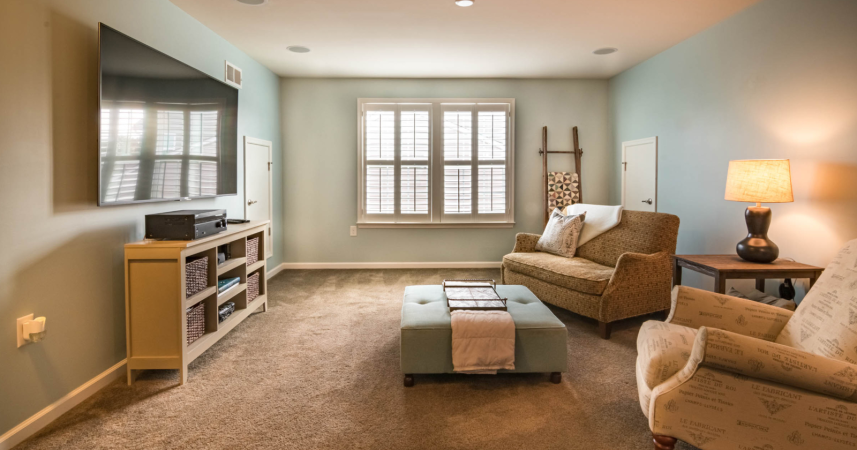
3. A big TV as the centerpiece
Walk into almost any of these living rooms and your eyes went straight to the TV.
It might’ve been a bulky Zenith in the ’80s, a Vizio flat screen in the 2000s, or a smart TV today, but the idea hasn’t changed: the television is the gathering spot.
Entertainment wasn’t just background noise—it was family bonding. Friday night movies, Saturday morning cartoons, Sunday football. The TV was where everyone came together.
There’s also a subtle psychology here. Lower-middle-class households often had limited disposable income, so television became the affordable way to escape, learn, and connect. It was the gateway to the wider world.
Sociologist Joshua Meyrowitz once noted that TV collapsed the distance between classes, giving everyone access to the same cultural references. That shared experience mattered.
4. Plastic covers or protective layering
This one makes people chuckle, but it was everywhere: couches wrapped in plastic, chairs draped in crocheted throws, tables covered with thick vinyl.
It wasn’t eccentric—it was insurance. Furniture was expensive, and once purchased, it needed to last. Plastic meant the new couch could survive kids, pets, and spaghetti night.
From a behavioral science lens, this is a textbook example of loss aversion. We hate losing more than we enjoy gaining, so people take extra steps to protect what they already own.
I vividly remember visiting a friend’s house and sitting on a crackling plastic-covered sofa in the middle of summer. It was uncomfortable, sure, but it also made sense. That couch was going to look “new” for the next 15 years.
5. Religious or cultural symbols
Look around, and you’ll usually find some kind of faith-based or cultural item in plain view. A cross on the wall. A “God Bless Our Home” sign. A framed scripture. In other homes, it might be a Buddha statue, a mezuzah, or cultural art tied to heritage.
These weren’t just decorations. They were anchors.
For families managing financial strain, religion or culture provided stability. As psychologist Kenneth Pargament observed, religious expression often helps people cope with stress. In that way, the living room doubled as both a family room and a sanctuary.
When I traveled through Latin America years ago, I noticed a similar pattern. No matter the income level, homes displayed faith symbols prominently. It wasn’t about money—it was about meaning.
6. Hand-me-down or mismatched furniture
Rarely did everything match. The sofa might have been new-ish, but the recliner came from an uncle, and the end tables were yard-sale finds. Rugs, lamps, and coffee tables all had their own backstories.
This wasn’t a failure of design. It was resourcefulness. And over time, those stories made the space feel more alive.
A friend once told me their coffee table had been passed down three times before reaching their living room. It wasn’t just a table—it was a family artifact.
When I lived overseas for a while, I saw this again in homes across Europe and Asia. Middle-class or not, mismatched furniture often meant: “We value use and memory over sleek uniformity.” And honestly? That’s far more human.
7. Seasonal decorations that stayed year-round
Plastic flowers in vases. Crocheted doilies. Holiday knickknacks that stuck around long past the season.
What seems kitschy now actually carried psychological weight. Keeping a bright poinsettia in sight or a festive candleholder on the mantel was a subtle mood booster.
As psychologist Deborah Serani has noted, small environmental cues—like decorations—can lift mood and create a sense of control in stressful times. For families balancing bills and worries, keeping the space cheerful was a form of resilience.
I remember my grandmother’s house always had a ceramic pumpkin on a shelf—long after Halloween. When I asked why, she said, “It makes me happy.” That was all the justification she needed.
8. A stack of mail, magazines, or newspapers
The final tell: a pile of paper on the coffee table or sideboard. Bills, catalogs, church bulletins, grocery store flyers, maybe a Reader’s Digest or TV Guide.
Some of it was intentional—clipping coupons, saving recipes. Some of it was just life piling up. But it was always there, a little reminder that the living room wasn’t a showroom. It was a headquarters for managing daily life.
In my house, the pile was where you’d find everything from overdue bills to handwritten letters from relatives. It was messy, yes, but it was also connective tissue—proof that the household was in motion, juggling and surviving.
Even today, when so much is digital, you still see versions of this: unopened Amazon packages, flyers from school, or grocery receipts. The pile remains.
The bottom line
The living room in a lower-middle-class home wasn’t just a place to sit. It was a living museum of values: family pride, practicality, faith, resourcefulness, and small touches of aspiration.
If you grew up in one, you probably recognize at least a few of these details. They weren’t flaws. They were signals. They told the story of resilience, of making the most of what you had, and of keeping dignity alive even when money was tight.
And honestly? That’s something worth honoring. Because in the end, those living rooms were about far more than décor. They were about creating a sense of home.