Some of the skills that once defined independence are quietly disappearing, and with them, pieces of confidence we didn’t realize we’d lost.
Every generation has its signature skills. But when I look at the way my dad’s generation—or even my granddad’s—moved through the world, it’s obvious that many practical abilities have slipped through the cracks.
Some of these skills weren’t just useful—they shaped how men saw themselves and how they related to others. They provided a sense of autonomy, pride, and capability.
Today, many of those same skills are becoming rarities, replaced by apps, services, and the idea that outsourcing is always easier.
Let’s break down eight of those disappearing skills.
1. Fixing things at home
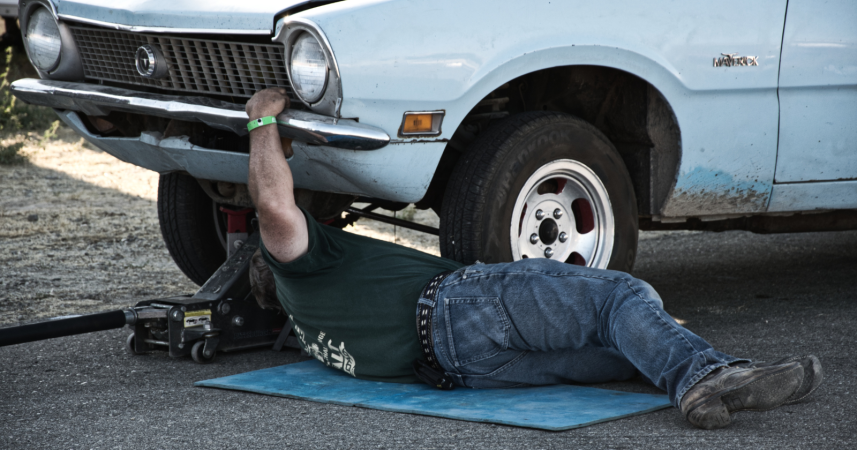
Once upon a time, most men could repair a leaky faucet, patch drywall, or at least keep the family car running. I remember watching my grandfather rebuild part of his fence after a storm. He didn’t call anyone; he just got out his tools, figured it out, and by dinner the problem was solved.
Now? Many guys don’t even own a basic tool kit. If something breaks, the instinct is to Google “repair service near me” rather than roll up their sleeves.
I’m not saying everyone should be an expert handyman. But there’s something powerful about knowing you can troubleshoot a problem yourself.
Psychologists call this self-efficacy—the belief in your ability to get things done. And fixing things around the house used to give men that direct feedback loop: a problem, a solution, and a sense of competence.
Today, it’s easier to call a contractor or replace things outright. But the cost is more than financial—it’s a slow erosion of self-reliance.
2. Navigating without technology
Remember when people used paper maps? I still have a vivid memory of sitting in the passenger seat of a beat-up van during a cross-country trip in my twenties, flipping through a road atlas while the driver tried not to miss the next exit. It wasn’t always smooth, but there was something thrilling about figuring it out together.
Men once prided themselves on knowing how to get places, reading landmarks, or even navigating by the stars. Today, GPS has made that skill nearly obsolete.
The downside? As noted by neuroscientist Eleanor Maguire, heavy reliance on GPS can actually reduce activity in the hippocampus—the part of the brain responsible for spatial memory. Outsourcing navigation might be convenient, but it literally shrinks your mental map of the world.
Beyond brain function, navigation taught patience, planning, and awareness of your surroundings. Without it, many people move through the world half-distracted, following the blue line on their screen without really seeing where they are.
3. Cooking real meals
Cooking was often painted as “women’s work” in the past, but men still knew how to throw together something more substantial than instant noodles. If you grew up in certain cultures, cooking was practically a rite of passage—whether it was grilling outdoors or learning the family’s traditional dishes.
Now, meal delivery and takeout have replaced what used to be a core survival skill. And here’s the thing: cooking isn’t just about food. It’s about creativity, independence, and the ability to care for yourself and others.
When I first went vegan, I had no choice but to learn my way around the kitchen. At first, it was clumsy—burnt tofu, undercooked rice, sauces that didn’t quite land.
But over time, it became one of the most grounding parts of my day. Cooking is both meditative and social: chopping vegetables while music plays in the background, or serving something homemade to friends and seeing their reactions.
Studies even show that cooking at home is linked to better nutrition, lower stress, and stronger family bonds. In other words, knowing your way around a kitchen is far more than a practical skill—it’s a lifestyle anchor.
4. Writing letters and communicating clearly
“Letters are among the most significant memorial a person can leave behind,” Johann Wolfgang von Goethe once said.
Men once wrote letters—whether to a partner overseas, a family member, or a business associate. These weren’t just scribbles; they were carefully composed, thoughtful, and often poetic. Even short notes carried weight because they took time, intention, and effort.
Today, communication is lightning-fast but shallow. A thumbs-up emoji or “k” doesn’t exactly carry the weight of a handwritten page. The lost art here isn’t just penmanship; it’s the ability to express yourself with clarity and emotional nuance.
As noted by psychologist James Pennebaker, expressive writing has measurable mental health benefits, from reducing stress to improving memory. When men lose this practice, they also lose a powerful tool for reflection and emotional connection.
I’m not arguing that everyone should start mailing letters again—but slowing down to write longer messages, even digitally, can reclaim some of that lost depth.
5. Defending themselves physically
In the past, most men knew at least the basics of physical defense. Whether from military service, boxing gyms, or just roughhousing in the neighborhood, they had confidence in their ability to handle themselves.
These days, outside of a handful of martial arts enthusiasts, that’s less common. Gyms are full of men working on aesthetics, but few train for practical self-defense.
I’m not advocating for bar fights. But psychologists like Albert Bandura have shown that perceived competence in physical skills builds confidence in other areas too. Knowing you can protect yourself changes the way you move through the world.
When I lived briefly in Spain, I took up kickboxing classes. Not because I expected to use it, but because I wanted that sense of competence. Even the training itself—sweating, learning techniques, getting humbled by sparring partners—shifted how I carried myself. That quiet assurance seeps into everything else you do.
6. Repairing clothes and gear
Sewing a button, patching a tear, resoling boots—these were once baseline skills. They came from a mindset of resourcefulness, of making things last.
Fast fashion and disposable everything have killed that habit. Why fix when you can just buy new?
But there’s a satisfaction in repair work that goes beyond saving money. I once stitched up a torn backpack on a trip through Thailand, and I remember feeling oddly proud walking through airports with it. That bag carried memories, not just clothes.
Experts like Kate Fletcher, a sustainability researcher, have pointed out that repairing clothes creates a stronger relationship with what we own. In her words: “When you mend, you add value through care, not cost.” That kind of relationship to our belongings changes how we consume—and how we respect what we already have.
7. Playing an instrument
Pick up a guitar at a party in the ’70s and you were instantly the center of the room. Music was woven into social life, and many men had at least a few chords under their belt.
Today, Spotify and Bluetooth speakers have replaced campfire sing-alongs. Fewer men learn instruments, partly because entertainment is so passive now.
And yet, playing music isn’t just entertainment—it’s a form of expression and community. As neuroscientist Daniel Levitin has noted, music activates more parts of the brain than almost any other activity. It boosts mood, sharpens memory, and builds social bonds.
I’ll admit, I’ve been guilty of letting my own guitar gather dust for stretches of time. But every time I pick it back up, I’m reminded why it matters. Strumming a few chords is a reminder that creativity isn’t about perfection—it’s about participation.
8. Building things with your hands
Woodworking, metalworking, even just assembling furniture without cursing at an Allen wrench—these were once normal skills.
Now, with flat-pack furniture and prefab everything, fewer guys ever touch raw materials. The result is a loss of tactile intelligence: that deep understanding of how things fit together.
I once spent a summer helping a friend build a tiny house in Northern California. I wasn’t great at it, but by the end I had a new respect for what it means to make something real with your hands. There’s an intimacy with materials—measuring, cutting, sanding—that you just don’t get from buying something ready-made.
Sociologist Richard Sennett, in his book The Craftsman, puts it this way: “Craftsmanship names an enduring, basic human impulse—the desire to do a job well for its own sake.” When men lose that connection, they also lose a vital piece of how humans have always related to the world.
The bottom line
This isn’t about nostalgia for some “golden age of men.” It’s about noticing the skills that once anchored confidence, creativity, and independence—and realizing they’re not being passed down as often.
The good news? Any of these can be relearned. Pick one, dive in, and notice how it changes not just your ability, but your mindset.
Because while technology and convenience are great, there’s still something deeply human about knowing you can handle things yourself. And that’s a skill that never goes out of style.
What’s Your Plant-Powered Archetype?
Ever wonder what your everyday habits say about your deeper purpose—and how they ripple out to impact the planet?
This 90-second quiz reveals the plant-powered role you’re here to play, and the tiny shift that makes it even more powerful.
12 fun questions. Instant results. Surprisingly accurate.