Hidden in old floor plans is a quiet truth about how much everyday comfort we’ve traded away without even realizing it.
Last weekend, I found myself scrolling through old real estate listings from the 1960s at an estate sale in Silver Lake. The yellowed pages revealed something fascinating: features that were standard in middle-class homes back then now only show up in luxury properties.
It got me thinking about how our definition of "normal" housing has shifted dramatically over the decades.
The more I dug into this, the more I realized we've quietly accepted a downsizing of expectations. What our grandparents considered basic amenities have somehow become luxury upgrades.
Let's explore eight features that were commonplace in 1960s middle-class homes that you'll mostly find in mansions today.
1) Formal dining rooms
Remember when every respectable home had a separate dining room? Not just an eat-in kitchen or a corner with a table, but an actual dedicated room for family meals and entertaining.
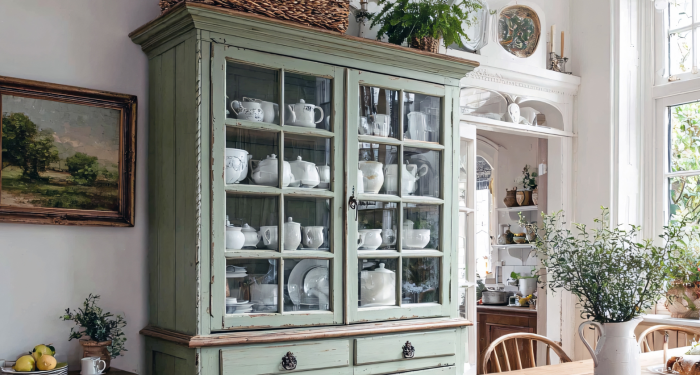
In 1960, this was standard. A middle-class family expected a proper dining room with space for a full table, china cabinet, and room to walk around when serving. It was where holidays happened, where homework got spread out after dinner, where important conversations unfolded over coffee.
Today? Unless you're shopping in the luxury market, you're probably looking at "open concept" living where the dining area is really just the space between the kitchen island and the living room. Formal dining rooms have become a selling point for high-end properties, marketed as "perfect for entertaining" as if that's something only rich people do.
I've noticed this shift even in my parents' neighborhood in Sacramento. The houses built in the 1950s and 60s all have dining rooms. The new developments nearby? Even the $800,000 homes just have breakfast nooks.
2) Generous lot sizes
The typical suburban lot in 1960 was about 10,000 square feet. That's nearly a quarter acre of actual land. Kids had room to play, families could garden, and there was genuine privacy between neighbors.
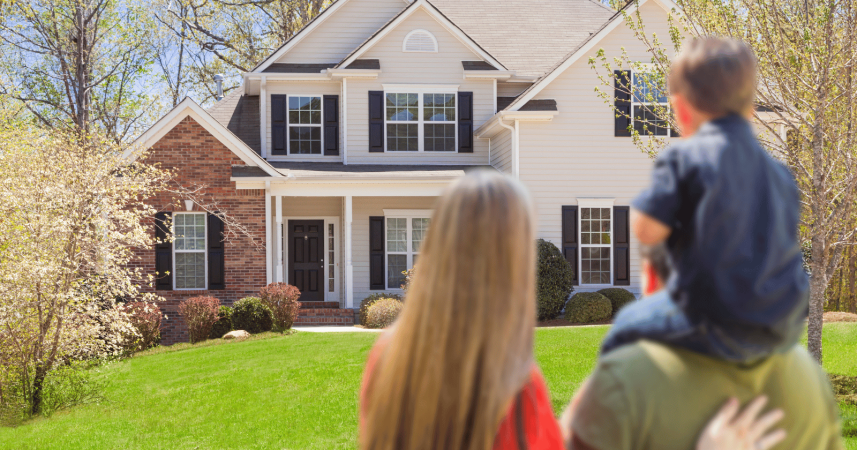
Fast forward to today, and the average new home sits on about 8,600 square feet, with many urban areas seeing lots as small as 4,000 square feet. But here's the kicker: the houses themselves have gotten bigger while the lots have shrunk. We've traded outdoor space for indoor square footage, and now a big yard is a luxury amenity.
When I visit my grandmother's place, built in 1958, I'm always struck by how much space there is between houses. You could actually throw a football in the backyard without hitting the neighbor's window. Try finding that in a new development under a million dollars.
3) Basements and attics
Walk through any neighborhood built in the 1960s and you'll find homes with both basements and attics. These weren't luxury features; they were just part of how houses were built. Storage space, workshop areas, places for the kids to play on rainy days.
Modern construction has largely eliminated these spaces in favor of slab foundations and lower rooflines. Why? It's cheaper to build, and developers can squeeze more houses onto less land. Now, having a basement is marketed as a premium feature, and finished basements are practically considered additional living space worthy of mansion status.
The irony? We have more stuff than ever before, but less space to store it. Hence the booming self-storage industry, which barely existed in 1960.
4) Separate living and family rooms
In 1960, even modest homes often had both a formal living room and a casual family room. The living room was for guests, kept tidy with the good furniture. The family room was where life actually happened: TV watching, kids playing, dad napping on Sunday afternoons.
This separation of formal and informal spaces gave families flexibility. You could have teenagers watching TV while adults talked in the other room. You had a clean space ready for unexpected visitors.
Today's homes have embraced the "great room" concept, where everything happens in one large space. Multiple living areas? That's luxury territory now. You'll see it advertised as "bonus room" or "flex space" in high-end listings, as if having room to spread out is an extravagance.
5) Walk-in pantries
My grandmother's modest three-bedroom house, built on her teacher's salary, has a walk-in pantry. Not a few cabinets designated for food storage, but an actual room you can walk into, with shelves on all sides.
This was completely normal in 1960. Families bought in bulk, canned their own food, and needed proper storage. The pantry was command central for household management.
Somewhere along the line, pantries disappeared in favor of more cabinet space. Now they're making a comeback, but only in expensive homes. "Butler's pantry" has become a luxury real estate term for what used to be a standard feature. Meanwhile, most of us are playing Tetris with our groceries in overstuffed cabinets.
6) Covered porches
Drive through any neighborhood built before 1970 and you'll see them: real front porches where people actually sat. Not just a small covered entry, but proper porches with room for chairs, maybe a swing, definitely conversation.
These weren't decorative. They were functional living spaces, especially before air conditioning was universal. Families spent evenings on the porch, neighbors stopped to chat, communities actually formed.
Modern homes might have a small overhang by the front door, if that. Real porches? Those are for custom homes now. We've retreated to private backyards and interior spaces, then wonder why we don't know our neighbors anymore.
7) Separate laundry rooms
In 1960, the laundry room was exactly that: a room. It had space for washing, drying, folding, ironing, and storing cleaning supplies. Often it connected to the outside for easy access to the clothesline.
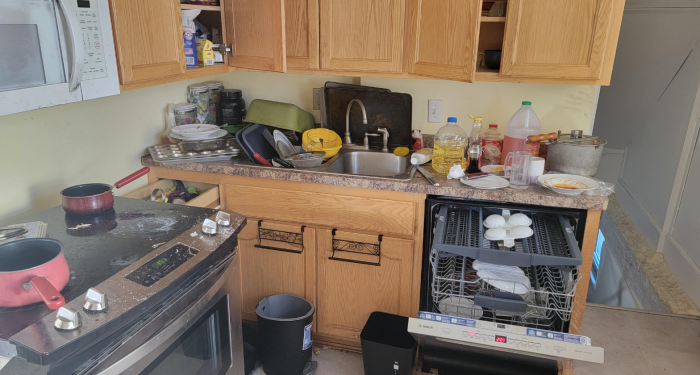
What do most of us have now? A stacked washer-dryer in a closet, if we're lucky. Maybe a corner of the garage. The dedicated laundry room has become a luxury feature, complete with marble countertops and custom cabinetry in high-end homes.
The behavioral science research I've been reading suggests that dedicated spaces for specific tasks actually improve our ability to complete those tasks. Yet we've compressed our functional spaces into multi-purpose areas that serve nothing particularly well.
8) Built-in storage everywhere
Linen closets in hallways. Built-in china cabinets. Window seats with storage underneath. Bedroom closets that were actually walk-in size. These were standard features in 1960s middle-class homes.
Modern homes, despite being larger overall, often have less built-in storage. Closets are smaller, linen closets have disappeared, and built-ins are considered custom features. I've been in new $500,000 homes where the coat closet is so small you can fit maybe three jackets.
Now, extensive storage is a luxury selling point. "Abundant storage throughout!" the high-end listings exclaim, as if having somewhere to put your things is an indulgence.
The bottom line
Looking at this list, I can't help but wonder what we've really gained in our modern housing trade-offs. We've got bigger houses on smaller lots, more square footage but less functional space, granite countertops but nowhere to store our groceries.
The shift from these once-standard features to luxury amenities tells a story about changing values, building economics, and perhaps a gradual lowering of what we expect from middle-class life. Our grandparents weren't living in luxury; they just had different priorities about what made a house livable.
Maybe it's time to question whether that "open concept" floor plan is really an upgrade, or if we've just been sold on the idea that less separation, less storage, and less land somehow equals modern living.
Because from where I'm sitting, in my Venice Beach apartment where I can hear my neighbor's Netflix choices through the wall, those 1960s middle-class homes are looking pretty luxurious indeed.
What’s Your Plant-Powered Archetype?
Ever wonder what your everyday habits say about your deeper purpose—and how they ripple out to impact the planet?
This 90-second quiz reveals the plant-powered role you’re here to play, and the tiny shift that makes it even more powerful.
12 fun questions. Instant results. Surprisingly accurate.