From matching sweater photo shoots to saved wrapping paper, these holiday rituals reveal how drastically our relationship with family, tradition, and stuff has transformed.
Christmas at my grandmother's house was a production. Not the warm, cozy, spontaneous kind of gathering you see in movies. More like a carefully choreographed performance where everyone knew their role, the schedule was non-negotiable, and deviation from tradition was met with the kind of disapproval usually reserved for people who put pineapple on pizza.
My younger cousins, born into a world of customizable everything, watched these rituals with genuine confusion. Why was everyone so stressed? Why did we need matching outfits? Why was Grandma saving wrapping paper like we were preparing for an apocalypse?
It got me thinking about how radically Christmas traditions have shifted between generations. What Boomers considered normal, even essential, parts of the holiday season now seem completely bizarre to millennials and Gen Z.
These weren't bad traditions, necessarily. But they came from a different world, one with different values, different constraints, and different ideas about what family gatherings should look like.
Let's dive into eight Christmas traditions that Boomer families treated as sacred but younger generations find absolutely baffling.
1) The formal dining room that was only used once a year
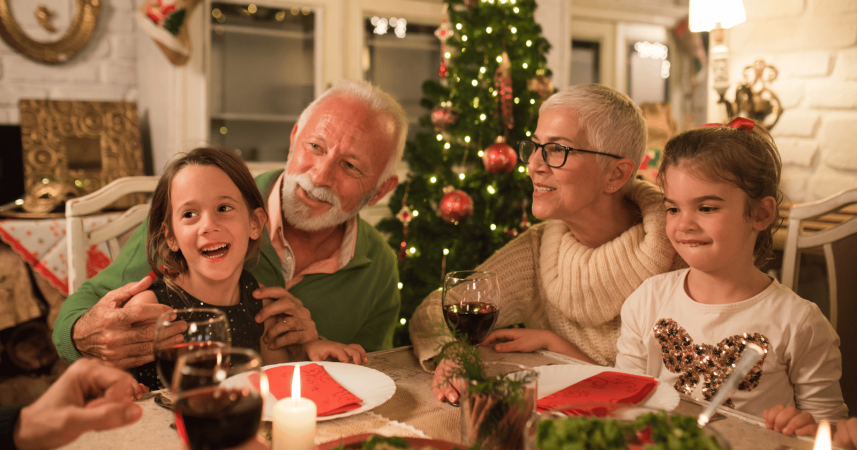
Growing up, my grandmother had this pristine dining room that sat empty 364 days a year. We're talking plastic covers on the chairs, a table so polished you could see your reflection, and a china cabinet filled with dishes that cost more than my first car.
Then Christmas rolled around, and suddenly this museum exhibit transformed into command central.
The thing is, this wasn't just about having a nice space for dinner. It was about performing a specific kind of formality that feels completely alien today. Everyone had assigned seats. There were multiple forks.
You couldn't start eating until Grandpa said grace, which could last anywhere from two to ten minutes depending on how many family members he felt needed divine intervention that year.
My younger cousins, who grew up eating dinner on the couch while watching Netflix, genuinely don't understand why anyone would maintain an entire room just for holidays. And honestly? I get it.
But there was something about that ritual. The way everyone dressed up, the hushed tones when passing the gravy boat, the collective sigh of relief when you made it through the meal without breaking anything priceless.
It forced a kind of presence that's hard to replicate when you're texting under the table or have one eye on your phone.
2) The fruitcake exchange that nobody actually wanted
Here's something that baffles younger generations: Boomers loved giving each other fruitcakes for Christmas. Not as a joke. Not ironically. They actually thought this was a thoughtful gift.
I remember watching my parents receive no fewer than four fruitcakes one Christmas. These dense, alcohol-soaked bricks that weighed about as much as a small child and tasted like what I imagine Victorian-era Christmas pudding mixed with disappointment would taste like.
The wild part? Nobody ate them.
They'd sit on the counter for weeks, then quietly disappear. I'm convinced there was an underground fruitcake exchange network where these things just circulated endlessly through Boomer social circles, never actually being consumed.
Fruitcakes date back to ancient Rome and were considered a luxury item because of the expensive dried fruits and nuts. For Boomers, giving one was a sign of sophistication and tradition.
For us? It's a punchline.
But here's what younger generations miss: it wasn't really about the fruitcake. It was about participating in a shared tradition, even if that tradition was objectively terrible. It was about showing up with something, anything, to contribute to the gathering.
Today we're more practical. We ask what people actually want. We send Amazon wish lists. We Venmo each other.
More efficient? Absolutely. But maybe something gets lost when we optimize away the weirdness.
3) The entire neighborhood synchronizing their outdoor decorations
I spent three years in Bangkok, where holidays were marked by modest decorations and a general lack of competitive spirit around festive displays. Coming back to America, especially during Christmas season, was like landing on another planet.
Boomer neighborhoods took outdoor decorations seriously. Not just "I put up some lights" seriously. More like "I've been planning this display since July and I've recruited my entire family to execute my vision" seriously.
What made it bizarre wasn't just the scale. It was the coordination.
Entire streets would have meetings about color schemes. There were unwritten rules about when lights went up and when they came down. If your house was dark while everyone else was lit up like Vegas, you'd get looks at the grocery store.
My millennial and Gen Z friends find this completely insane. Why would you care what your neighbors think about your decorations? Why would you spend hundreds of dollars on inflatable Santas? Why would you risk your life climbing on your roof in December?
Fair questions, all of them.
But there was something kind of beautiful about driving through those neighborhoods as a kid. The collective effort created something bigger than any individual house could achieve. It felt like magic, even if the magic was powered by competitive suburbanites and Home Depot credit cards.
4) The mandatory family photo in matching outfits
Every Christmas, without fail, Boomer families would gather everyone together for the annual family photo. And not just any photo. A coordinated production featuring matching outfits that someone, usually Mom, had spent months planning.
I'm talking full matching sweaters. Matching plaid. Matching red and green color schemes that made you look like a human Christmas tree.
The photo shoot itself was an ordeal. Everyone had to be perfectly positioned. Smiles had to be genuine but not too genuine. Hair had to be just right. And god forbid anyone blinked, because we were using actual film and couldn't just take 47 versions until we got one usable shot.
These photos would then be printed, framed, and mailed to basically everyone who had ever met the family. They'd appear on mantels across the country, documentation that yes, the Johnson family was still intact and coordinating their wardrobes.
Younger generations find this practice deeply weird. Why would you dress identically? Why the formality? Why the pressure to project perfect family harmony when, let's be honest, half the people in the photo weren't speaking to each other by dessert?
The answer, I think, is that Boomers valued the appearance of family cohesion more than we do today. There was social currency in having a picture-perfect family, even if the reality was messy.
We're more comfortable with messy now. We post imperfect moments on Instagram. We're honest about family dysfunction. We don't need matching sweaters to prove we're related.
Progress? Maybe. But I'll admit those old photos have a certain charm that our casual iPhone snapshots lack.
5) The Christmas morning order of operations that couldn't be deviated from
In Boomer households, Christmas morning followed a script more rigid than any Broadway production.
First, everyone gathered. No exceptions. It didn't matter if you were 25 and wanted to sleep in. Christmas morning started at a specific time, usually ungodly early, and everyone was expected to be present and alert.
Then came the order of gift opening. Youngest to oldest. Or oldest to youngest. Or clockwise around the room. The specific method varied by family, but whatever method your family chose was sacred law.
One person opened a gift while everyone else watched. Everyone had to see the gift, comment on the gift, thank the giver appropriately, then move to the next person. This process could take hours.
My younger friends think this sounds like torture. Why not just tear into everything at once? Why the performance? Why does everyone need to watch me open socks?
I asked my mom about this once. She said it was about savoring the moment, about not rushing through something special, about teaching patience and gratitude.
What it actually taught me was how to fake enthusiasm for gifts I didn't want while an audience watched.
But there was something about the ritual itself. The predictability was comforting. Year after year, the same process, the same roles, the same rhythms. In a world that felt increasingly chaotic, Christmas morning was a constant.
We've lost that now. Or rather, we've traded it for efficiency and individual preference. Everyone does their own thing. Kids open gifts whenever they wake up. There's no script.
More freedom, less structure. Better or worse depends on what you value.
6) The insistence on watching specific holiday specials live
Before streaming, before DVR, before the internet made everything available always, Boomer families scheduled their entire Christmas season around television broadcasts.
"Rudolph the Red-Nosed Reindeer" aired once. Maybe twice. If you missed it, you missed it until next year. Same with "Frosty" and "A Charlie Brown Christmas" and whatever other claymation special CBS decided to bless us with.
This meant planning. Marking calendars. Canceling other activities. Gathering the entire family around the TV at the appointed time to watch a show you'd seen dozens of times before.
My younger cousins literally cannot comprehend this. They watch what they want, when they want, on whatever device is closest. The idea of waiting for a specific day and time to watch a 30-minute cartoon feels like describing ancient history.
But here's the thing: that shared experience created something. When the entire country watched the same thing at the same time, you had a common cultural touchstone. You could reference it at school the next day and everyone knew what you were talking about.
There was anticipation too. You waited all year for that one night. It became an event, a tradition, something to look forward to.
Now everything is always available, which means nothing is special. We've gained convenience but lost that collective anticipation.
I'm not saying we should go back to scheduled programming. But I understand why Boomers get nostalgic about it.
7) The thank-you note requirement that was non-negotiable
After Christmas came the reckoning: handwritten thank-you notes for every single gift received.
Not texts. Not emails. Not a mass Facebook post thanking everyone at once. Individual, handwritten cards, mailed through actual postal service, to every person who gave you anything.
My grandmother kept a list. She checked it off as the notes came in. If you didn't send one, you heard about it. Possibly for years. "Remember when you didn't send Aunt Linda a thank-you note in 1997? I remember."
This practice strikes younger generations as completely absurd. Why write it when you can text it? Why wait days for mail delivery when you can thank someone instantly? Why the formality?
Boomers saw it differently. A handwritten note took effort. That effort demonstrated genuine appreciation. A quick text took seconds and cost nothing. A note required thought, time, paper, a stamp, a trip to the mailbox.
The medium was the message.
I'll be honest: I hated writing those notes. My hand would cramp. I'd run out of ways to say "thank you for the sweater" by the eighth card. It felt like homework during Christmas break.
But I think back to the few handwritten notes I've received as an adult, and they do hit different. There's something tangible about them, something permanent. They feel more real than digital messages that disappear into the void.
Maybe the Boomers were onto something. Or maybe I'm just getting old.
8) The preservation of wrapping paper for reuse next year
Finally, here's something that absolutely confounds younger generations: Boomer families carefully unwrapped presents, salvaging wrapping paper for the following year.
Not just pulling off the tape. I'm talking surgical precision. Gentle peeling. Smoothing out wrinkles. Folding the paper neatly and storing it with the Christmas decorations for next year.
My friends thought my family was insane for doing this. And okay, it was a little insane.
But it wasn't about being cheap, though there was certainly a Depression-era frugality influence. It was about not being wasteful. About using things fully before discarding them. About the idea that something still had value even after its initial use.
Today we tear through wrapping paper like it's personally offended us. Mountains of shredded paper end up in garbage bags before the coffee's even finished brewing. We buy new paper every year without thinking twice about it.
More convenient? Sure. More fun? Absolutely.
But something about that Boomer practice reflected a different relationship with stuff. Things were meant to last. Waste was shameful. Everything had potential value if you looked at it right.
That mindset feels increasingly foreign in our throwaway culture.
The bottom line
Looking back at these traditions, they seem bizarre because they come from a different world. A world where scarcity was more recent memory, where community standards carried real weight, where patience was required because technology hadn't yet optimized it away.
Were these traditions better? Not necessarily. Many of them were rigid, formal, and created unnecessary stress. They prioritized appearance over authenticity, tradition over individual preference.
But they also created shared experiences, required presence, and built memories that clearly stuck with people. There was intentionality to them, even when that intention produced weird results like fruitcake circulation networks.
As someone who straddles these worlds, having learned service precision in fine-dining kitchens while also living through the digital transformation, I see value in both approaches.
Maybe the answer isn't choosing one or the other. Maybe it's being intentional about which traditions we keep, which we modify, and which we're okay letting fade away.
What matters is creating moments that feel meaningful, even if they look nothing like what our parents or grandparents did.
What’s Your Plant-Powered Archetype?
Ever wonder what your everyday habits say about your deeper purpose—and how they ripple out to impact the planet?
This 90-second quiz reveals the plant-powered role you’re here to play, and the tiny shift that makes it even more powerful.
12 fun questions. Instant results. Surprisingly accurate.