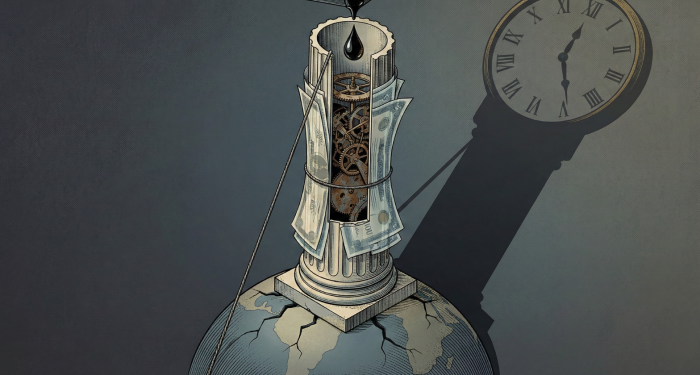
The deepest wounds between parents and adult children are often carried in silence—shaped not by conflict, but by what’s never said aloud.
Let’s be honest—most adult kids won’t sit their parents down and say, “Hey, I need you to stop doing this.” It’s uncomfortable. It feels ungrateful. And depending on how your relationship has gone over the years, it might even feel pointless.
But just because we’re quiet doesn’t mean we don’t notice.
As someone who’s been on both sides of the generational equation—first as a daughter navigating her own boundaries, and now as someone regularly holding space for others doing the same—I’ve learned a few things.
One of them? A lot of the tension that exists between adult children and their parents stems from the unspoken. The patterns that get brushed off as “just how things are,” even though they quietly drain the relationship.
So, in the spirit of emotional honesty, here are seven things many adult children wish their parents would stop doing... even if they don’t quite have the words—or courage—to say it.
1. Offering advice when we didn’t ask for it
There’s a difference between being supportive and being directive.
Most of us just want to feel heard. When we open up about a work dilemma, a relationship snag, or a health issue, it’s usually not a coded request for a ten-step plan.
But too often, well-meaning parents jump in with:
“Have you tried…”
“You should just…”
“I think what you need to do is…”
And suddenly, what was a moment of connection turns into a lesson or a fix-it session.
Of course, this usually comes from a place of love. But unsolicited advice often feels like a lack of trust. As if we’re not capable of solving our own problems. As therapist Nedra Glover Tawwab puts it, “Unsolicited advice is criticism wrapped in good intentions.”
What helps more? A simple: “That sounds hard. Do you want advice, or do you just want me to listen?”
2. Commenting on our appearance—especially when it’s framed as “concern”
This one hits deep.
Whether it’s about weight, clothing, hairstyle, or how “tired” we look—it stings. Especially when it’s dressed up as care:
“I’m just worried about your health.”
“You used to look so good when you did X.”
“That outfit is… interesting.”
What might seem like harmless banter to one person can land as a quiet judgment to another. And when these comments come from parents—the very people we first looked to for unconditional acceptance—it can trigger years of internalized self-doubt.
I’ve spoken to countless adults who still remember the offhand remark their mom made about their thighs when they were thirteen. Or how their dad used to compare their body to a sibling’s.
If you’re a parent reading this, trust me: your adult child knows what they look like. They don’t need a reminder. They need your love.
3. Guilt-tripping us for living differently than you did
Not everyone follows the traditional script of life anymore.
Marriage, kids, homeownership, climbing the corporate ladder—these things don’t hold the same appeal for everyone. And yet, when adult children choose a path that doesn’t mirror their parents’, it can lead to a quiet (or not-so-quiet) current of guilt.
Things like:
“When I was your age, I had two kids and a mortgage.”
“Must be nice to just pick up and travel whenever you want.”
“I just don’t get how you can be happy without a family of your own.”
Research on family dynamics reveals that adult children frequently feel a sense of guilt or shame when they diverge from parental expectations—and this feeling can linger even when they’ve built lives that suit them.
Here’s the thing: we don’t owe our parents a replica of their life. Love is not tied to imitation.
Different doesn’t mean wrong. It just means different.
4. Bringing up the past to make a point
You know what I mean.
Moments when a parent says something like, “After all I’ve done for you...” or “You used to be so grateful,” especially in the middle of a disagreement.
Sometimes it’s subtle. A sigh. A reference. A pointed look.
But the message is clear: you owe me.
Now, most adult children deeply appreciate the sacrifices their parents made. We get it—parenting is hard, and raising a child is no small feat. But when past efforts are leveraged to win an argument or shame us into compliance, it erodes trust.
Healthy relationships aren’t scoreboards. No one wants to feel like they’re in lifelong emotional debt just for being raised.
5. Overstepping boundaries with our own children (or pets, or homes)
Let’s talk boundaries.
Just because you’re the grandparent doesn’t mean you get to override parenting decisions. Whether it’s feeding the grandkids something we’ve asked you not to, correcting us in front of them, or saying, “Oh come on, don’t be so uptight,”—it adds up.
And for those of us without kids? The same goes for our homes, routines, and pets. When someone walks into your space and rearranges the kitchen or lets your dog do something you’ve been training against, it doesn’t feel helpful. It feels disrespectful.
Research shows that setting and respecting clear personal boundaries is foundational for building trust, maintaining emotional well-being, and strengthening relationships across generations
As Dr. Dan Siegel puts it, secure and meaningful connections—whether with family or friends—stem from being attuned to one another’s emotional states and honoring the mental space between “me” and “we”
If you're not sure where the line is—ask. Don’t assume.
6. Assuming we’ll always drop everything
This one’s tough because it often intersects with love.
Parents want to feel important. To know they matter. And many adult kids do want to be there. But when there’s an unspoken expectation that we’ll always answer the phone, show up at a moment’s notice, or accommodate every change in plan—it can get overwhelming.
We’re juggling a lot. Careers, families, health, mental load. And while we want to stay connected, sometimes we just don’t have the bandwidth.
When love turns into obligation, resentment sneaks in.
One of the kindest things a parent can say? “I’d love to see you—when’s a good time?” Or “I understand if you’re busy. Let me know what works.”
It’s a subtle shift, but it makes all the difference.
7. Dismissing or downplaying our emotions
Raise your hand if you’ve ever heard one of these:
“You’re too sensitive.”
“That’s not how it happened.”
“You always make a big deal out of everything.”
It’s exhausting.
Many adult children struggle to express how they feel—not because they don’t know what they feel, but because they’ve learned it won’t be taken seriously. When a parent habitually downplays their emotions, it creates a wall. One that’s built with bricks of invalidation.
Psychologist Dr. Lindsay Gibson, author of Adult Children of Emotionally Immature Parents, notes that this kind of emotional minimization “leaves the child feeling unseen and alone, even in adulthood.”
It’s okay not to understand why something bothers us. But please don’t tell us it shouldn’t.
Try this instead: “I may not fully get it, but I want to understand.”
That’s how healing begins.
Final thoughts
We’re not trying to be ungrateful.
Most adult children carry a deep, complicated love for their parents. But love doesn’t erase frustration. It doesn’t mean we’re okay with dynamics that wear us down.
Sometimes the silence is self-protection. Sometimes it’s exhaustion. Sometimes it’s just knowing that saying the hard thing might not lead to a change.
But if you’re a parent reading this and thinking, Maybe I’ve done one or two of these things—that’s okay. Awareness is the first step. No one gets it perfect. What matters is the willingness to listen, reflect, and adjust.
Because at the end of the day, we want what you want: a relationship built on mutual respect, understanding, and care.
And maybe—just maybe—it starts with what we stop doing.
If You Were a Healing Herb, Which Would You Be?
Each herb holds a unique kind of magic — soothing, awakening, grounding, or clarifying.
This 9-question quiz reveals the healing plant that mirrors your energy right now and what it says about your natural rhythm.
✨ Instant results. Deeply insightful.