What if the chaos, laughter, and burnt marshmallows of 70s Thanksgiving dinners were actually teaching us the basics of being human?
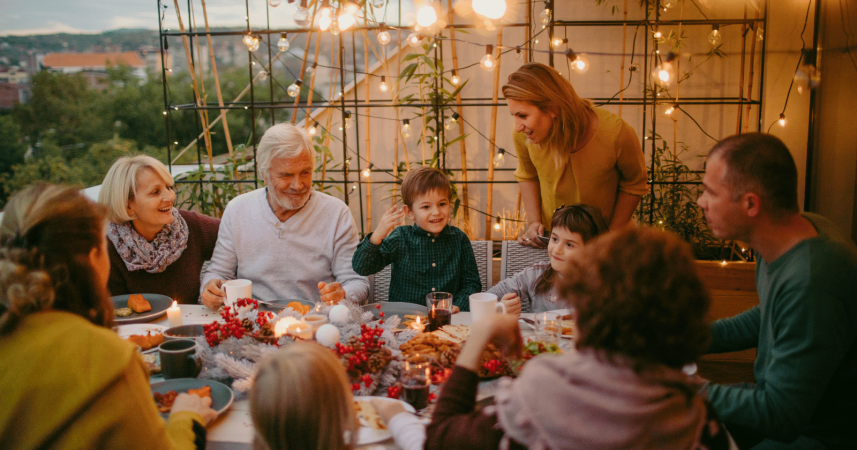
Thanksgiving in the 70s wasn’t just a holiday. It was an event.
The house smelled like a mix of turkey, Jell-O salad, and furniture polish. The TV was blaring, the phone had a cord long enough to trip over, and someone’s polyester shirt was always dangerously close to the oven flame.
And kids? We weren’t just along for the ride. We were part of the operation.
Before participation trophies and gluten-free stuffing, every kid had a specific job to do. Some roles were noble. Others were questionable. But all of them taught us something we didn’t realize we were learning.
Here’s a look back at the seven roles every kid had on Thanksgiving in the 70s, whether we liked it or not.
1) The gravy runner
Every family had one.
The kid who was always on call, ready to sprint from the dining room to the kitchen the second someone yelled, “We need more gravy!”
You’d dart between the adults like a pinball, trying not to spill the steaming Pyrex dish while navigating a sea of polyester bell-bottoms and kitchen chairs. If you were really good, you learned to balance it with one hand like a waiter, soaking up the applause (and the heat).
In my house, that was me. I didn’t understand the responsibility back then, but the gravy runner was basically the operations manager of Thanksgiving. Without you, half the family was stuck with dry turkey and silent resentment.
And here’s the thing: those chaotic little missions taught us more than balance. They taught situational awareness. You had to read the room, see who was talking, who was stressed, and who needed help. You learned how to navigate authority and chaos without being told how.
Looking back, I think those were the first seeds of leadership. You weren’t just running for gravy. You were learning how to handle pressure and deliver results under fire, literally.
2) The cousin entertainer
If you were the oldest kid in the room or just the one who didn’t cause trouble, you automatically got the job of keeping the younger cousins busy.
That meant herding a pack of sugar-loaded children into the den, putting on a scratchy VHS tape of Rudolph the Red-Nosed Reindeer, and praying the adults forgot about you for a while.
Of course, one cousin would always cry, one would cheat at every game, and one would try to “experiment” with mixing all the sodas together in one cup.
You weren’t just babysitting. You were managing personalities. You learned diplomacy without realizing it. You learned to say, “Okay, let’s all take turns,” when what you really wanted to say was, “Stop touching everything.”
It’s funny, but those chaotic afternoons built real emotional intelligence. You learned how to negotiate, de-escalate, and even empathize. You saw how different kids handled boredom, jealousy, or attention and you adjusted.
These days, I meet people in leadership roles who have that same calm-under-pressure energy, and I always wonder: were they once a cousin entertainer too?
3) The reluctant taste-tester
Every kitchen had one kid who was constantly being handed spoons.
“Here, taste this,” someone would say, holding out a mysterious mixture that might be stuffing, pudding, or some “new recipe” your aunt clipped from Good Housekeeping.
You’d take a cautious bite, nod politely, and try to guess if it was supposed to taste that way.
You were the quality control department. The unpaid intern of culinary experimentation.
But you were also learning subtle social skills, like how to give feedback without offending anyone, how to pretend to enjoy something when everyone’s watching, and how to trust your instincts (especially when those instincts said, “Don’t ask what’s in this”).
That role taught adaptability. You never knew what was coming, but you had to react fast. You couldn’t overthink. You had to say something, anything, that kept the peace.
Now, decades later, I realize how much that translates to life. Sometimes, you just have to take a small taste of something new, an idea, a project, a risk, and give it an honest shot before deciding if it’s for you.
4) The parade watcher (who wasn’t really watching)
Every Thanksgiving morning, adults would announce, “The parade’s on!” as if that was the event we’d been waiting for all year.
In truth, no one was actually watching.
We’d lie on the carpet in front of the TV, half-awake, munching on Fritos, waiting for the floats to get interesting. You might perk up for Snoopy or Kermit, then drift back into a trance.
But the parade wasn’t really about watching. It was about marking the start of the day. It gave the grown-ups a sense of rhythm: coffee, parade, chaos, dinner.
For us, it was the calm before the storm. A chance to just be before the orders started flying.
What I love about that memory is the stillness of it. You weren’t expected to perform, or help, or talk. You were just there, absorbing the hum of the house and the distant sound of marching bands.
That kind of quiet observation sticks with you. It’s mindfulness before anyone called it that. And maybe that’s why, even now, I like to start big days with a bit of stillness, no screens, just some space to take it all in.
5) The table setter with big dreams
Some kids treated this job like an Olympic event.
They’d carefully unfold the napkins, align the forks with surgical precision, and ask, “Do we have any candles?” as if Better Homes & Gardens might drop by unannounced.
If you were that kid, you probably had a creative streak. You wanted to make things look right. Maybe you didn’t know why, but aesthetics mattered to you.
And it wasn’t just about forks and plates. It was about harmony. You wanted the environment to feel good. That’s a personality trait that never really fades.
Even now, I catch myself paying attention to small details: the layout of a workspace, the way lighting affects mood, or how presentation changes perception.
The table setter in the 70s was more than just a helper. They were the designer, the organizer, the early minimalist before minimalism was a trend.
In a loud, chaotic household, setting the table was one of the few ways to create calm and control a small piece of the day.
6) The family photographer (armed with a disposable camera)
Every Thanksgiving needed documentation.
Someone had to be the one yelling, “Everyone look over here!” while half the family pretended they didn’t hear.
If you were that kid, you probably got stuck with a Kodak Instamatic or a disposable camera. You’d line everyone up in the backyard, accidentally cut off Grandma’s head in half the shots, and hope at least one photo turned out.
The irony was, you wouldn’t know until a week later when the film came back from the drugstore.
But that job taught patience. You couldn’t instantly check or redo. You just had to trust your eye and hope for the best.
You also learned how to notice details, who was smiling naturally, who was forcing it, how light hit the side of the house. You learned how to see people.
As someone who now spends weekends behind a camera, I still think about that: how the value of a picture isn’t in perfection. It’s in what it captured that words couldn’t.
Those fuzzy, off-center photos? They’re often the truest ones.
7) The dog feeder under the table
Every Thanksgiving had one rebel who couldn’t stand to see the dog left out.
You’d slip scraps under the table, turkey, mashed potatoes, the occasional biscuit, while pretending to tie your shoe.
The adults knew, of course. But they let it slide.
That tiny act of rebellion came from compassion. You saw the dog’s hopeful eyes and made a judgment call: kindness over rules.
That moment, small as it was, planted seeds of empathy. For a lot of us, it was one of the first times we made a moral decision based on feeling, not instruction.
And it’s interesting how those little acts echo forward. Many people I know who care deeply about animals and the environment trace that awareness back to moments like these, those tiny, heart-led choices that made us question what was “normal.”
It’s a reminder that our early instincts often knew what was right long before we could explain why.
The takeaway
If you grew up in the 70s, you probably recognize at least a few of these roles.
Maybe you were the runner, the entertainer, the creative, or the quiet observer. Either way, Thanksgiving wasn’t just a holiday. It was an ecosystem of personalities, rituals, and lessons hiding in plain sight.
What strikes me most now is how much those roles shaped us. We learned cooperation, patience, empathy, and adaptability. We learned how to read the room, how to help without being asked, how to see others’ needs even when no one spelled them out.
We didn’t call it emotional intelligence back then, but that’s what it was.
Looking back, I think that’s what made those 70s holidays so memorable. They weren’t perfect. They were loud, unfiltered, and occasionally tense, but they were real.
And sometimes, the lessons that stick the longest come from exactly that kind of chaos.
If You Were a Healing Herb, Which Would You Be?
Each herb holds a unique kind of magic — soothing, awakening, grounding, or clarifying.
This 9-question quiz reveals the healing plant that mirrors your energy right now and what it says about your natural rhythm.
✨ Instant results. Deeply insightful.