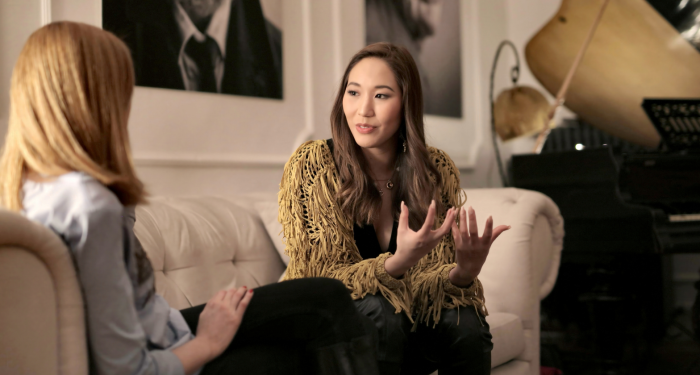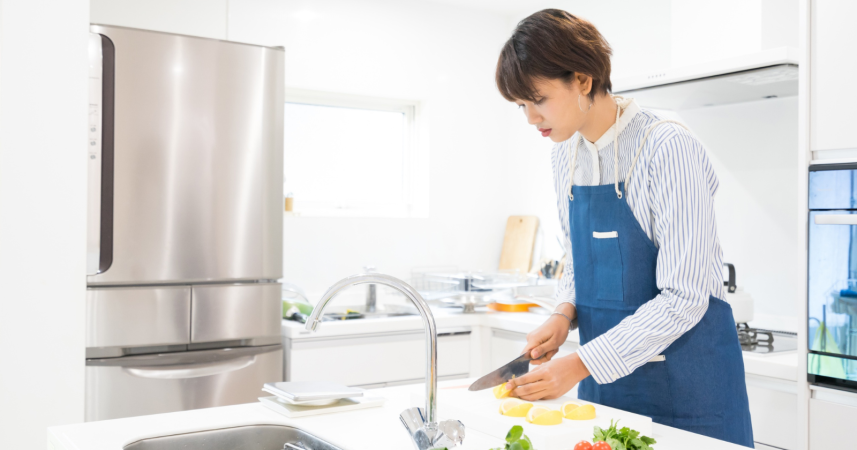
Behind every perfect holiday spread is a woman who's been choreographing this exhausting dance since dawn, and what she craves isn't your gratitude—it's for someone to pull out a chair and make her sit in it.

Add VegOut to your Google News feed. 
The kitchen smells like sage and butter, that particular holiday alchemy that transforms an ordinary Thursday into something sacred. Steam fogs the windows while three timers beep in succession, and somewhere between basting the turkey and stirring the gravy, she realizes her lower back has started that familiar ache. The one that comes from standing on tile floors since dawn, pivoting between stove and sink, counter and table, orchestrating a meal that will disappear in thirty minutes but took her two days to plan and six hours to execute.
I've been that woman more times than I can count. And here's what I've learned: the exhaustion isn't really about the cooking. It's about being invisible in plain sight.
The performance nobody sees
Have you ever watched a holiday meal unfold from the kitchen's perspective? While everyone else experiences dinner as a single event, the cook experiences it as a marathon that started yesterday with the grocery shopping, continued through this morning's prep work, and won't end until the last dish is dried and put away sometime around midnight.
During my years as a single mother, I perfected this particular dance. I'd start cooking at 6 AM, timing everything backward from our 2 PM dinner. The turkey needed four hours, the pies were already done from the night before, the potatoes could wait until noon. I moved through these calculations automatically, my body knowing the rhythm even when my mind wandered to other things, like whether my kids noticed how hard I was trying to make this feel normal despite their father's absence.
What struck me then, and still strikes me now, is how the work of feeding people becomes background noise to the meal itself. We praise the food, we compliment the recipes, we say thank you for dinner. But we rarely acknowledge the woman who hasn't had a sip of water since breakfast, whose feet are swollen, whose nice blouse has splatter marks hidden under her apron.
Why we don't ask for help
"Can I help with anything?" they ask, usually when the hardest work is already done, when accepting help would mean explaining seventeen different steps and probably redoing half of them anyway.
So we say no, we've got it covered, everything's under control. And it is under control, but at what cost?
I remember one Thanksgiving when I was working full-time and raising my kids alone. I'd been up since 4 AM cooking, and by the time we sat down to eat, I could barely focus on the conversation. My teenage daughter kept asking if I was okay, and I kept insisting I was fine, just tired. Later that night, after everyone had gone to bed, I sat in my kitchen and cried. Not from sadness exactly, but from a bone-deep exhaustion that felt like grief.
The truth is, we don't ask for help because we've internalized this idea that feeding our families is an expression of love, and asking for help somehow diminishes that gift. We've been taught that a good mother, a good wife, a good woman handles it all with grace. But grace, I've learned, is often just exhaustion wearing lipstick.
The invisible labor of love
Virginia Woolf once wrote about the angel in the house, that phantom of female perfection who sacrifices herself daily on the altar of family comfort. The holiday cook is her modern incarnation, wielding a baster instead of a dustpan but performing the same vanishing act.
What would happen if we made this labor visible? If instead of just thanking the cook, someone said, "You've been standing for six hours. Sit down. I'll bring you a plate." If someone noticed the empty coffee cup by the stove, the untouched glass of wine growing warm on the counter, the way she keeps rolling her shoulders to release the tension.
During those years when money was tight, I felt the weight of having to make everything perfect even more acutely. As if the homemade stuffing and perfectly golden turkey could somehow compensate for all the things I couldn't give my children. Nobody knew about the food stamps, of course. That was my secret ingredient, mixed in with the shame and determination that seasoned every meal.
Changing the recipe
These days, I do things differently. Age has given me permission to care less about perfection and more about presence. I've learned to say yes when someone offers to bring a dish. I've discovered that store-bought pie crust won't trigger the apocalypse. Most importantly, I've started sitting down.
Last year, halfway through cooking Christmas dinner, I simply stopped. I poured myself a glass of wine, sat at the kitchen table, and watched my family navigate around me. At first, they looked confused. Then concerned. Then, beautifully, they started figuring it out. My son-in-law finished mashing the potatoes. My daughter took over the gravy. Someone else set the table.
The meal wasn't perfect. The rolls were slightly burnt, the green beans a bit underdone. But for the first time in decades, I actually tasted the food. I participated in the conversation. I was present at my own table.
Final thoughts
The woman cooking your holiday meal doesn't need your praise, though praise is nice. She doesn't need elaborate gifts or flowery speeches about her culinary skills. What she needs is for someone to see her, really see her. To notice the work before it's finished, the effort while it's happening, the tired in her eyes before she has to say it out loud.
This holiday season, look for that woman in your life. Pull out a chair for her. Pour her a drink. Take the spoon from her hand and tell her to rest. Because the best gift you can give the holiday cook isn't gratitude for the meal. It's the radical act of noticing she's human, not just the magic that makes dinner appear.