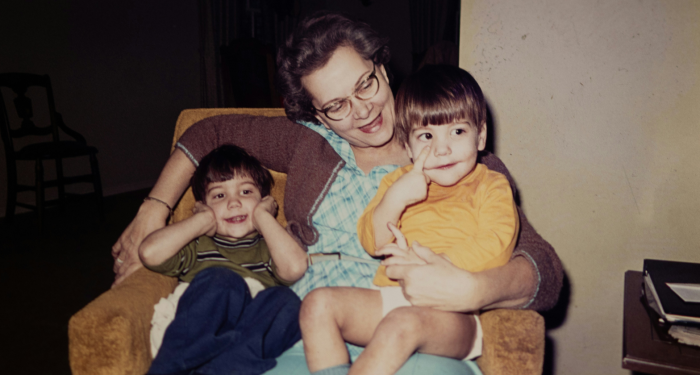
She taught me to cook it perfectly, left me her exact recipe, and I've made it 47 times since she died — but mine tastes like grief where hers tasted like gravity.

Add VegOut to your Google News feed. 
Every Sunday at 2 PM sharp, the smell of rosemary and garlic would drift through my grandmother's house, pulling us from whatever corner we'd scattered to like an invisible rope. The sound of her carving knife against the cutting board created a rhythm that somehow made everything else in the world slow down.
And there, in the center of her cramped dining room table, would sit the same mahogany-brown roast beef, its edges crispy and caramelized, surrounded by vegetables that had soaked up every drop of those precious pan juices.
I've made that roast 47 times since she passed. I've counted. I have her handwritten recipe card, worn soft at the edges and splattered with decades of Sunday dinners. I know exactly which butcher she went to, what temperature she set the oven, how many minutes per pound. Hell, I even tracked down the same cast-iron roasting pan at an estate sale three years ago.
But something's missing. Every. Single. Time.
And after years of trying to crack this code, I've finally figured out what my culinary training couldn't teach me: the secret ingredient was never in the recipe at all.
The recipe that reads like a treasure map
My grandmother's recipe card is a masterpiece of vague instructions and assumed knowledge. "Season generously" it says, with no indication of what generous meant to a woman who lived through the Depression. "Cook until done" appears at least three times, as if the meat would simply announce its readiness.
When I was training in New York, surrounded by precision and technique, I thought I could reverse-engineer her process. I measured everything. Created spreadsheets. Took the internal temperature at five-minute intervals. My instructors would've been proud of my methodology.
But here's what they don't teach you in culinary school: some recipes aren't meant to be followed. They're meant to be inherited through years of standing next to someone, watching their hands move, learning the weight of "a pinch" and the color of "golden brown" through their eyes.
My grandmother never measured anything. She'd hold the salt in her palm and somehow know. She'd glance at the roast through the oven door and declare it needed "seven more minutes" without checking a clock. It drove me crazy as a kid. Now I realize she was cooking by instinct, built from making this same meal every Sunday for forty years.
Why Sunday dinner was our family religion
In our house, you could skip school, miss work, forget birthdays. But you did not miss Sunday dinner. This wasn't negotiable.
My brother would drive down from medical school, sometimes studying flashcards between courses. My sister would postpone client calls, telling her marketing firm that Sunday afternoons were blocked out indefinitely. And me? I'd escape the restaurant I was working at by noon, no matter how much the owner protested.
We weren't particularly religious, but those dinners were our church. The dining room was our sanctuary, and that roast was our communion.
You know what's funny? We rarely talked about anything important during those meals. No life-changing conversations or family revelations. We talked about the Patriots, complained about the weather, argued about movies none of us had time to see. But somehow, in that ordinary ritual, everything important was being said.
Daniel Coyle writes in "The Culture Code" about how small, repeated interactions build the strongest bonds. He calls them "belonging cues" – tiny behaviors that signal connection and safety. That's exactly what those dinners were. Three hours of belonging cues, served with Yorkshire pudding.
The invisible ingredients I keep leaving out
Here's what the recipe card doesn't mention: the way my grandmother would start cooking at dawn, not because the roast needed it, but because the anticipation was part of the ritual. The way she'd call each of us Saturday night, pretending to confirm we were coming but really just wanting to hear our voices. The way she'd set the table with the good china even though we were just family.
I follow all the steps, but I rush through them. I'm efficient where she was patient. I'm precise where she was intuitive. I cook the meal, but she created the event.
There's this concept in Japanese culture called "ikigai" – your reason for being, the thing that gets you up in the morning. For my grandmother, Sunday dinner was her ikigai. It wasn't about the food. It was about the gravity it created, pulling us all back to center once a week.
When I make the roast now, I'm usually cooking for friends in my apartment, squeezing it in between deadlines and gym sessions. I'm multitasking where she was single-minded. I'm documenting it for social media where she was present in the moment.
What happens when the center doesn't hold
After my grandmother died, we tried to keep the tradition going. My mother took over for a while, then my sister, then me. But gradually, the excuses started piling up. My brother had hospital rotations. My sister got promoted and started traveling constantly. I opened my own place and Sundays became our busiest days.
The dinners became monthly, then quarterly, then just major holidays. And something shifted in our family. We still loved each other, but we became satellites in separate orbits instead of planets around the same sun.
Is it dramatic to say a roast beef could hold a family together? Maybe. But I've worked in enough high-end restaurants to know that food is never just about food. It's about the permission it gives us to slow down, to sit across from each other, to exist in the same space without an agenda.
Final thoughts
Last week, I made the roast again. Number 48. This time, I didn't measure anything. I didn't set timers. I didn't check the internal temperature. I just... cooked. I started early, not because I needed to, but because I wanted to. I called my siblings the night before, pretending to ask about dietary restrictions we all know don't exist. I set the table with actual plates instead of eating over my laptop.
And you know what? It still didn't taste quite right. Maybe it never will.
But my brother showed up. And my sister cleared her schedule. We sat around my too-small table in my too-expensive apartment, and we talked about nothing important for three hours. The roast was overcooked on one end and underdone on the other. The Yorkshire puddings were flat. The gravy had lumps.
Nobody complained. Because somewhere between the first bite and the last, I finally understood what my grandmother knew all along: the recipe was never about getting it right. It was about giving us a reason to keep trying, together, every single Sunday.
I'm making it again this weekend. Number 49. Maybe this time I'll nail it. Probably not. But we'll all show up anyway, drawn by something stronger than the promise of a perfect meal. Drawn by the same invisible rope that pulled us through her narrow townhouse all those years ago.
Some recipes, it turns out, aren't meant to be mastered. They're meant to be attempted, again and again, with the people who matter most. Even if you never quite get them right.