
Aimless walking activates parts of your brain that structured exercise can't reach, tapping into a kind of mental freedom that has little to do with fitness.
There's a stretch of Atlantic Avenue I walk some mornings where the light hits the brick buildings at an angle that makes the whole block look like it belongs to a different decade. I'm never heading anywhere specific. I don't have a route or a pace in mind. I just walk, and somewhere around the third or fourth block, my brain starts doing something it doesn't do when I'm at my desk or at the gym or on a run with a split time to chase.
What's happening has a name. Neuroscientists call it the default mode network. It's the neural state responsible for creative insight, self-reflection, and emotional processing. When you walk without a destination, this network activates in ways that goal-oriented exercise simply cannot reach. Your prefrontal cortex, the part that monitors and evaluates when you're counting reps or tracking pace, finally loosens its grip. The mental wandering that produces your best ideas gets room to breathe. The reason has almost nothing to do with fitness.
The conventional wisdom says that all movement is good movement, and that more structured movement is better movement. Step counters, training plans, and HIIT timers all reinforce the same logic: if you're going to move your body, you should be getting something measurable out of it. And to be fair, that logic works. Goal-oriented exercise genuinely improves cardiovascular health, builds muscle, and sharpens focus.
But the strongest objection to treating all walks as exercise is that it misses what aimless walking actually is. It's not a less efficient version of a run. It's a different cognitive state entirely.
Your brain on autopilot (the good kind)
When you walk without a destination, your brain shifts into what neuroscientists call the default mode network. This is the state where your mind drifts between loose associations, replays old memories, imagines future scenarios, and makes connections between unrelated ideas. It's the neural mode responsible for creative insight, self-reflection, and emotional processing.
Goal-oriented exercise does something different. When you're chasing a split time or counting reps, your prefrontal cortex stays engaged. You're monitoring, tracking, evaluating. That's useful for discipline and performance, but it keeps the default mode network suppressed. Your brain stays in production mode.
Research has shown that neuronal activity patterns during physical movement vary significantly depending on the cognitive demands layered on top of that movement. The brain doesn't just register that the body is moving. It registers what kind of attention the movement requires, and it allocates resources accordingly. Strip the attention demands away, and you free up cognitive bandwidth that gets redirected toward internal processing.
That's the thing about walking nowhere. You're not asking your brain to produce anything. And in that absence of demand, it starts producing on its own.

The motivation trap nobody talks about
Most fitness culture runs on external rewards and metrics: before-and-after photos, leaderboard rankings, calorie deficits, Strava badges. That's not inherently wrong. Extrinsic motivators can encourage people to hit short-term goals. But some evidence suggests that too much extrinsic motivation may actually undermine learning and reduce intrinsic motivation over time. The external incentive doesn't sharpen the mind. It narrows it.
Walking without a destination sidesteps this trap completely. There's no reward structure to game. No metric to optimize. You're moving because the air felt good on your face, or because you wanted to see what was on the next block, or because you simply didn't want to sit anymore. That's intrinsic motivation in its purest form. Doing something because it's enjoyable and interesting rather than because of an outside incentive. When the reward is the activity itself, you don't burn out on it. You just keep walking.
Why movement without measurable goals feels so hard to justify
I wake up at 5:30 most mornings regardless of when I slept. Before Brooklyn fills up with noise and commuters and construction, I walk to whatever coffee shop is open and work until about ten. Some mornings I take the subway. But many mornings I walk, and I walk slowly, and I take routes that make no logistical sense.
It took me a long time to stop feeling guilty about this. Not because anyone was judging me, but because I'd internalized the idea that unstructured time is wasted time. If I was already outside and already moving, shouldn't I at least be getting my heart rate up? Shouldn't I throw on running shoes and make it count?
That guilt isn't personal. It's structural. We live in an economy that rewards optimization and treats leisure as something you earn after productivity, not something that has value on its own terms. Fitness culture absorbed that logic seamlessly. Rest days need justification. Recovery walks need to hit a step count. Even meditation apps gamify stillness with streaks and badges.
The walk that goes nowhere and tracks nothing feels like a rebellion against all of that. Not a dramatic one. A quiet, 40-minute rebellion where you look at a building you've passed 200 times and notice, for the first time, the tile work above the door.
What the neuroscience actually supports
The cognitive benefits of undirected movement aren't just anecdotal. Even brief, low-intensity physical activity has measurable effects on mental health and brain function. Research suggests that even one minute of exercise per day carries psychological benefits that most people dramatically underestimate, including improved mood regulation and stress reduction. Scale that up to a 20- or 30-minute walk with no particular agenda, and you're giving your brain an extended window of low-demand physical engagement. Your body is active enough to increase blood flow and trigger neurotransmitter release, but your mind isn't being directed anywhere. It's free to wander. Research on combined body-mind exercise has shown that integrating cognitive engagement with physical movement can improve cognitive control and memory, particularly in younger populations. But what's interesting about aimless walking is that it flips this equation. Instead of layering structured cognitive tasks onto movement, you're removing cognitive tasks from movement. You're not training your brain to focus better. You're giving it permission to unfocus.
And unfocusing, it turns out, is something most of us are dangerously bad at.
The difference between stillness and surrender
There's a related conversation happening around meditation and stillness practices, and it connects to the idea that stillness isn't the absence of thoughts but the decision to stop chasing them. Aimless walking shares that DNA. You're not trying to clear your mind. You're just not giving it a job.
Meditation asks you to sit with whatever comes up. Walking without a destination lets you move through whatever comes up. For a lot of people, especially those who find sitting still agitating, the walking version is more accessible. Your legs are doing something. Your eyes are engaged with changing scenery. The sensory input keeps the anxious part of your brain occupied just enough to let the deeper part breathe.
This is why so many writers, designers, and musicians talk about their best ideas arriving on walks.
It's not magic. It's architecture. You've built a cognitive environment where the default mode network can run without interruption, where ideas can bump into each other without a moderator, where your brain can do what it actually wants to do when you stop asking it to perform.
Reclaiming movement from the metrics
There's also something worth saying about what a sustainable relationship with exercise actually looks like. The ability to skip a week without spiraling. The flexibility to move differently on different days. The recognition that not every walk needs to be a workout and not every workout needs to be a war.
Aimless walking builds that flexibility. It teaches your body that movement can be gentle. It teaches your brain that time spent moving doesn't need to be justified by results. And it teaches your nervous system that you can be outside, in your body, fully present, without being in performance mode.
That last part matters more than the fitness industry would like to admit. Because the people who sustain movement over decades aren't usually the ones who crushed every session. They're the ones who found forms of movement they didn't need discipline to return to.
A walk with no route is easy to return to. There's nothing to fail at. No pace to maintain. No personal best to defend. It just exists, available whenever you want it, asking nothing from you.
How to actually do this (without making it another project)
The irony of writing instructions for aimless walking isn't lost on me. But a few things help.
Leave your phone in your pocket. Not at home, because that creates its own anxiety, but in your pocket where you know it's there and can choose not to reach for it.
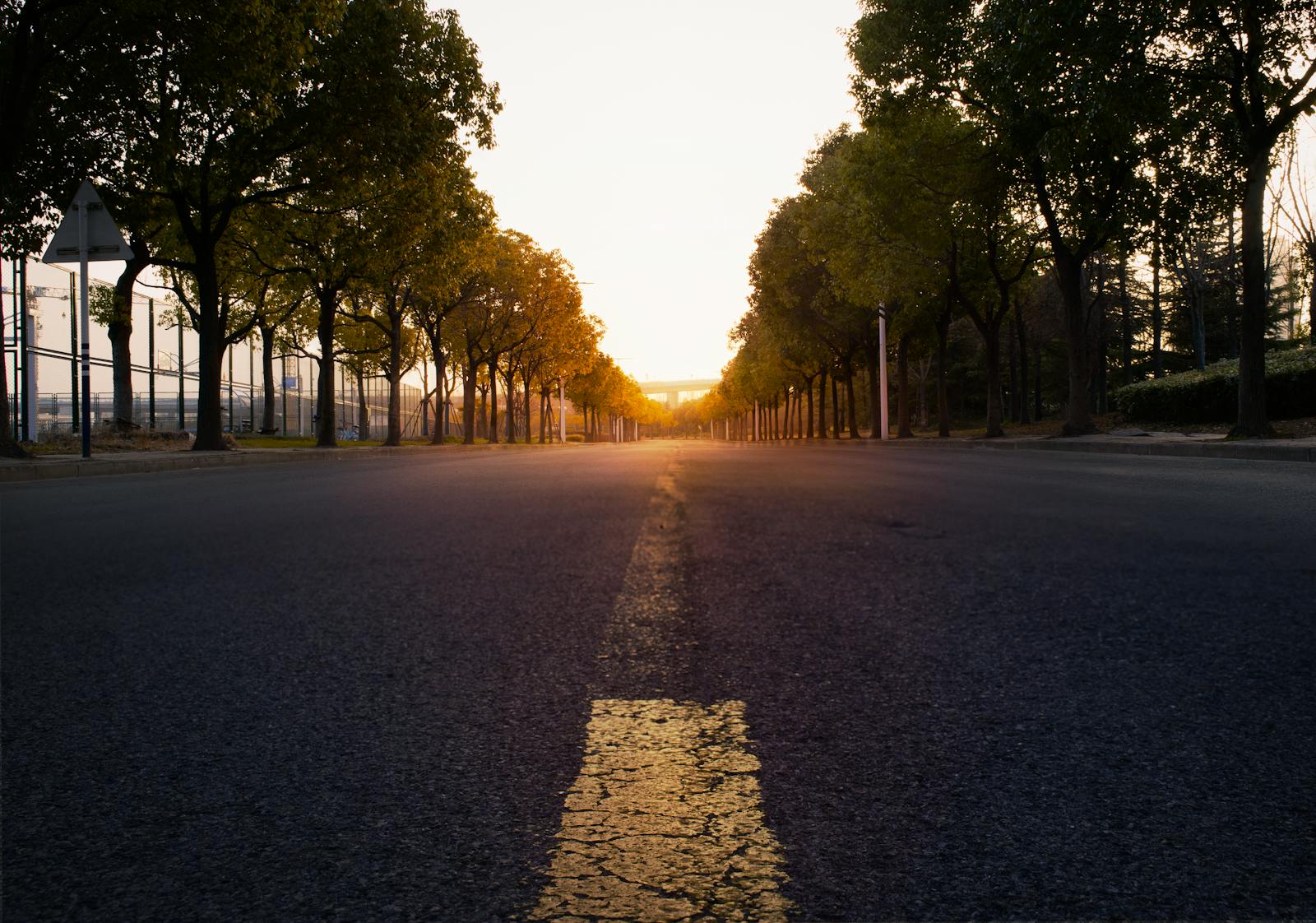
Don't pick a route. Walk out your front door and turn whichever direction feels right. When you hit an intersection, decide in the moment. The point is to keep the decision-making improvisational, not pre-planned.
Don't set a timer. Walk until you feel like stopping. Some days that's fifteen minutes. Some days it's an hour. The variable length is part of the exercise, if you can even call it that.
Don't try to think about anything specific. Don't use the walk as a brainstorming session or a moving meditation. Those are fine activities, but they're different activities. This is about removing the agenda entirely.
And don't track it. No step counts, no distance, no route maps. The moment you introduce measurement, you've reintroduced the performance framework. The whole point is to step outside that framework for a while.
Some days it will feel like nothing happened. You walked around for twenty minutes, came home, and got on with your day. That's fine. That's the point, actually. Not every walk will hand you a revelation or a creative breakthrough. Some walks just recalibrate your nervous system so quietly you don't notice until later. Until you realize you're less reactive in a meeting, or a sentence you've been struggling with suddenly writes itself, or you fall asleep fifteen minutes faster than usual. The benefits of letting your default mode network run aren't always dramatic. They're cumulative.
Other days, something will click. A connection you couldn't force. A feeling you didn't know you were carrying. An idea that needed empty cognitive space to finally surface. You won't be able to predict which walks produce what. And that unpredictability is a feature, not a flaw. It means you've genuinely surrendered the outcome.
The thing about not producing anything
We live in a culture that treats the mind like a factory. Inputs, outputs, efficiency metrics. Even wellness has been absorbed into this logic. Meditate to be more productive. Exercise to perform better at work. Sleep to optimize tomorrow's output.
Walking without a destination refuses that framing. It doesn't optimize anything. It doesn't produce content for your social media or data for your health app. It just lets you be a person moving through space, thinking whatever you think, noticing whatever you notice.
And the strange paradox is that this non-productive state often produces the most valuable things. The realization you've been avoiding. The idea that solves a problem you'd been overthinking. The emotional clarity that three hours of journaling couldn't unlock.
Your brain knows how to do extraordinary work. It just needs you to stop supervising it for a while. The walk with no destination is one of the simplest ways to step aside and let it.
Most mornings, I come back from those walks and can't tell you what I thought about. The route blurs. The time collapses into something shapeless. But I sit down, and the work comes easier, and the day feels like it has a little more room in it. That's all. A walk that asks nothing, and a mind that quietly answers anyway.
What’s Your Plant-Powered Archetype?
Ever wonder what your everyday habits say about your deeper purpose—and how they ripple out to impact the planet?
This 90-second quiz reveals the plant-powered role you’re here to play, and the tiny shift that makes it even more powerful.
12 fun questions. Instant results. Surprisingly accurate.