Trust isn't always built in moments of perfection—it often forms when someone watches you stumble, sees how you recover, and decides to stay through your becoming.
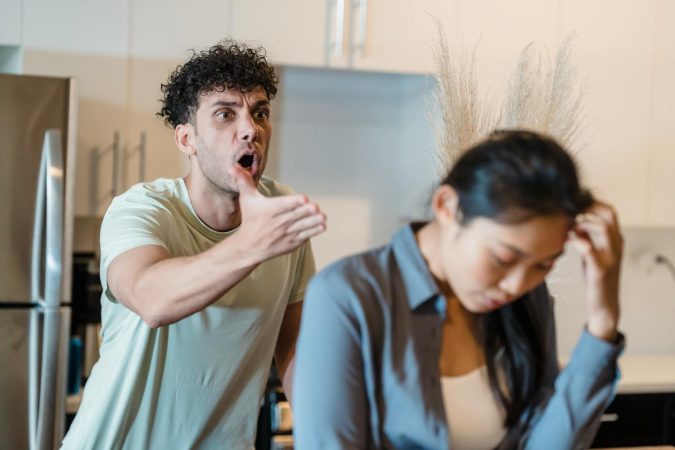
You're standing in a kitchen that smells like garlic and something slightly burnt — a pan of cashew cream sauce that's gone just past golden. Your partner just said something sharp about the dinner you've spent an hour on. Not cruel, but pointed enough to land: You know, this would have been easier if we'd just ordered takeout. You watch yourself snap back, a little too loud, a little too fast. The words leave your mouth and you can feel them hanging there, occupying real space between the stove and the sink. Your partner goes quiet. You go quiet. The faucet drips. And then comes the part nobody prepares you for: the ten seconds after, when you're deciding what kind of person you're going to be about this.
If you've ever transitioned to a plant-based lifestyle with a partner, a roommate, or inside a family that didn't come along for the ride, you know this kitchen. You know the friction that lives inside something as intimate as what we eat — the eye rolls when you suggest a new recipe, the loaded silence when the holiday table looks different this year, the unspoken accusation that your choices are a judgment of theirs. Food is never just food. It's identity, memory, care, control, and love all tangled together on a single plate. And when something goes wrong in that space — when frustration boils over about something that's supposedly just about dinner — it's almost never really about dinner.
Most conversations about trust treat it as binary — you have it or you don't, it's broken or it's intact. The conventional wisdom positions trust as something fragile, a glass thing that shatters on impact and can only be painstakingly reassembled. There's truth in that framing. But it leaves out an entire category of trust that doesn't emerge from consistency or reliability. It emerges from rupture. From the ugly moment. From what someone does in the aftermath of handling something badly, and from what the person watching decides to do with that information.
The counterargument worth taking seriously: isn't staying after someone behaves badly just a euphemism for tolerating poor treatment? Can't watching what someone does next become a way to rationalize enduring cycles of harm? Yes. It absolutely can. The distinction matters enormously, and I want to draw it carefully.
The do-over nobody talks about
There's a concept in relationship psychology called the "do-over" — a deceptively simple tool where, after a misstep, one person pauses, takes a breath, and says something like, OK, let's try that again. As described by clinicians writing for Psychology Today, the do-over functions as a shortcut to acknowledgment, apology, forgiveness, and learning — all compressed into a single small act of relational courage.
What makes it work isn't the erasure of the mistake. It's the implicit agreement between two people that the mistake doesn't define the next hour, the next day, or the relationship itself. Research in relationship psychology suggests that mistakes handled well strengthen individuals and relationships more than not making mistakes at all. That's a radical reframe. It suggests that the never-fight, never-fumble, never-say-the-wrong-thing ideal isn't just unrealistic — it's actively less bonding than the messier alternative.
Anyone who has navigated a significant dietary shift knows this intuitively. The first time you cook a plant-based meal that genuinely doesn't work — the tofu scramble that tastes like wet cardboard, the seitan that could sole a shoe — and your partner makes a face, and you feel the heat rise, and someone says the wrong thing? That's not a disaster. That's an invitation. The question is whether both people can say, OK, that was bad. The food and the fight. Let's try again.

Why the aftermath matters more than the act
Think about the last time someone disappointed you in a space that felt personal — not betrayed you, but disappointed you. The dismissive comment about your meal prep. The partner who "forgot" your dietary needs at the restaurant. The friend who made the thousandth protein joke. What do you remember more: the moment itself, or what happened in the five minutes after?
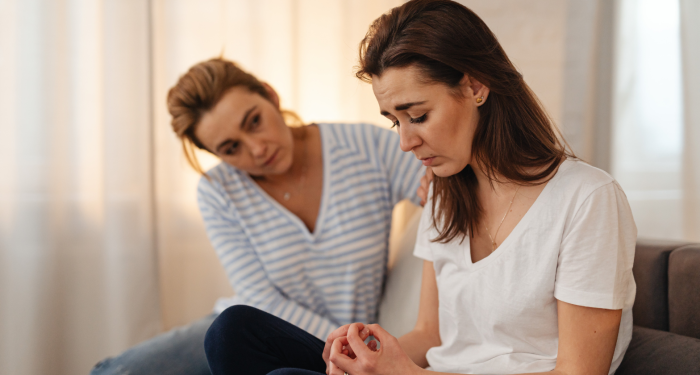
Most of us carry our sharpest relational memories not from the wound but from the response. The apology that came too late or not at all. The deflection that told you the other person cared more about being right than being kind. Or — and this is the version that builds something — the moment someone stopped, looked at you, and said, That was dismissive. I know. Let me try again.
Research covered in Forbes explains that when a stressful relational experience ends, the resulting relief activates reward circuits in the brain. The contrast between tension and resolution can make even small gestures of repair feel intensely meaningful. After an argument that ends with honest accountability, the warmth that follows isn't manufactured — it's neurologically amplified. The brain is saying, We survived that. We're safe again.
But under unhealthy conditions, the same mechanism fuels what researchers call intermittent reinforcement: the unpredictable cycle of conflict and warmth that makes chaotic relationships feel magnetic. The same Forbes analysis draws a direct parallel to gambling psychology, where B.F. Skinner's classical research demonstrated that unpredictably reinforced behaviors become remarkably persistent. So the question becomes: how do you tell the difference?
The line between repair and repetition
The answer isn't complicated, but it requires honesty.
Repair looks like someone acknowledging what happened without minimizing it. It looks like changed behavior over time, not just a good apology in the moment. It looks like the partner who mocked your lentil soup last month and now asks, genuinely, Can you show me how you make that dressing? Relationship experts acknowledge that sometimes the quick second chance works in the moment, but the underlying pattern requires a longer, planned conversation about how to work together to learn and change.
Repetition looks like the same apology on a loop. It looks like someone who is very good at the five minutes after, but never changes the five minutes before.
The trust I'm describing — the kind that forms when someone sees you handle something badly and chooses to stay — only earns that name when the staying is informed by evidence. Not by hope alone, not by the neurological high of relief, but by the observable pattern of someone doing the work that comes after the words.
This is also where acceptance research offers a useful lens. The differences that draw us to our partners often become sources of friction — and few lifestyle differences create more daily friction than food. Acceptance doesn't mean pretending the friction isn't real. It means recognizing that the person in front of you is not a project to fix. And paradoxically, that acceptance is often what creates the safety needed for genuine change. The partner who feels accepted rather than judged for their food choices is far more likely to reach for the oat milk on their own.
What the person staying is actually doing
We talk a lot about what the person who messed up needs to do. Less about the courage required from the person who stays.
Choosing to remain present after watching someone handle something poorly is its own act of discernment. It requires you to hold two truths simultaneously: this person did something that hurt me, and this person is not reducible to the thing they just did. That's not naive. It's actually one of the more sophisticated cognitive moves a human being can make.
The Forbes piece on post-hardship bonding references research on dyadic coping showing that couples who face challenges together often develop increased closeness, trust, and relationship satisfaction — but with a critical caveat. The strengthening effect is most reliable when the adversity is external. When the relationship itself is the source of distress, the resulting bond can be more complicated. So when someone handles something badly within the relationship and you choose to stay, you're not staying because the storm brought you closer. You're staying because you watched someone recognize the storm they created and decide to learn weather patterns. That's a different thing entirely.
I think about the people who struggle most with closeness — the ones who were deeply open once and learned the wrong lesson from having that openness met with carelessness. For them, this kind of trust is the hardest to build and the most transformative when it arrives. Because it answers the question their nervous system has been asking for years: If I'm seen at my worst, will I be left?
The shared table that survives the fight
This isn't only about romantic partnerships. Some of the deepest trust I've experienced has been in friendships — specifically the ones where both people stopped performing and started telling each other what was actually happening. Those friendships almost always became rare because at some point, someone said or did the wrong thing and the other person didn't disappear.
In the plant-based community, this test arrives constantly. The friend who slips up at a barbecue and eats something they said they wouldn't. The partner who stress-eats their way through a bag of cheese puffs during a terrible week and feels the double shame of both the emotional spiral and the perceived failure. These moments are not moral catastrophes. They are human. And the people who meet those moments with presence instead of judgment — who say I'm still here, tell me what's actually going on — are the ones who build the kind of trust that sustains not just a relationship but a lifestyle change.
Because here's what the wellness world rarely admits: nobody maintains a plant-based life long-term through willpower alone. They maintain it through the quality of their relationships. Through the partner who learns to cook one great vegan dish. Through the friend who texts a restaurant menu ahead of time. Through the family member who stops making it a debate. That relational scaffolding is the infrastructure of sustainable change — and it's built, brick by brick, in the aftermath of getting things wrong.
A trust that is earned, not given
The version of trust described in this title — the kind that forms when someone watches you handle something badly and stays — cannot be manufactured. You cannot stage it. You cannot shortcut it. It requires a real failure and a real witness.
For the person who messed up, the work is accountability without self-destruction. Owning what happened without making the other person manage your guilt about it. For the person who stayed, the work is discernment without cynicism. Watching what happens next with clear eyes, not looking for proof of damage or proof of perfection, but proof of effort.
That mutual effort — the fumble and the grace that follows — produces something no amount of smooth sailing can. A shared knowledge that this relationship has been tested by the people inside it and chosen anyway. Not once, in some dramatic declaration, but in the small repeated act of trying again after getting it wrong.
The kitchen still smells like garlic and something slightly burnt — the cashew cream sauce that started all of this. The faucet still drips. But someone has turned from the stove and said, with no performance at all, I'm sorry. That came out wrong. Can I try again?
And someone else has said yes.
That yes is the door. And walking through it, together — back to the cutting board, back to the shared meal, back to the life you're building one imperfect dinner at a time — is where the real thing begins.
If You Were a Healing Herb, Which Would You Be?
Each herb holds a unique kind of magic — soothing, awakening, grounding, or clarifying.
This 9-question quiz reveals the healing plant that mirrors your energy right now and what it says about your natural rhythm.
✨ Instant results. Deeply insightful.

Tessa Lindqvist
She/Her
Tessa Lindqvist writes about cities, travel, and the quiet rituals that make a place feel like home. Originally from Stockholm, she has lived in five countries and spent a decade writing about urban life, sustainable travel, and the intersection of culture and place. Her work focuses on how people build meaningful lives in the cities they choose. Based in Los Angeles.
More Articles by Tessa