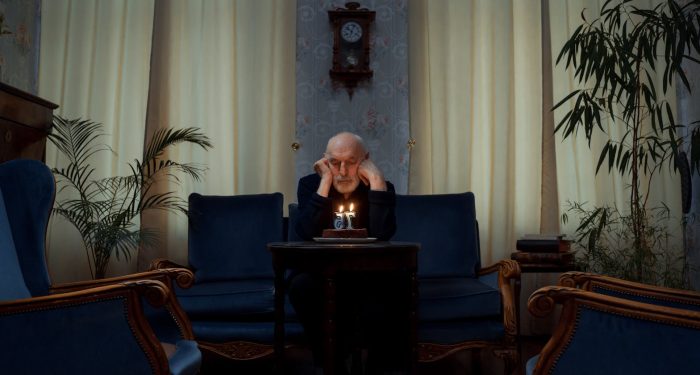
You can be deeply liked and deeply unknown at the same time—a loneliness that flourishes in full rooms and active group chats, where everyone recognizes your performance but nobody sees the person behind it.
Someone was saying my name across the table, asking if I wanted another glass of wine, and I smiled and said yes and kept laughing at the story being told, and the whole time I was performing a version of myself that everyone at that dinner recognized and no one actually knew. The evening was warm. The company was good. I liked these people. They liked me. And somewhere between the appetizer and dessert, a familiar feeling settled in, quiet as fog: I was completely surrounded and completely unseen.
That feeling doesn't have a clean name. It's not the loneliness of empty apartments or canceled plans. It's a different species, one that lives inside full calendars and group chats and birthday invitations. The conventional wisdom says loneliness is about isolation, about not having enough people around you. Fix the quantity, fix the problem. But a growing body of research suggests that framing misses something fundamental about how disconnection actually works.
The strongest counterargument, of course, is that this sounds like a luxury problem. Millions of people genuinely lack social contact. Recent research shows that many Americans report feeling lonely every day. Many of them would trade their empty evenings for a crowded dinner table in a heartbeat. That's real, and it matters. But the research increasingly shows that the crowded dinner table carries its own risk, one that's harder to spot precisely because it looks, from the outside, like everything is fine.
The gap between being included and being known
The science on this is sharper than you'd expect. Studies have found that people who felt lonelier than their level of social connection would predict faced higher risks of cardiovascular disease and other health conditions, even after accounting for demographics, behavior, and existing health. Two people at the same party. Same number of conversations per week. Entirely different health trajectories. Your body doesn't respond to your contact list. It responds to whether you feel met. Research points toward a clear conclusion: loneliness depends on feelings, not just social contact, and can strongly affect long-term physical and mental health.

This is the quiet version of loneliness that popularity can't fix. Being well-liked is not the same as being well-known. Everyone knows your personality but nobody knows your mind. You're invited to everything. You're the person people describe as easy to be around. And that ease becomes a trap, because it was built on years of editing yourself down to the version that gets the warmest reception.
How the performance becomes the person
From a humanistic psychology perspective, this pattern has deep roots. As one analysis in Psychology Today puts it, modern social life often rewards performance over presence. Conversations center on productivity, accomplishments, and efficiency. People exchange updates rather than experiences. The pressure to present as capable, positive, or doing well means that over time, connection becomes conditional. Rather than feeling known, people feel managed.
I think about this when I notice how differently I talk to my four closest friends versus the wider circle I see at parties. With Sofia or Rita, I can say something half-formed and ugly and still feel like the room holds. With the wider group, I'm editing in real time, choosing the funnier version of the story, leaving out the part that doesn't land well in a crowd. It's not dishonest exactly. But it's not the whole picture. And when you only ever show the curated cut, people end up liking someone who doesn't fully exist.
The Psychology Today analysis describes this as a cycle: when people sense that their value depends on meeting expectations, they remain socially engaged while becoming increasingly disconnected, both from others and from themselves. Loneliness grows not because others are absent, but because the self feels unwelcome.
That last phrase stopped me. The self feels unwelcome. Not rejected. Not excluded. Unwelcome, in the way a house can be full of furniture and still feel like nobody lives there.
The loop that keeps tightening
Research has tracked how this plays out in real time. Studies following adults over multiple days, using smartphone prompts throughout the day, found that feelings of loneliness coincided with perceptions of social threat — exclusion, criticism, devaluation — which in turn changed behavior. People shared less, interacted less, pulled back just slightly. Then the emotional withdrawal reinforced the threat perception, and the loop repeated. No dramatic event required. Just small moments, stacking into something structural.
The popular person who doesn't call because they assume everyone is busy. The liked person who doesn't share because the group expects them to be the easy one. The visible person who becomes invisible to themselves because they've been performing so long they forgot what the original material even sounded like.
Why "just put yourself out there" misses the point
Most public health messaging around loneliness focuses on expanding social networks through advice to put yourself out there. Join a club. Get off the couch. Make more plans. Experts acknowledge that joining groups can help, but with a significant caveat: just joining a group may not be sufficient, especially if you don't feel any kind of connection or acceptance within that group.
That distinction matters enormously for the kind of loneliness we're talking about. The person who feels invisible at a crowded table doesn't need more tables. They don't lack social opportunities. They lack emotional safety within the ones they already have.
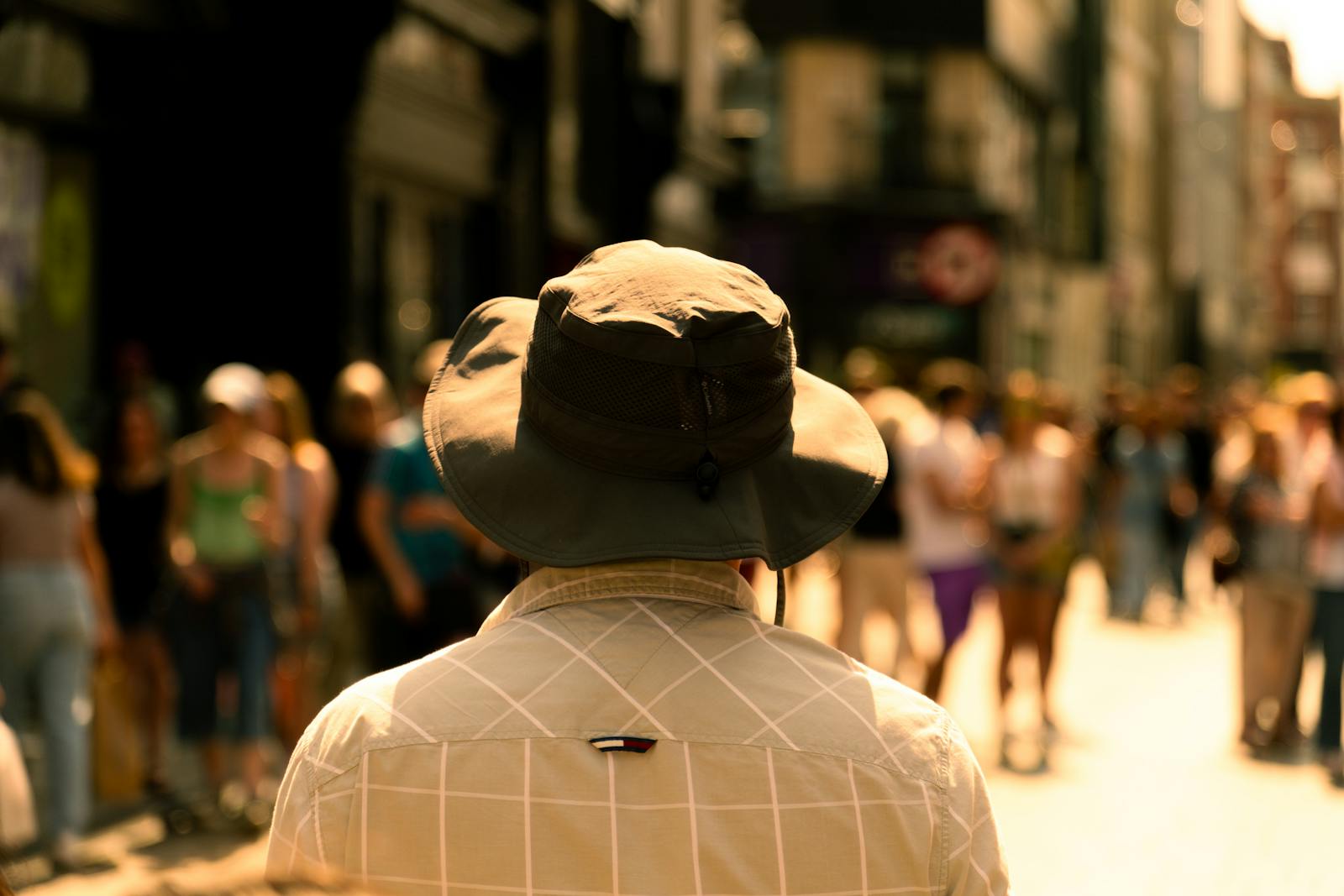
The fix isn't just more interaction. It's different interaction. Ones where sharing feels less risky. Where being imperfect doesn't mean being abandoned.
Experts have also pointed to something that works in the opposite direction: rather than looking inward, look outward. Research shows that helping others can be just as beneficial as receiving help, sometimes more so. There's something about turning attention toward another person's needs that temporarily short-circuits the self-monitoring loop that sustains loneliness.
The cost of being low-maintenance
There's a particular identity that popular-but-invisible people often carry: the low-maintenance friend. The one who never makes demands. Never causes friction. Never needs anything.
That identity often masks a deeper fear: that needing something means losing the role that made you valuable. Being easy is a survival strategy, often one learned early. The Psychology Today analysis describes how emotional self-protection can come to feel like independence, with people priding themselves on being self-sufficient even as loneliness quietly grows.
The strategies that once ensured safety become the architecture of distance.
I grew up moving between two cultures, two languages, two sets of expectations for what a room full of people should feel like. My Brazilian family celebrated loudness, mess, emotional overflow. My American side valued composure and self-sufficiency. I learned early how to read a room and give it what it wanted. That skill makes you popular. It also makes you a chameleon, and chameleons are admired for their adaptability, not known for their true colors.
Recognizing this isn't the same as fixing it. But it's a starting point. The humanistic psychology framework suggests that connection deepens when people slow down, tolerate emotional risk, and allow conversations to move beyond the transactional. Naming uncertainty. Sharing something imperfect. Staying present with another person's experience without trying to redirect it.
What actually changes things
Screening for the gap between how connected someone appears and how connected they feel may help identify risk earlier than waiting for them to withdraw entirely. But that's a systems-level answer. On a personal level, the shift is smaller and harder.
It looks like telling someone the not-funny version of the story. It looks like saying you're actually not doing great when someone asks how you are and means it casually. It looks like risking the awkward pause that comes when you stop performing and start existing in a room.
It looks like accepting that some people won't know what to do with the unedited you. And that the ones who do are worth more than a full restaurant table of people who like the highlight reel.
The first time I told Sofia something genuinely ugly about how I was feeling, something without a punchline or a silver lining, she didn't try to fix it. She just sat with it. The silence lasted maybe four seconds. It felt like a year. And when she finally spoke, she said something so ordinary I can't even remember the words. What I remember is the weight that left my chest. Not because the problem was solved, but because for the first time in that friendship, I had shown up without a costume and the room didn't empty.
I think about that moment sometimes when I'm back at a dinner table like the one I described at the start of this piece. Wine glasses refilling, laughter cycling through the usual rhythms, someone asking me something easy and expecting the easy answer. The fog still rolls in sometimes. I don't think it ever fully stops for people who learned to perform before they learned to rest. But now I notice it. And I used to believe that noticing was the whole answer. Standing up in three feet of water instead of drowning.
I'm less sure now. Standing up doesn't tell you where to walk. Popularity and invisibility still share the same room, and knowing that doesn't rearrange the furniture. Some nights I show the unedited version and it lands. Some nights I show it and the room gets quiet in a way that doesn't feel like holding. Connection measured by how many people know your silences sounds right until you realize most people don't know what to do with silence at all. Maybe the crowded room stays the loneliest place in the world even after you've named why. Maybe the naming is still worth something. I haven't figured out how much.