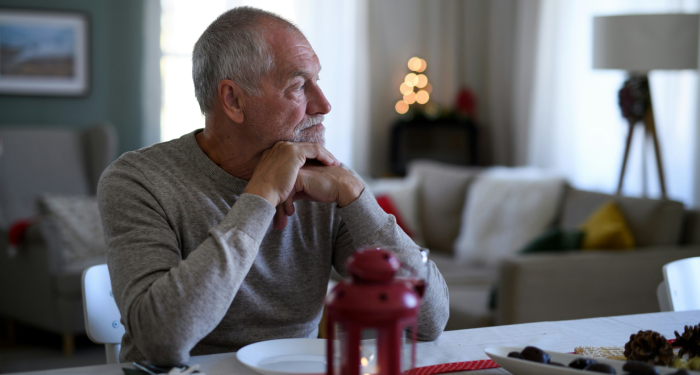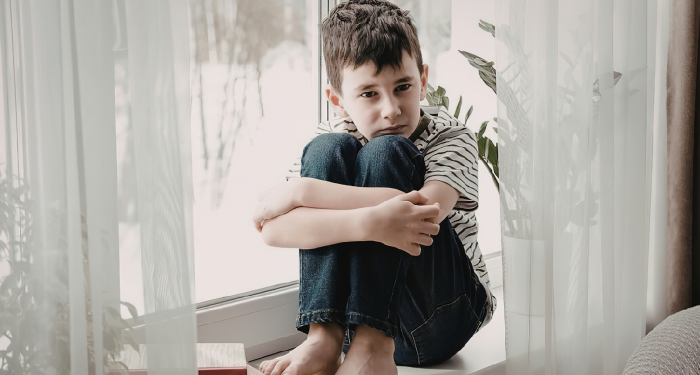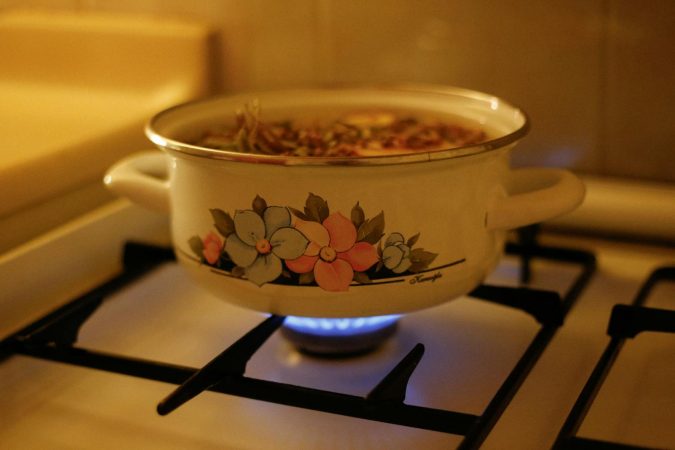
Cooking can be a way to process emotion before you're ready to talk about it, turning mindless motion into quiet clarity while your hands work through what your mind hasn't sorted yet.
Last month, at 11 p.m. on a Tuesday, I stood in my LA kitchen making Swedish pancakes from my mother Kerstin's recipe. I wasn't hungry. I wasn't homesick exactly. Twenty minutes earlier I'd hung up the phone after a conversation that left me holding something I couldn't yet name, and the only thing that felt like the right speed was the familiar motion of thin batter swirling in a hot pan. Everything else was too fast or too still. I made the entire batch. I ate one and a half, standing at the counter. I put the rest in the fridge. And somewhere between the fourth and fifth pancake, I realized I was angry, not sad, which changed everything about what I needed to do next.
Cooking is not always about hunger. Sometimes it's about the space between what just happened and what you haven't yet figured out how to feel about it. The pot of soup that takes shape while you replay what you said and didn't say, the slow, rhythmic chopping that gives your hands a job so the rest of you can fall apart in an organized way. We talk about cooking as nourishment, as creativity, as love language. But there's a whole category of cooking that functions more like a pressure valve. The food is almost incidental. What matters is the motion.
The conventional take on emotional cooking frames it as comfort food: you're sad, so you eat mac and cheese. That's a consumption story. What I'm talking about is a production story. The act of making. The difference between eating your feelings and literally working through them with a knife and a cutting board is worth paying attention to, because the second one has more going on beneath the surface than most people realize.
The counterargument worth taking seriously is that this can become avoidance. If you always cook instead of sitting with discomfort, you might be building an elaborate escape hatch dressed up as productivity. That's fair. But there's strong evidence that what looks like distraction can actually be a form of processing, that your body sometimes needs to catch up to your mind, and that giving it something structured to do accelerates that process rather than delaying it.
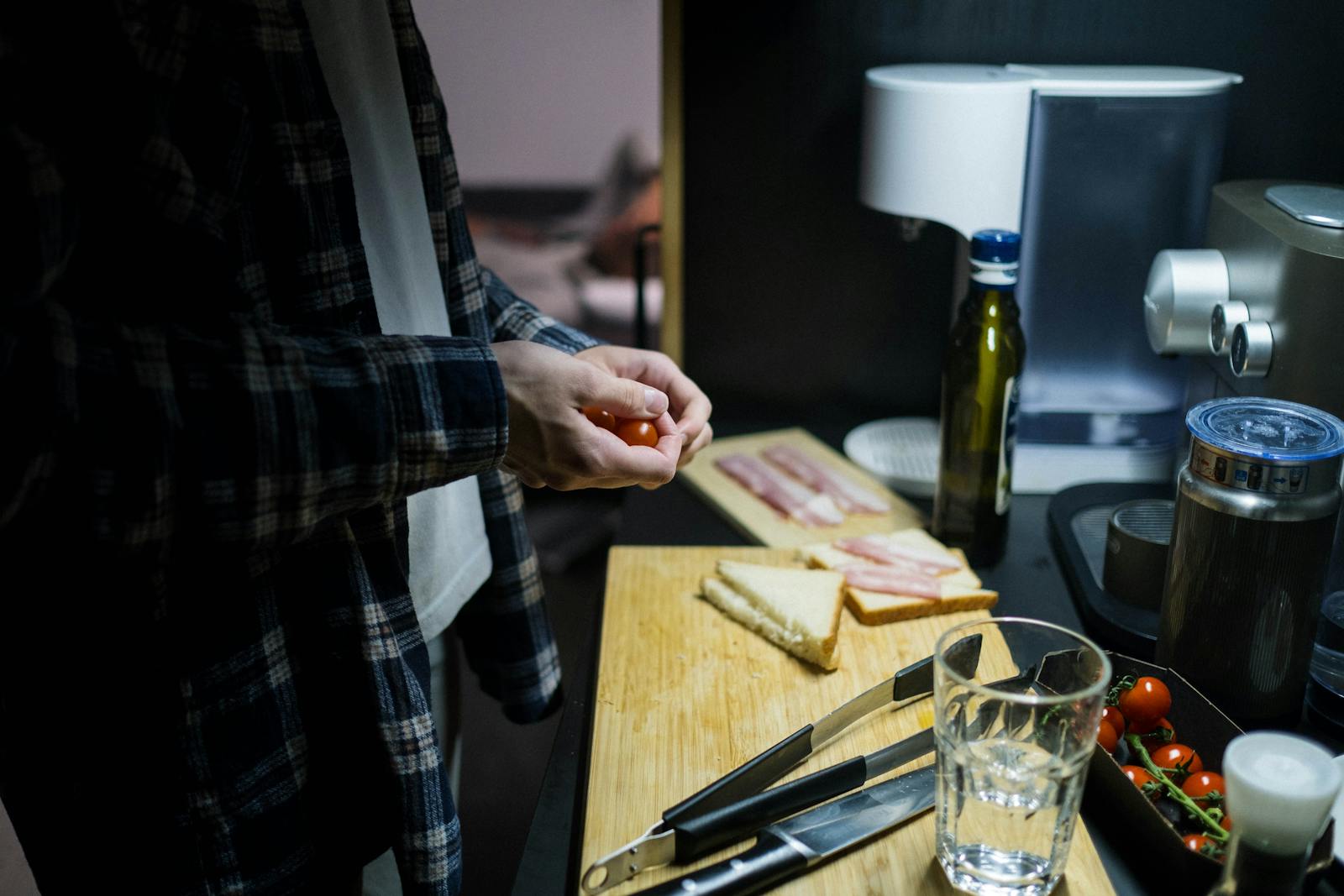
Your body processes what your brain can't yet name
There's a body of research on embodied cognition that explains why reaching for a skillet after a hard conversation isn't just nervous energy. The core idea is that our physical actions feed back into our emotional and cognitive states. We don't just think and then act. We act, and the acting shapes what we think. When participants in studies are made to furrow their brows, they report more sadness when rating photographs. The muscle movement activates the emotional experience. Our faces don't just express what we feel. They help produce it.
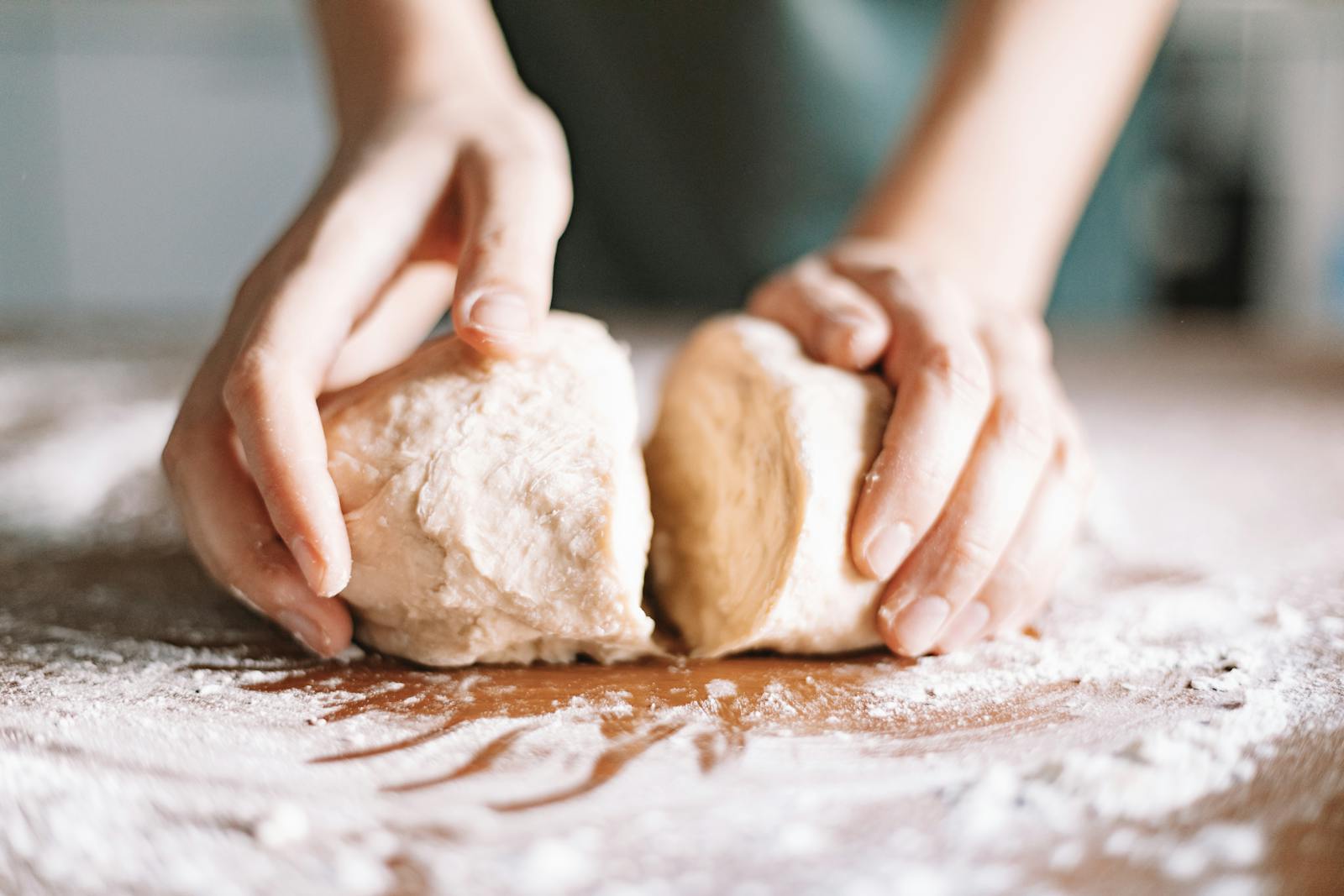
That feedback loop runs in both directions, and it extends far beyond facial expressions. If muscle movements can push us toward sadness, then repetitive hand movements, the kind you do while dicing onions or kneading dough, can push you toward something else entirely. Researchers have found that people who experienced social rejection literally felt colder and preferred warm food afterward. The emotional state changed their physical perception. So when someone gravitates toward a warm stove after a fight, they might be responding to something more precise than habit. The body is looking for warmth it lost. And the steady rhythm of a physical task creates a kind of scaffolding around emotional chaos. You can't spiral the same way when your hands are occupied with something that requires just enough attention to keep you anchored.
The regulation is in the repetition
Research into repetitive behaviors offers an unexpected window into why cooking works as emotional regulation. Conditions like trichotillomania (compulsive hair pulling) and skin picking are understood as attempts to manage overwhelming emotion through physical, repetitive action. The impulse is maladaptive in those cases, but the underlying mechanism, using a motor task to regulate feelings, is widely documented in psychiatric research.
The difference is what you do with that impulse. Cooking gives it somewhere constructive to go. You're still engaging in a repetitive, focused motor task. You're still using your hands to manage what's happening in your nervous system. But instead of damage, you end up with dinner.
This is why the specific kind of cooking matters. Nobody processes a breakup by assembling a charcuterie board. The cooking that works is the kind with texture. Chopping, stirring, kneading, peeling. Tasks that are absorbing enough to require presence but automatic enough to leave room for background processing. Your prefrontal cortex can wander while your hands stay busy, and that combination seems to be where the emotional integration happens.
The kitchen as a regulation space, not an escape
There's an important distinction between avoidance and what researchers call active coping. Avoidance is scrolling your phone for three hours after a fight. Active coping is doing something that allows your emotional system to metabolize the experience at its own pace.
Writing for The Seattle Times, one mental health perspective described emotional regulation as something we need to practice rather than something we address only in crisis. That framing shifts the whole conversation. If regulation is a practice, then the kitchen is one place where that practice happens without anyone needing to call it therapy.
And the practice looks different depending on where you come from. Culture shapes how people process difficulty and what they reach for when they need to steady themselves. A Medical News Today overview of culture and mental health points out that mainstream mental health approaches, often rooted in Western traditions of one-on-one talk therapy, don't always fit how different communities experience or express emotional difficulty.
In some families, the kitchen has always been the place where hard things get processed. Not through conversation but through the shared labor of making food. The grandmother who starts cooking when bad news arrives isn't avoiding her feelings. She's doing what her culture taught her: you hold yourself together by making something with your hands, and the feelings find their way into the room on their own terms.
Why it works after conversations specifically
Hard conversations have a particular quality that makes physical movement afterward almost necessary. During an argument or a difficult disclosure, your body activates. Cortisol rises, your heart rate increases, your breathing changes. But because you're sitting across from someone talking, you can't discharge any of that physical energy. You're flooded and frozen at the same time.
When the conversation ends, all that activation is still there. It's why people pace after fights, or clean the apartment, or go for a drive. The body has been holding tension for the duration of the exchange and it needs somewhere to put it.
Cooking is particularly effective here because it combines discharge (the physical movement) with structure (a recipe, a sequence of steps). Running can help with the first part, but it doesn't give your mind the gentle scaffolding of a process to follow. Cleaning works for some people, but it's often too mindless to engage the cognitive reprocessing that seems to be part of what makes cooking so useful. The kitchen hits a sweet spot: enough complexity to keep you present, enough rhythm to let your thoughts reorganize.
Research on stress and recovery has found that the body has built-in responses to help process stressful experiences, but those responses require the right conditions to activate. You can't force recovery, but you can create an environment that allows it. A quiet kitchen at 10 p.m. turns out to be a pretty good recovery environment.
The meal nobody asked for
There's a particular loneliness to this kind of cooking. You're not making food for a dinner party. Nobody requested this. Sometimes no one else is even home. You're making a meal because you need the process of making it, and when it's done, you might eat half a bowl standing at the counter and put the rest in the fridge.
I think this is related to something broader about how people handle emotional difficulty in private. The people who cook after hard conversations are often the same people who learned early to manage their feelings by themselves. The kitchen becomes a place where you're allowed to be not-okay while also being productive, and for people who were taught that falling apart is unacceptable, that combination is the closest thing to permission they've ever received.
There's a version of this that connects to growing up fast. Kids who were praised for being mature early often become adults who can't just sit with their feelings because sitting still feels unproductive. They need to be doing. The kitchen gives them that permission to feel something while also doing something, which for certain people is the only way the feelings get through at all.
What the food tells you
Pay attention to what you cook when you're processing something. It tells you more than you'd expect.
After anger, it tends to be something aggressive. Bread that needs punching down. Garlic that needs smashing. The physical release is part of the point. After sadness, it's usually something warm and slow. Soup. Stew. Something that simmers and fills the room with steam while you sit on the kitchen floor and stare at the wall for a while.
After a conversation where you didn't say what you meant, it's often something precise. Measured ingredients. Exact temperatures. As if getting this one thing exactly right could compensate for the thing you got wrong an hour ago.
None of this is a substitute for actually dealing with whatever the conversation surfaced. The soup doesn't resolve the conflict. The bread doesn't fix the relationship. But the cooking creates a transition space, a bridge between the raw experience and the point where you can actually think clearly about it.
My morning walks serve a similar purpose for me on ordinary days. But after a hard conversation, walking feels too open. Too much sky, too many directions. The kitchen is bounded. The task is finite. You start, you follow steps, you finish. And by the time you're washing the last pot, something in your chest has loosened just enough that you can finally name what you've been feeling.
The quiet utility of doing something small
We live in a culture that wants us to process everything verbally and immediately. Journal about it. Talk about it. Name the feeling. Text your therapist. And those are real tools. But there's an older, slower kind of processing that doesn't require language at all. It just requires your hands and a little heat and something to cut.
The central insight isn't that cooking is therapeutic, though it can be. It's that the body has its own timeline for understanding what happened to you, and that timeline doesn't sync with the mind's demand for immediate clarity. You can't talk your way to an emotion you haven't physically arrived at yet. But you can chop your way there. You can stir your way there. You can knead dough until your shoulders finally drop and your breathing slows and the thing you couldn't say an hour ago suddenly has a shape.
That's what the midnight cooking is really about. Not avoidance, not comfort, not even nourishment. It's translation. The body taking the raw, unsorted data of a difficult experience and converting it, through heat and motion and repetition, into something the mind can finally work with. The meal is a byproduct. The real product is the moment you set down the spoon and realize you know what you feel.
The meal nobody asked for, made by the person who isn't ready to talk about it yet, served to no one in particular, eaten standing up or not eaten at all. That meal is doing work. It's not a detour around the hard thing. It's the quiet, unmarked road that leads directly through it.
And when someone you love is standing in the kitchen at midnight, making something elaborate after a conversation that clearly went badly, the kindest thing you can do is not ask if they're okay. Just ask if they need you to chop anything.