Delaying mornings isn't about sleep—it's about avoiding the moment when yesterday's unfinished business becomes impossible to ignore. One writer finally stopped blaming her circadian rhythm and faced what she was really afraid of.
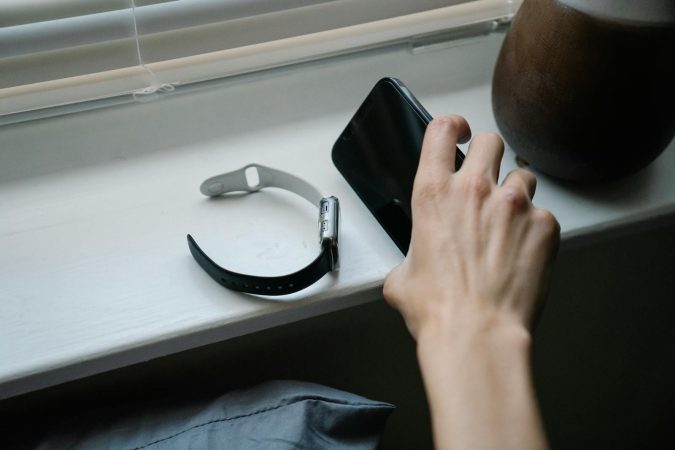
The alarm goes off at 6:14 a.m. and you don't snooze it. You turn it off entirely, with purpose, the way you close a book you've decided not to finish. Then you pull the blanket higher, open your phone, and spend forty minutes reading things you won't remember, waiting for the morning to become less morning. Not because you're tired. Because somewhere between sleep and full consciousness, there's a window where you can feel the weight of the email you didn't send, the conversation you sidestepped, the money you spent on something you already regret. The dark is neutral. Morning has opinions.
For most of my twenties, I called this being a night owl. It was a personality trait, something I'd mention on dates or in group settings with a slight shrug, the way people disclose a mild allergy. I work best at night. I'm not a morning person. I said it so many times it became architecture, a room I lived in without questioning whether I'd built it or just wandered in.
The conventional take on chronotype says some people are wired for mornings and some for evenings, and the healthiest thing you can do is honor your biology. There's real science behind this. Research suggests that chronotype is genetically influenced, not simply a matter of preference or motivation. Studies on shift workers have found that people whose schedules clash with their biological clocks face measurably higher health risks, from metabolic issues to mental health diagnoses. The body has a clock, and fighting it costs you.
I don't dispute any of that. But here's what I've come to believe after years of studying behavioral patterns, first in a therapy office in Berkeley and now through writing: some of us aren't honoring our biology when we stay up late. We're hiding behind it.
The identity we build around avoidance
There's a version of "I'm a night owl" that's genuinely about circadian rhythm. And there's a version that means: the world asks less of me at 1 a.m. No one expects a reply. No decision feels urgent. The day's failures are behind a locked door, and I don't have to face the next batch until the sun forces my hand.
This second version isn't about sleep. It's about what psychologists call avoidance behavior, a pattern so well-documented that it shows up in nearly every model of anxiety. Research on avoidance behavior consistently shows that avoiding feared situations tends to maintain or intensify anxiety over time, rather than reducing it. The relief is immediate. The fear grows.
I recognized this loop in clients long before I recognized it in myself. During my years in private practice, I worked with people who had reorganized their entire lives around not feeling certain things. They didn't call it avoidance. They called it preference, routine, personality. The language of identity is a surprisingly effective shield against self-examination.
I was doing the same thing. Calling myself a night owl gave me a frame that sounded like self-knowledge when it was actually self-protection.
What mornings actually demand
Morning is when the buffer runs out. At night, there's always tomorrow. At 7 a.m., tomorrow has arrived and it brought receipts.
The discomfort isn't about grogginess or early alarms. It's about confrontation. The daylight version of your life includes the unanswered question about whether you're spending your time the way you actually want to. It includes the inbox, the bank balance, the relationship you've been meaning to either repair or leave. Night softens all of that. Morning sharpens it.
Research on shift workers has found that chronic fatigue from circadian disruption is strongly associated with burnout. That data is about shift workers, not freelance writers in Oakland. But the principle translates: when your relationship with time is misaligned, whether by schedule or by emotional avoidance, the cost compounds in ways you don't see until it's structural.
I wasn't burned out from working nights. I was burned out from the low-grade dread that accompanied every sunrise, the accumulated weight of knowing I'd pushed things off again.
The neuroscience of choosing later
The urge to avoid isn't just psychological. It has a biological signature. Research from Mount Sinai has identified distinct dopamine receptors in the ventral hippocampus that appear to govern approach versus avoidance behavior, suggesting neurological hardware dedicated to navigating uncomfortable decisions.
In simpler terms: your brain has hardware dedicated to the decision of whether to move toward something uncomfortable or away from it. And that hardware can malfunction. In animal studies, when certain receptor cells were artificially activated, subjects became measurably less fearful. The circuitry for avoidance isn't character. It's mechanism.
This doesn't excuse the pattern. But it reframes it. I wasn't lazy for dreading mornings. I was running a well-worn neural program that rewarded me with short-term relief every time I chose 2 a.m. over 6 a.m.
Separate neuroscience research covered by Wired has identified a specific brain circuit that may explain procrastination itself, reinforcing the idea that avoidance isn't a personality flaw. It's a default setting that can, with effort, be overridden.
The year I stopped
I didn't have a dramatic wake-up call. There was no rock bottom, no crisis that forced my hand. What happened was duller and, honestly, more unsettling: I noticed that my best mornings were the ones where I hadn't avoided anything the night before.
When I'd sent the difficult email before midnight, 6 a.m. felt fine. When I'd looked at my finances instead of scrolling, the alarm didn't feel like a threat. Morning wasn't the problem. Morning was just the environment where my avoidance became visible.
So I stopped calling myself a night owl. Not because I suddenly loved mornings, but because the label had become a wall I was hiding behind. There's a real difference between a boundary and a wall, and I'd been confusing the two for years. A boundary protects you while still letting life in. A wall just keeps everything out, including the parts of yourself that need air.
The shift wasn't about waking up earlier. Some weeks I still work late. The shift was about honesty. About asking whether my schedule served my work or served my fear.
Identity as armor
People who study the evolutionary origins of self-defeating habits point out that patterns which look irrational often have a deeper logic. The behavior protected us at some point. It solved a real problem. Then the problem changed but the behavior stayed, hardened into identity.
"I'm a night owl" was armor. It protected me from the vulnerability of admitting that I was anxious about my own life. That I didn't fully trust my own decisions. That daylight felt like a courtroom and I was both the defendant and the judge.
I see this pattern constantly, not just around sleep but around dozens of identity labels people wear to avoid examining what's underneath. I'm not a relationship person. I'm bad with money. I'm not the type who exercises. Each one may contain a grain of truth. Each one also conveniently closes the door on change.
The version of yourself you perform can become so familiar that you mistake it for the real thing. I performed "night owl creative" for a decade. It was comfortable. It was also a cage with good lighting.
What actually helped
I won't pretend I overhauled my schedule with some elegant morning routine. What I did was less photogenic. I started processing things before bed instead of after waking up.
Ten minutes at night: what did I avoid today, and why? Not journaling in the aesthetic sense. More like an audit. Did I push that conversation off because it genuinely wasn't the right time, or because the right time will never come if I keep deciding it hasn't arrived yet?
I also started running in the morning instead of the evening. Not because morning runs are inherently better. Because they forced me outside before I had time to build a case for staying in. I use running to process complex thoughts without trying to solve them, and it turns out 6:30 a.m. is when the complex thoughts are loudest and most useful, before I've had a chance to muffle them with productivity.
The clinical literature on breaking avoidance says awareness is the first step, but awareness alone isn't enough. You have to build a tolerance for the discomfort you've been dodging. Gradually. In small, deliberate exposures. My morning runs were that. My nightly audits were that. Neither was revolutionary. Both were uncomfortable in a productive way.
The part nobody talks about
When you stop avoiding mornings, you don't suddenly love them. What happens is subtler. The dread gets quieter. Not because the mornings changed. Because you did.
You start carrying less into the next day. The inbox still exists. The decisions still wait. But they wait without the added weight of knowing you've been running from them.
I still stay up late sometimes. I still have nights where the work flows better after midnight and I ride that wave. The difference is I know why I'm up. And I can tell the difference between a night that serves my writing and a night that serves my fear.
That distinction took me years to make. I can recite studies about behavioral change from memory, but changing my own behavior required something studies can't give you: the willingness to let a comfortable identity die so a more honest one could replace it.
Morning didn't need me to love it. It just needed me to stop pretending it was the enemy.
The enemy was always the gap between who I was at 1 a.m., safe and unchallenged, and who I'd have to be at 7 a.m., accountable and visible. Closing that gap didn't require a better alarm clock. It required admitting the gap existed.
Which, if you're reading this at midnight and nodding, you probably already know.