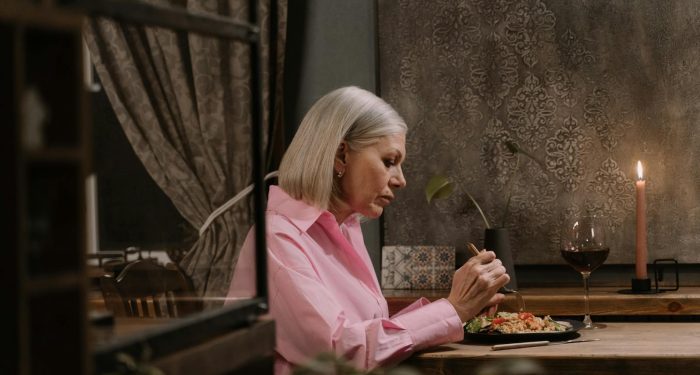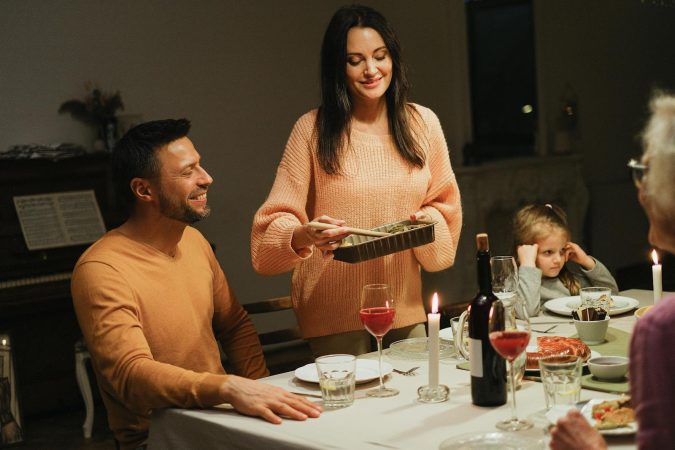
The person who remembers everyone's allergies, preferences, and life details is doing invisible emotional labor that goes almost entirely unappreciated—and nobody thinks to check in on them.

Add VegOut to your Google News feed. 
The most overworked person in your family isn't the one with the longest commute or the most demanding job. They're the one who knows your partner's name, your kid's shoe size, your best friend's dietary restriction, and the exact brand of hot sauce your uncle refuses to eat without. They carry the entire relational architecture of your family in their head, and almost nobody ever asks them how they're doing.
The conventional wisdom says these people are "just naturally good at that stuff," as if remembering that your cousin's daughter is allergic to tree nuts or that your grandfather prefers his coffee with exactly one sugar is some kind of personality trait rather than ongoing, invisible labor. We've been conditioned to frame this kind of attentiveness as a gift, a charming quirk, maybe even a love language. What gets lost in that framing is the cost. The person doing this work is performing a function so seamlessly that the people who benefit from it rarely pause to wonder whether the person behind the function is okay.
The weight of being the one who remembers
Every family has a central nervous system. One person who tracks the allergies, mediates the tensions, sends the flowers, coordinates the visits. Sometimes they volunteered for the role. More often, they just noticed what needed doing before anyone else did, and by the time they were twelve, the pattern was set.
This kind of cognitive and emotional labor doesn't show up on any to-do list. There's no calendar reminder for "remember that your sister felt left out at Thanksgiving three years ago and still hasn't fully gotten over it." There's no app that tracks the fact that your dad doesn't like being called before noon, or that your mother-in-law will say she doesn't want anything for her birthday but will be quietly hurt if you take her at her word.
The person holding all of this rarely describes it as labor. They describe it as caring. And because caring is supposed to feel good, admitting that it's also exhausting can feel like a betrayal of their own identity.
Research on caregiver burnout suggests that we've made a habit of framing this kind of exhaustion as a personal failure, something to be solved with bubble baths and boundary-setting, when the deeper issue is structural: the unequal distribution of emotional labor within families and communities. The person burning out isn't burning out because they forgot to meditate. They're burning out because the system was built to run on their unpaid attention.
Research on family caregiving reinforces this: burnout isn't an isolated episode but a recurring condition, closely tied to the realities of caregiving rather than moments of acute crisis. The people most affected aren't necessarily those dealing with medical emergencies. They're the ones doing the quiet, daily maintenance that nobody sees.
How the role gets assigned (and why it sticks)
Families are remarkably efficient at distributing roles early. The funny one. The ambitious one. The difficult one. And the reliable one: the person who gets praised for being thoughtful, responsible, tuned-in. That praise feels good at eight years old. By thirty-eight, it can feel like a cage with a very polite lock.
The psychological roots run deep. Research on attachment-based therapy suggests that many people who become hyper-attuned to the needs of others developed that skill in childhood as a way of managing insecure or anxious attachment. They learned early that being useful was the safest way to be loved. The attentiveness wasn't just kindness; it was strategy, a way of securing connection in an environment where connection felt conditional.
None of this means their care isn't genuine. It is. But the origin story matters because it explains why stepping back feels so terrifying. If your sense of belonging is built on being the person who remembers, what happens to your place in the family when you stop?
We previously explored a particular kind of loneliness that belongs to people who held everyone together so convincingly that nobody thought to check on them. The loneliness isn't dramatic. It doesn't announce itself. It sits quietly at the center of a busy, well-connected life, undetected precisely because the person experiencing it is so good at making everyone else feel seen.
The paradox of being indispensable
Here's what makes this dynamic so stubborn: the person who holds everything together is often the last person anyone worries about, specifically because they seem so competent. Their capability becomes a kind of camouflage. When someone always has the right answer, the right snack, the right thing to say at the funeral, it's easy to mistake that preparedness for ease.
My roommate pointed this out to me last month while I was assembling a care package for my mom in Miami, tucking in her favorite guava paste and a card for a neighbor who'd just had surgery. "You know every single thing your mom likes," she said. "Does she know what you need right now?" I didn't have a fast answer.
The question wasn't an accusation. It was an observation about how one-directional these flows of attention can become, not out of selfishness on anyone's part, but because the system trains everyone involved to look in one direction.
The United Nations' work on mental health and wellbeing recognizes what individual families often miss: that millions of people go without mental health support not because they don't need it, but because the structures around them don't make it available or visible. Scale that down to the family unit and the pattern is the same. The person who organizes care for everyone else often has no infrastructure of care organized around them.
When "checking in" isn't enough
The internet loves to say "check on your strong friend." The sentiment is real. The execution tends to be shallow. Sending a text that says "hey, just checking in ❤️" to the person who has been running emotional logistics for your entire family is a little like thanking a restaurant's head chef by bringing them a bag of chips. The gesture is kind. It doesn't match the scale of what they've been doing.
Genuine reciprocity looks different. It looks like remembering their preferences without being told. Noticing when they seem tired and not just asking "are you okay?" but actually rearranging plans so they can rest. It means learning the details they've been tracking for you and tracking a few of theirs in return.
There's a version of this that goes deeper. Some families never develop the capacity for mutual care because the roles calcified too early and nobody examined them. The reliable one keeps being reliable. The rest of the family keeps receiving. Years pass. And then one day the reliable one either breaks down or pulls back, and the family, stunned, calls them "difficult" for the first time in their life. We've written about that exact moment before: the point where someone who spent decades being available finally stops, and the family responds not with concern but with irritation.
That reaction tells you everything about whether the family valued the person or the function.
What this looks like beyond the family
This dynamic doesn't stay at home. It follows people into friendships, workplaces, partnerships. The person who remembers every birthday in their family becomes the person who organizes the office potluck, plans the friend group's trips, keeps the group chat alive. They're rewarded for it, socially, which reinforces the loop.
Research on the hidden toll of caregiving has been documented extensively in the context of parents raising neurodivergent children, where the demands are acute and visible. But the broader pattern applies to anyone whose daily life is organized around anticipating and meeting others' needs. The toll is cumulative. It's not one Thanksgiving dinner or one forgotten birthday that breaks you. It's the compound interest of years of attentiveness flowing in a single direction.
For people from minority communities, the barriers are compounded. Research on mental health access shows that cultural stigma, language barriers, and systemic gaps in care mean that the very populations most likely to rely on family-based caregiving networks are also the least likely to have formal support systems when those caregivers burn out. The person holding the family together may not have anywhere to go when they need holding themselves.
Choosing presence over performance
Last weekend, turning soil at the community garden in Bed-Stuy, I got into a conversation with a woman in her sixties who told me she'd recently stopped hosting Easter for twenty-three family members. "Thirty years," she said. "And not once did anybody ask if I wanted to come to their house instead." She didn't seem angry. She seemed clear. Like someone who'd finally set down a suitcase she forgot she was carrying.
Clarity like hers doesn't come from self-help mantras. It comes from honestly examining what you've been doing, why, and what it's cost. The person who remembers everything is often someone who has been busy, useful, appreciated, and exhausted for so long that they've conflated being needed with being loved.
Untangling those two things is some of the hardest personal work there is. And it doesn't require anyone to stop caring. It requires everyone else to start.
If you recognize yourself in this, the move isn't to dramatically withdraw from your family or deliver a TED Talk at Thanksgiving about emotional labor. The move is smaller and harder. Let a ball drop. See who picks it up. Notice who notices. That information, uncomfortable as it might be, is worth having.
And if you recognize someone else in this: the aunt who always knows, the friend who always plans, the partner who always remembers. Don't just check on them. Study them the way they've been studying you. Learn what they need without asking. That's the language they speak. Meet them in it.
If You Were a Healing Herb, Which Would You Be?
Each herb holds a unique kind of magic — soothing, awakening, grounding, or clarifying.
This 9-question quiz reveals the healing plant that mirrors your energy right now and what it says about your natural rhythm.
✨ Instant results. Deeply insightful.