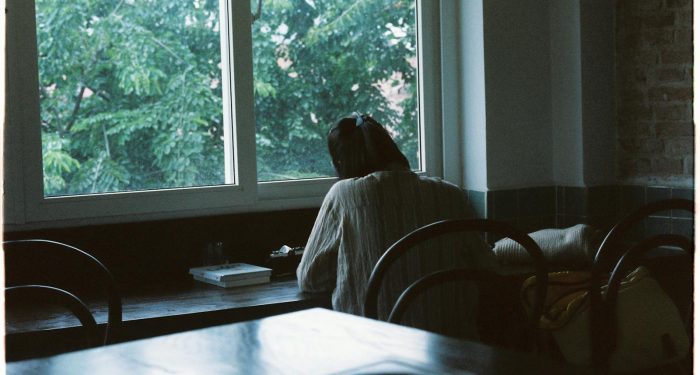
The most genuinely generous people aren't naturally that way—they learned it by discovering how much of themselves they could lose before disappearing entirely.

Add VegOut to your Google News feed. 
The way someone holds their time tells you almost everything about what they've survived. Not the dramatic, headline-worthy kind of survival, but the quieter kind: the years of saying yes until the word lost all meaning, the slow erosion of self that looks, from the outside, like being a wonderful person. The people I've watched move through the world with genuine, unhurried generosity almost always share a particular quality. They know exactly where they end and another person begins. And that knowledge was expensive.
The conventional wisdom celebrates generosity as pure instinct, something the good-hearted simply possess. We admire the friend who always picks up the phone, the colleague who never says no, the partner who anticipates every need before it's spoken. We call these people kind. We call them selfless. We rarely ask what it costs them, because the mythology around generosity doesn't have a line item for cost.
But ask a therapist, and the picture shifts. Clinical psychologists draw a sharp distinction between people-pleasing and genuine kindness, noting that continual people-pleasing can lead to chronic stress, physical ailments, and resentment. The person who gives everything isn't necessarily generous. They might be terrified.
The architecture of over-giving
Self-abandonment doesn't announce itself. It arrives dressed as virtue. You volunteer for the extra shift because nobody else will. You listen to a friend's crisis at 11 p.m. when you have a 6 a.m. flight. You restructure your entire week around someone else's needs, and when someone asks how you're doing, you say "fine" with such practiced ease that you almost believe it.
Experts have identified several habits commonly mistaken for kindness that are actually markers of self-abandonment: constantly apologizing, suppressing your own opinions to keep the peace, over-explaining yourself, and treating other people's emotions as your responsibility to manage. These aren't small quirks. They're a behavioral architecture built over years, often decades.
The foundation is usually laid early. A child who learned that love was conditional on usefulness. A teenager who figured out that being indispensable was the safest way to belong. By adulthood, the pattern is so embedded it feels like personality rather than strategy.
I think about this sometimes on my morning walks in Los Angeles, which I take with no destination and no earbuds, just the sound of the city waking up. Walking alone is one of the few activities that requires nothing of you socially. No performance, no accommodation. Just your own pace. It took me a long time to stop feeling guilty about that kind of unproductive solitude.
My mother, who still lives in Stockholm, once told me something I return to often. She said the Swedish concept of lagom, roughly "just the right amount," applies to giving as much as to anything else. Too little and you're cold. Too much and you disappear. The balance isn't intuitive. You find it by getting it wrong first.
The turning point nobody talks about
Here's what the narrative of effortless generosity omits: the crisis. The moment when the over-giver finally breaks. It might look like burnout, a sudden withdrawal from social obligations, a relationship ending, or a health scare. Sometimes it's quieter than that. A gradual deadening. The realization that you feel nothing when you help someone, because you've been running on fumes so long that the reward circuitry has gone dark.
This turning point is where the real work begins, and research on giving supports an uncomfortable truth: generosity is only sustainable when it doesn't consume the giver. Studies have found that giving to others can boost both mental and physical health, but the inverse is also true: when giving becomes compulsive or self-depleting, those health benefits evaporate.
The people who emerge from this period with a healthier relationship to generosity have typically done something counterintuitive. They've gotten selfish. Or what felt like selfish at the time.
They said no to a favor. They let a call go to voicemail. They chose their own evening over someone else's emergency that wasn't really an emergency. And the sky didn't fall. The friendship didn't end. The world kept turning. That data, collected painfully and personally, is what eventually allows them to give from surplus rather than deficit.
Boundaries as the foundation, not the opposite, of kindness
There's a persistent misunderstanding that boundaries and generosity are at odds. That setting limits makes you less kind. The research consistently says the opposite.
Psychology Today frames it plainly: for many people-pleasers, kindness feels like their North Star, but without boundaries, that kindness becomes unsustainable and eventually corrosive. The distinction matters because it reframes boundary-setting not as a retreat from generosity but as its prerequisite.
Think about the most generous person you know. Not the one who's always frantic, always overcommitted, always martyring themselves on the altar of helpfulness. The other one. The one who gives you their full attention when they're with you, who offers help in specific and manageable ways, who seems to have enough energy for the people they love without running on empty.
That person almost certainly went through a reckoning. They learned, probably through pain, where the line sits between "I want to help" and "I'm afraid of what happens if I don't."
When I lived in Lisbon, I had a neighbor who ran a small bakery. She was the warmest person on the block, always giving away bread, always remembering your name. One day I asked her how she had the energy for it, and she told me she'd closed her first bakery five years earlier because she'd been giving away so much product to friends and family that the business collapsed. The second time around, she said, she learned that a boundary was what kept the bread coming.
The quiet recalibration
What does healthier generosity actually look like in practice? It looks boring, mostly. Unglamorous. Psychology literature on setting boundaries describes prosocial behavior as humanity's saving grace, countering selfishness and aggressiveness, but notes that this prosocial impulse needs structure to remain healthy.
The recalibration tends to happen in small, private moments. You pause before responding to a request. You check in with your own body: is this a yes that feels expansive, or a yes that feels like dread? You stop over-explaining your no. You let people feel disappointed without rushing to fix it.
These are not dramatic shifts. They're the kind of micro-adjustments that nobody notices except you. And they change everything.
The person on the other side of this process gives differently. Their generosity has texture and intentionality. When they show up for you, you can feel the choice in it. They're not there because they couldn't figure out how to say no. They're there because they wanted to be. That distinction is what makes their presence feel so steady.
Why the "effortless" part is a mirage
We love the idea of effortless anything. Effortless style, effortless cooking, effortless kindness. The word itself is a compliment in our culture, implying natural talent, ease, an absence of strain.
But effortlessness is almost always the result of significant, invisible effort. The dancer who looks fluid has trained for years. The cook who improvises beautifully has burned a hundred meals. And the person who gives their time with grace and ease has usually spent years learning to stop giving it to everyone, all the time, at their own expense.
We explored a version of this idea in our piece on how therapists describe women over 60 who appear "put together" but have often lost track of their own desires along the way. The pattern is related: years of orienting around others can produce an external polish that hides an internal void.
The difference between performing generosity and practicing it shows up most clearly in sustained relationships. The performer burns out, grows resentful, withdraws suddenly and dramatically. The practitioner shows up consistently, within their capacity, for a long time. One is a sprint that looks impressive. The other is a pace you can maintain for decades.
Doing less, meaning more
There's a specific kind of freedom in watching someone who has learned this lesson. They're unhurried. They don't volunteer for everything. They might say, "I can't do that this week, but I'm free next Thursday." They've stopped treating their own needs as an inconvenience.
If you recognize yourself in the over-giving pattern, the path forward isn't to stop being generous. That framing turns it into another form of self-punishment. The path is to start noticing the difference between giving because you genuinely want to and giving because you're scared of the alternative.
One is kindness. The other is a survival strategy wearing kindness's clothes.
The people who seem effortlessly generous aren't naturals. They're graduates. They took the hardest course available: learning to treat themselves with the same consideration they'd been offering everyone else. The lesson cost them something. That's what makes their generosity, when they offer it, feel so real.
You can feel it the moment they sit down across from you and give you their full, unburdened attention. That attention didn't come free. It came from every time they chose, against every instinct, to keep some of it for themselves.