Cooking confidence doesn't come from nailing ambitious recipes—it comes from the unremarkable weeknights when you trust yourself enough to skip the instructions and just start cooking.
Most people believe the meals that transform your relationship with cooking are the ambitious ones. The from-scratch pasta on a Saturday. The dinner party showpiece that earns applause. The recipe you bookmarked six months ago and finally attempted with every ingredient measured, every step followed. We've built an entire culture around the idea that cooking confidence comes from nailing hard things. But the psychology points in a different direction. The meals that actually rewire how you feel in a kitchen tend to be quiet, unwitnessed, and a little bit messy. They happen on an unremarkable weeknight when you open the fridge, scan what's there, and just start.
This isn't just a feel-good observation. There's a growing body of psychological research that helps explain why those low-stakes, improvised meals carry so much more weight than the impressive ones. The difference comes down to something deceptively simple: who's making the decisions, and what that does to your brain over time.
The counterargument is worth acknowledging. Recipes exist for good reasons. They reduce cognitive load. They create predictable outcomes. For someone learning technique or building a repertoire, following a recipe is not just useful but necessary. Nobody's arguing you should throw out your cookbooks.
But there's a difference between using a recipe as a tool and needing one as a crutch. And the shift from one to the other reveals something about how we build (or fail to build) a sense of agency, not just in cooking, but across our entire lives.
Why the recipe feels safe
A recipe is essentially an external authority. It tells you what to buy, when to add it, how long to wait, and what the result should look like. When the dish turns out well, the recipe gets the credit. When it doesn't, the recipe takes the blame. Either way, you stay emotionally protected.
This maps cleanly onto what psychologists call controlled motivation: behavior driven by external pressures, expectations, or rules rather than internal interest. Research grounded in self-determination theory has consistently shown that when people act primarily from external structure, their engagement tends to be less sustainable and less satisfying over time, even when the outcomes are technically fine.
The dish came out right. You followed the steps. So why does it feel hollow?
Because you weren't really there. You were executing someone else's decisions. And execution, no matter how precise, doesn't build the same psychological muscle as authorship.
The autonomy gap in your kitchen
Self-determination theory, developed by psychologists Edward Deci and Richard Ryan, identifies three basic psychological needs that drive well-being: autonomy, competence, and relatedness. When those needs are met, people tend to feel more motivated, more engaged, and more alive. When they're frustrated, motivation erodes.
As Psychology Today noted in reflecting on Deci's legacy, his research demonstrated that feeling your motivation drain under external control isn't a character flaw. It's a predictable human response to having your autonomy undermined.
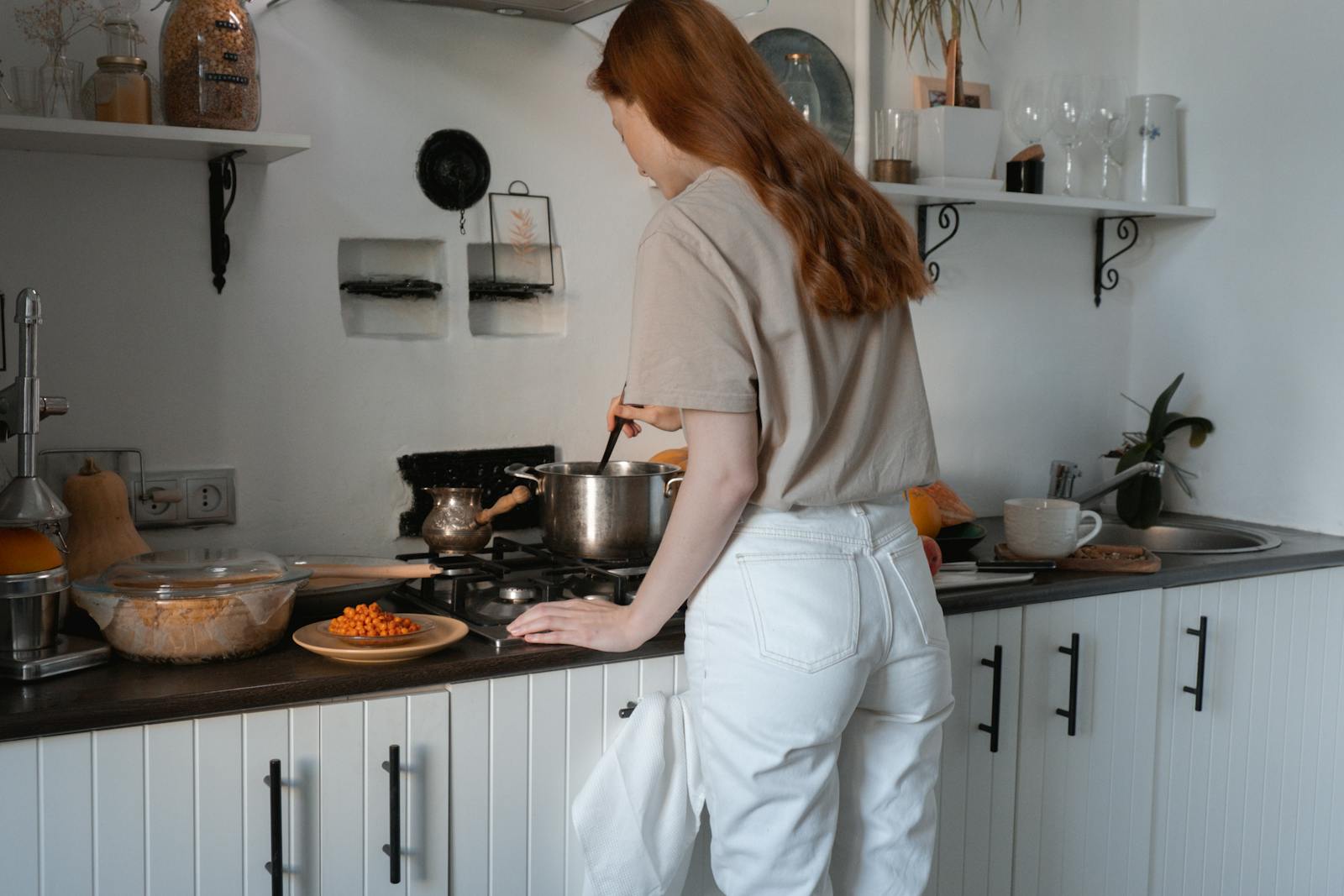
Cooking without a recipe is, at its simplest, an autonomy exercise. You decide what goes in the pan. You decide when it's done. You taste as you go and adjust based on your own judgment, not someone else's instructions.
That might sound trivial. It isn't.
For people who spend their workdays following other people's priorities, hitting other people's deadlines, performing competence on other people's terms, the kitchen can become one of the few spaces where authorship is possible. But only if you actually claim it.
The language trick that changes everything
There's a small but revealing language pattern that shows up in how people talk about cooking. People often frame cooking as an obligation, thinking they should make something healthy or should try a new recipe. The word should turns cooking into an obligation before you've even turned on the stove.
Dr. Nicole Lipkin has written in Forbes about how the word 'should' creates external pressure and frames activities as obligations rather than choices.
People who cook with joy tend to speak differently about it, such as looking forward to experimenting in the kitchen. The shift isn't semantic. It's motivational. It moves cooking from controlled to autonomous motivation, and that one shift changes how the whole experience feels.
The Tuesday night when you skip the recipe isn't really about the recipe. It's about replacing the feeling that one must follow instructions exactly with developing confidence in one's own judgment and ability to improvise.
Habit formation and the myth of the impressive meal
Here's where the cooking-as-event mentality does real damage. When you treat cooking as a performance, something that needs to be impressive to count, you inadvertently raise the stakes on every single meal. And high stakes kill consistency.
A Psychology Today analysis of habit formation identified something that gets overlooked in most self-improvement advice: there's a meaningful difference between building a habit in the foreground (making it a top priority, restructuring your life around it) and building one in the background (integrating it without letting it take over). The piece noted that a lot of habit content is written by and for people who lean intense and prefer obsessional approaches, which means most advice about cooking more often is calibrated for people who want to make it their whole personality.
For everyone else, the path to cooking consistently is lower-key. It means letting a Tuesday dinner be just a Tuesday dinner. Rice and whatever vegetables are about to go bad and a sauce you improvise from what's already open in the fridge.
That same analysis raised another tension worth sitting with: adding variety to a habit makes it more enjoyable but less automatic, while keeping things repetitive makes a habit more automatic but more boring. Recipe-free cooking lives naturally in that sweet spot because the ingredients change based on what's available, but the underlying pattern stays simple. Open fridge. Assess. Cook.
Your body is part of the thinking
There's a field of research called embodied cognition that challenges the idea of the mind as something separate from the body. The core premise: our thinking isn't just happening in our heads. It's distributed across our physical experience. Our hands, our senses, our posture, our movement all participate in how we process information and regulate emotion.
A course on embodied cognition from Cursus describes how even functions typically linked to logic and decision-making are aided by our bodies' feelings and sensations. The field proposes that it's time to move past the mind-body split entirely and recognize that cognition is a whole-body process.
Cooking is one of the most embodied everyday activities available to most people. You're using your hands, responding to heat, smelling shifts in flavor, adjusting texture by feel. When you cook without a recipe, that embodied processing gets amplified because there's no external script telling you what to expect. You have to stay present. You have to trust your senses.
That engagement is what makes the experience land differently in your memory. It's not just food prep. It's a full-body feedback loop between you and what you're making.
I grew up watching my mother manage the chaos of a restaurant kitchen, and the thing that stuck with me wasn't any particular dish. It was the way she almost never looked at a recipe. She tasted. She adjusted. She moved on instinct built from years of paying attention. That wasn't talent. It was a kind of embodied knowledge that only develops when you let go of the instructions and start listening to what's in front of you.
What the Tuesday meal actually teaches you
The impressive Saturday meal teaches you technique. The Tuesday meal teaches you something harder to name.
It teaches you that your judgment is good enough. That dinner doesn't have to be optimized. That the gap between the uncertainty about what to cook and the realization that a simple meal is perfectly adequate is smaller than you think, and you can cross it without a guide.
Research on meaning and psychological well-being consistently connects a sense of personal agency to overall life satisfaction. The mechanism isn't complicated: when you make decisions and they work out, even in low-stakes ways, you accumulate evidence that you can handle things. That evidence compounds. It starts in the kitchen and leaks into other areas.
The people who feel best about cooking aren't necessarily the most skilled. They're the ones who have the most experience trusting themselves in the process, including trusting themselves to make something mediocre and not spiral about it.
This connects to something broader about how small everyday choices reveal your values more clearly than any grand gesture. The Tuesday meal is a small choice. But it's a choice to show up for yourself without external validation, without a recipe's stamp of approval, without the performance of cooking for an audience.
Giving yourself permission to be unimpressive
There's a version of cooking culture that treats every meal as content. Every plate as a potential photo. Every dinner as a test of whether you're the kind of person who "cooks well."
That framing turns the kitchen into another performance arena. And performance arenas are exhausting.
The antidote is unglamorous. It's the bowl of grain and roasted vegetables you threw together in twenty minutes. It's the soup that's basically just whatever was in the crisper drawer plus some broth. It's the meal nobody will ever see or praise.
And those meals matter more than you think. Because every time you make one, you're practicing something most people struggle with: being okay with enough.
Not perfect. Not impressive. Enough.
Sometimes my friend Maya comes over and we spend half a day in the kitchen building something elaborate, talking about behavioral economics between courses. Those meals are wonderful. But they don't change my relationship with cooking. They're celebrations of a relationship that already exists.
The relationship got built on the nights nobody saw. The stir-fry that was just soy sauce and whatever was left. The rice bowl with a fried egg and some chili oil. The meals where I trusted myself enough to not look anything up.
That trust doesn't come from talent. It comes from repetition. From learning, over dozens of unremarkable dinners, that your instincts are worth following. And that letting go of the idealized version of how things should look is often what makes space for how things actually feel.
Start tonight
You don't need a plan for this. That's the whole point.
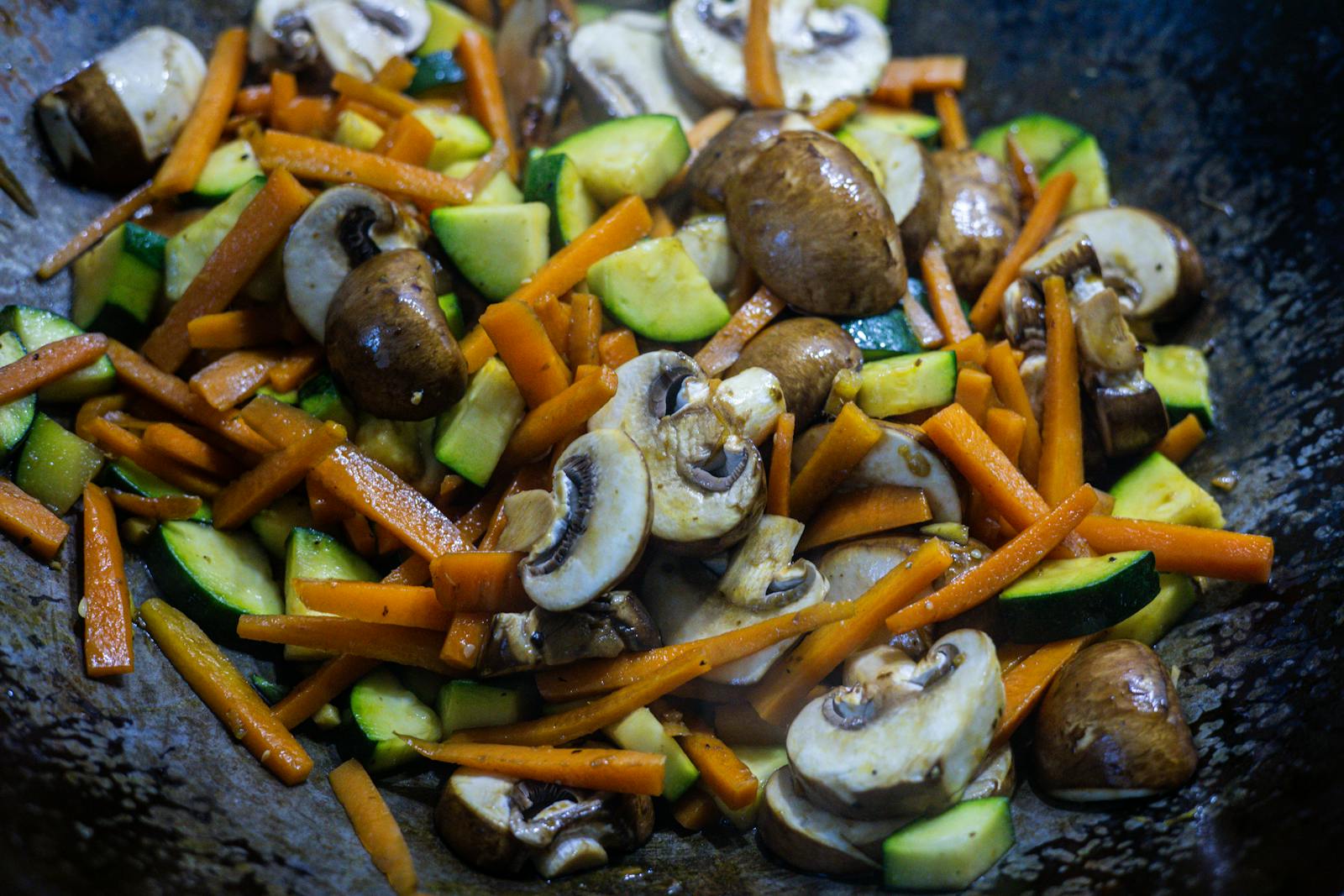
Open the fridge. See what's there. Put heat under a pan. Add fat. Add something that needs to be used up. Season it the way that sounds right to you.
Don't time it. Don't photograph it. Don't evaluate it against some imagined standard.
Just eat it. Notice that you made something from nothing. Notice that it was enough.
Then do it again next week. And the week after that. Not because you should. Because you can.
Here's your actual assignment, if you want one: next Tuesday, leave your phone in another room. Don't open a browser. Don't search "easy weeknight dinner." Just walk into the kitchen and make something. It doesn't matter what. The point isn't the food. The point is the fifteen minutes you spend making decisions that are entirely yours, in a day that probably didn't offer many. That's the meal that changes things. Not because it tastes extraordinary, but because you trusted yourself enough to make it at all. And that small, quiet act of authorship — repeated over enough unremarkable evenings — is how cooking stops being a task and starts being a place you actually want to be.
What’s Your Plant-Powered Archetype?
Ever wonder what your everyday habits say about your deeper purpose—and how they ripple out to impact the planet?
This 90-second quiz reveals the plant-powered role you’re here to play, and the tiny shift that makes it even more powerful.
12 fun questions. Instant results. Surprisingly accurate.