Millennials who grew up under constant surveillance are deliberately choosing a different path, letting their kids navigate the world with far less oversight—not because parenting experts told them to, but because they remember the suffocation of never being trusted.
In 2008, a columnist named Lenore Skenazy published a piece about letting her 9-year-old ride the subway alone, and the internet responded as though she'd described leaving her child in the wilderness with a compass and a prayer. Skenazy was widely criticized as a negligent parent. Talk shows booked her to be scolded. What she'd actually done was trust her kid to do something millions of children in previous decades had done without anyone writing a headline about it. That year became a kind of fault line. On one side, the parenting culture that had been tightening its grip for two decades. On the other, the first visible cracks of resistance.
Nearly two decades later, the resistance has a face. It looks like millennials in their thirties and early forties, many of them the products of the most surveilled, scheduled, and structurally anxious childhoods in American history, now making a conscious choice to parent differently. They're letting their kids walk to the corner store. They're refusing to monitor homework. They're sitting on the bench at the playground instead of hovering three feet behind the slide. And the force driving this shift isn't intellectual—it's visceral. These are not parents who read a study and changed course. These are people acting from the body, from memory, from the still-tender knowledge of what it felt like to grow up under the weight of someone else's anxiety.
Spend any real time talking to people in this cohort and the pattern is unmistakable. They remember being fourteen and not trusted to stay home alone. They remember a parent calling their college professor. They remember the suffocating message underneath all that attention: you are not capable. The parenting philosophy came later. The feeling came first.
What helicopter parenting actually cost
The term "helicopter parenting" became widely used in popular culture to describe intensive parental involvement that had been building since the 1980s, when a wave of stranger-danger fears, competitive college admissions, and a shifting economy convinced a generation of parents that vigilance was love. The impulse made sense in context. These were parents, many of them boomers, who'd grown up with less structure and were determined to give their kids more. More guidance. More oversight. More protection.
The outcomes, though, told a complicated story. Research has found that heavy parental involvement doesn't necessarily help young adults launch into their careers—it can actually hinder them. And the word "launch" is doing a lot of work there. It doesn't just mean getting a job. It means becoming someone who can tolerate uncertainty, make a bad decision, recover from it, and try again—the very capacities that helicopter parenting, by design, prevented children from developing. There comes an age at which young people need to make the transition to independence, and failure to do so is associated with professional constraints and emotional ones alike. Anxiety. A persistent sense of incompetence. The quiet fear that you can't handle things, even when you demonstrably can.
What the new parenting actually looks like
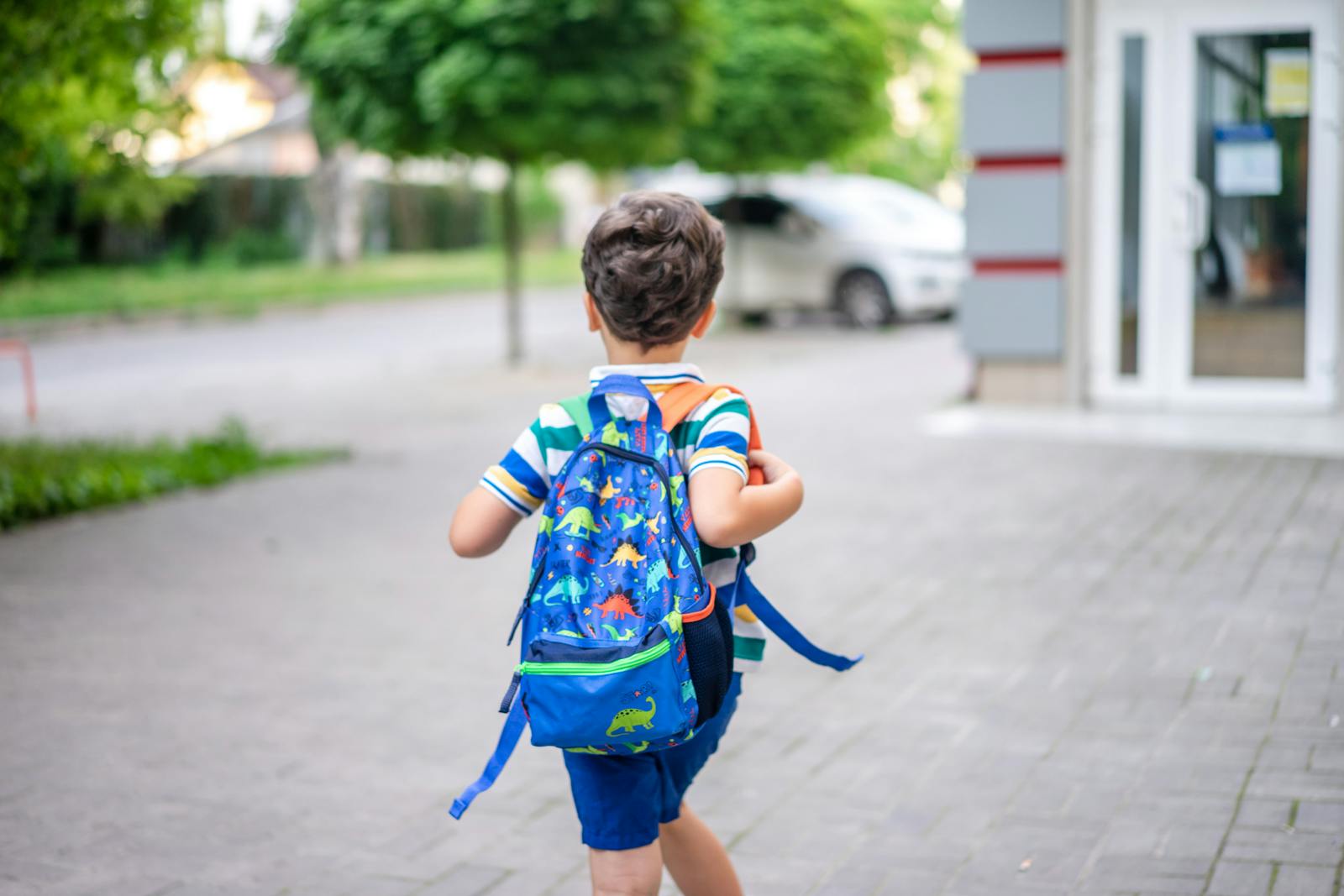
The specifics matter here, because "radical independence" sounds abstract until you see it in a Tuesday afternoon. It looks like a seven-year-old making her own lunch—badly, with too much mustard and bread torn at the corners—while her mother stands in the kitchen doorway and does not intervene. It looks like a ten-year-old navigating a conflict with a friend without a parent calling the other parent to mediate. It looks like a family where the kids are bored on a Saturday and no one rushes to fill the silence with a structured activity.
It also looks like deliberate policy choices at the household level. Some of these parents have stopped tracking their children's locations on their phones. Some have set an explicit rule: no emailing teachers on the child's behalf. Some are choosing neighborhoods partly based on walkability, not for themselves, but so their kids can move through the world without a chauffeur. One father I know described his parenting approach as "being the person my kid knows they can come to, not the person who's already there before they arrive."
These choices are small, and they are daily, and they are often made against the current of a culture that still treats unsupervised childhood as negligence. The parent who lets their eight-year-old play in the front yard alone is making a decision that feels, in many communities, quietly radical.
The body remembers what the mind rationalizes
People who grew up over-parented don't always name it as such. They'll say their parents were "involved" or "caring" or "a lot." The reframe often happens later, in their late twenties or thirties, when they realize that the thing they thought was love had another dimension to it. A dimension of control.
I think about this through the lens of intergenerational patterns. Research on how trauma and anxiety transmit between generations shows that the mechanism isn't just genetic—it's behavioral. Parents who experienced adversity communicate a worldview rooted in that experience, often without realizing it. Children, even very young ones, detect and react to their parent's anxiety cues. Research with trauma survivors has shown that even when parents resist talking about their experiences, their worldview that the world is a dangerous, unpredictable place can shape their children's outlook.
Helicopter parenting isn't trauma in the clinical sense for most people. But the underlying transmission works the same way. A parent who believes the world is dangerous and their child is fragile will communicate that belief through a thousand small actions. Don't climb that. Let me do it. You're not ready. I'll call them for you. The child absorbs a story about themselves: I need help. I can't be trusted.
What's happening now, with millennial parents pulling hard in the opposite direction, is a kind of correction that starts in the body before it reaches the brain. They feel the old pattern activate, the urge to intervene when their kid struggles with something, and they consciously resist it. Not because a parenting book told them to. Because they remember what it felt like to be the kid who was never allowed to struggle.
There's a version of this realization that hits people around midlife, when they start sorting their own beliefs from the ones they inherited. For parents, the sorting often happens earlier, because having a child forces the question: whose voice am I hearing right now? Mine or my mother's?
The correction isn't always clean
Here's where intellectual honesty matters. The swing toward "radical independence" parenting isn't purely healthy, and the strongest counterargument deserves space.
Research has shown that childhood experiences shape parenting style through complex emotional pathways. Studies suggest that mothers who experienced childhood adversity often develop heightened emotional empathy, which sounds positive but can make them more likely to feel overwhelmed by their children's emotions, potentially leading to depressive symptoms and difficulty parenting effectively.
The takeaway isn't that empathy is bad. It's that unprocessed experience distorts even good impulses.
The same principle applies to the helicopter-to-independence pipeline. When a parent's drive toward granting autonomy is fueled primarily by unresolved resentment toward their own upbringing, the child doesn't experience freedom. They experience emotional distance wearing the costume of a parenting philosophy.
I grew up watching my mother manage the organized chaos of a restaurant kitchen with an authority that left no room for hesitation. That taught me something real about competence and trust. But there were also things she couldn't teach me about emotional expression, things that got swallowed in the demands of running a business and raising a family between two cultures. The skills we gain from our parents and the gaps they leave us are often two sides of the same quality.
Kids who are given radical independence without emotional attunement don't learn self-reliance. They learn to stop asking for help.
What the cycle actually looks like when it breaks
The research on intergenerational transmission of trauma and resilience suggests that people who openly discuss their experiences with their children are less likely to pass on the effects of those experiences. The mechanism is transparency. When parents acknowledge their reactive patterns and explain they're working to change behaviors rooted in their own childhood experiences, children receive context instead of confusion.
This is the difference between reactive parenting and reflective parenting. Reactive parenting says: my parents hovered, so I won't. Reflective parenting says: my parents hovered, and here's what that cost me emotionally, so I want to find a different way, and I'm paying attention to whether my different way is actually working.
The most interesting parents in this generation aren't the ones who've adopted a rigid anti-helicopter philosophy. They're the ones who hold the tension. Who let their kid ride a bike to school but also sit with them through a hard feeling at night. Who grant autonomy in the physical world and remain present in the emotional one.
That's harder than either extreme. Hovering is actually easier because it gives a parent something to do. Total hands-off is easier because it requires less attentiveness. The middle path, being available without being controlling, asks a parent to tolerate their own anxiety without offloading it onto the child.
Why this isn't really about parenting styles
Every few years, a new parenting framework gets a name. Helicopter. Free-range. Gentle. Conscious. Lighthouse. The labels sell books and generate clicks, but they also flatten something that's far more personal and jagged than any framework can hold.
The millennial parent who lets her kid walk to school alone isn't practicing free-range parenting. She's practicing not being her mother. The dad who refuses to check his teenager's grades isn't following a philosophy. He's honoring a wound.
And that's fine. That's how most of human behavior works. We don't change because a study tells us to. We change because something we lived through left a mark, and when we find ourselves at the same crossroads our parents faced, we turn a different direction. Sometimes the direction is better. Sometimes it's just different. Often it's both.
Research on intergenerational trauma has shown that when a parent suffered in childhood, their kids are affected. The echo travels forward. But the research also shows that the echo can be interrupted, and the interruption doesn't require perfection. It requires awareness.
Parents who can acknowledge to their children that they're providing space as a reaction to their own childhood constraints—and that they're still calibrating the right balance—are practicing something more honest and more durable than any parenting philosophy. They're showing their kids what it looks like to be shaped by your past without being governed by it.
The trust that was missing
There's a particular kind of adult who was told they were mature for their age but never actually trusted with real decisions. Who was praised for being responsible but wasn't allowed to take responsibility for anything that mattered. These are often the same people who, as parents, are most determined to offer their children something they never received: the belief that they can handle it.
The "it" is everything. A skinned knee. A social rejection. A bad grade. A Saturday afternoon with nothing scheduled and no one telling them what to do.
My father still calls monthly with a specific set of questions about my life that are really a specific set of concerns wearing the clothing of curiosity. I love him for it. I also recognize, more clearly each year, the architecture of worry underneath the questions. He isn't asking because he doesn't trust me. He's asking because no one taught him what trust looks like when you're not monitoring the outcome.
That's the inheritance this generation of parents is trying to rewrite. Not the love. The love was always there. The trust is what was missing.
And you don't learn to trust your child from a book. You learn it by remembering what it felt like to be a child who wasn't trusted. By sitting with the discomfort of letting them fail. By choosing, over and over, to believe they can handle more than your anxiety wants to admit.
The research supports giving kids more autonomy. It does. But that's not why most of these parents are doing it. They're doing it because they carry, somewhere in their nervous system, the memory of a door that was always locked from the outside. And they've decided to leave it open. Not flung wide, not recklessly, not without watching. But open. Because they know, from the inside, what it costs a person to grow up in a house where every door required permission. And because the deepest thing a parent can offer a child isn't protection from the world. It's the belief—demonstrated daily, in a thousand small choices—that the child is someone the world can be trusted to meet.