
When you stop performing your life story for people determined to misunderstand you, it's not surrender—it's the moment you finally start living for an audience that actually matters.
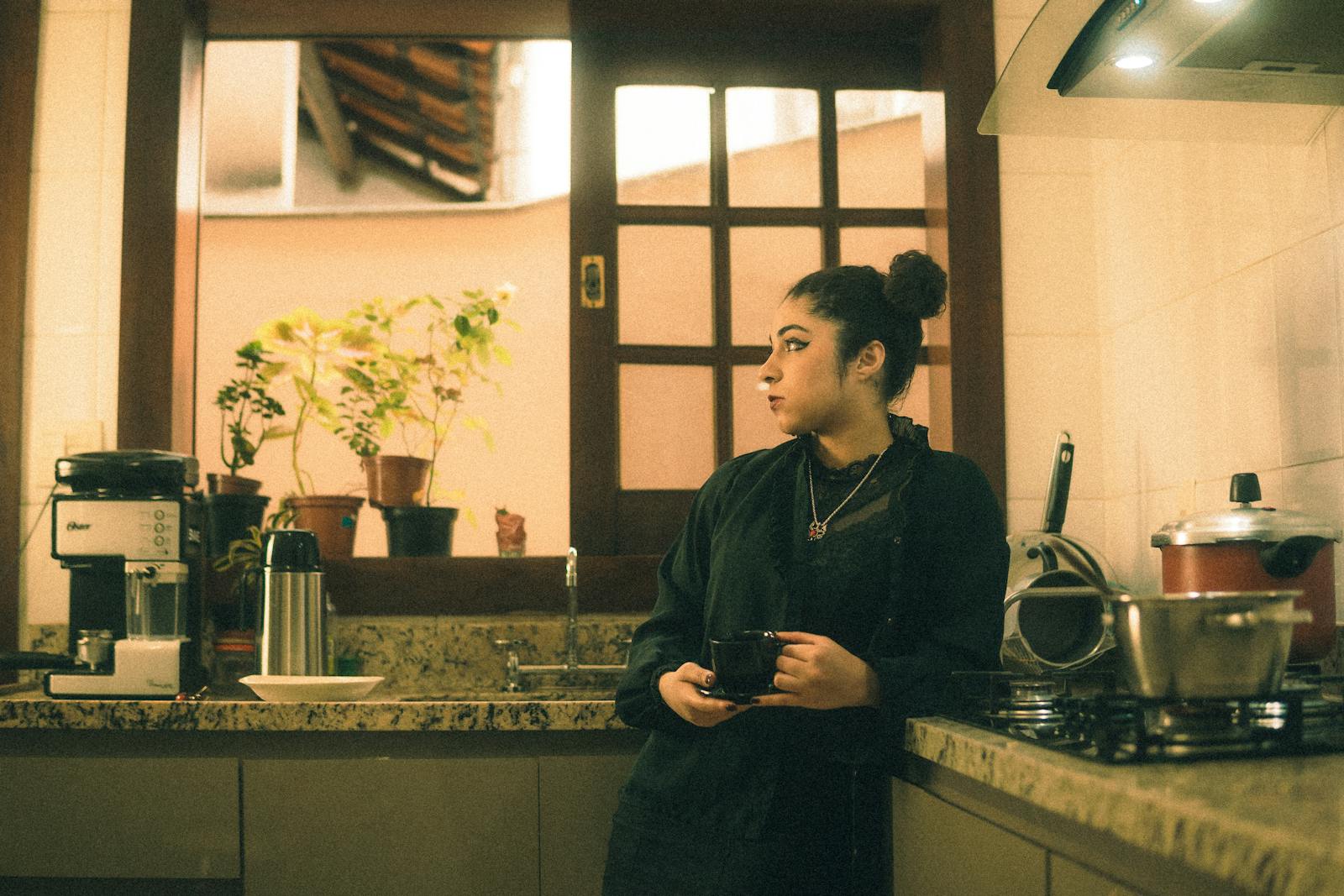
Sofia picked up, listened for maybe forty seconds, and then said, very calmly, she loved her mother but wouldn't be explaining herself again, then returned to preparing dinner. Her hands didn't shake. Her eyes were clear. It was a Sunday in March, our Brooklyn kitchen clouded with that caramelized, almost-burnt sweet potato smell that means you timed it perfectly. I was sitting at her counter, slicing limes for drinks, and it was the most unbothered I had ever seen her after a call with her mother. It unsettled me, honestly, because I realized she had crossed some invisible line I was still standing behind.
The conversation, she told me later, was about her decision not to fly home for Easter. She'd explained her reasons before. Multiple times. Work, finances, the fact that every visit ended with a passive-aggressive inventory of her life choices. Her mother never absorbed any of it. Each call reset to zero, as if the previous conversation had never happened. So Sofia stopped resetting with her.
The conventional reading of this moment is that she gave up. That she's being cold, or selfish, or that she'll regret the distance when it's too late. People love to say that. Family is family. You only get one mother. Blood is thicker than whatever boundary you're trying to draw with your little therapy vocabulary. And the counterargument is worth taking seriously, because disconnection can be its own kind of avoidance. Sometimes people mistake withdrawal for growth.
But what I watched Sofia do wasn't withdrawal. It was the end of a performance.
The audition that never closes
There's a specific kind of exhaustion that comes from explaining yourself to someone who has already decided what you mean. You're not having a conversation. You're auditioning. Every holiday, every phone call, every carefully worded text is another take, another attempt to deliver your lines in a way that finally lands. And the director never yells cut, because the role you're auditioning for doesn't actually exist. There is no version of you that satisfies the script they've already written.
This dynamic reflects family systems theory: families operate as emotional units, and children adjust their behavior, often unconsciously, to stabilize the system. Research on family roles has documented how daughters in particular get cast as the emotional center of gravity, the one who holds everything together. Research suggests that these parentified children often learn to meet others' needs first, at the expense of their own development.
The cost isn't always dramatic. Sometimes it's just the low hum of performing a version of yourself that someone else designed. You learn what to say about your job so it sounds stable enough. You learn which opinions to keep in your pocket. You develop a sixth sense for the shift in your father's tone that means you need to soften yourself, redirect the conversation, make yourself smaller so the room can breathe.
That's the audition. And the people who quietly stop doing it aren't walking away from love. They're walking away from the specific, grinding labor of trying to earn something that was supposed to be unconditional.
Emotional labor has a weight you can measure now
We throw around "emotional labor" casually enough that it's almost lost its meaning, but the research behind it keeps getting sharper. New approaches now offer ways to actually quantify the hidden emotional work people do, moving it from a vague feeling to something measurable. And research on invisible labor in families has found that the mental load women carry behind the scenes, juggling calendars, emotional check-ins, relational maintenance, has concrete effects on well-being that track with burnout.
The family audition is a specific strain of this labor. It's not just doing the dishes or remembering your aunt's birthday. It's the cognitive overhead of constantly translating yourself into a language your family can accept, then watching the translation fail anyway. Mental health experts have described how chronic over-responsibility for others' feelings can lead to emotional exhaustion and resentment, especially when reciprocity is absent.
Reciprocity. That's the quiet word at the center of all this.
People don't stop explaining themselves because they've become indifferent. They stop because the exchange rate collapsed. They put in a hundred attempts and got back confusion, deflection, or a restatement of the same position their family held before the conversation started. At some point the math just doesn't work.
The difference between giving up and letting go of the script
I grew up splitting my time between São Paulo and Miami, and one thing that permanent in-between taught me is that you can love a place deeply and still stop trying to prove you belong there. My father's family in Brazil had a whole theory of who I was. My mother's family in Miami had a different one. Neither was wrong exactly, but neither left room for the version of me that existed outside their framing. For a long time, I performed both scripts. The Brazilian Elena, warm and effusive, always down for the long Sunday lunch. The American Elena, practical, moving forward, not too sentimental.
I don't perform those scripts anymore. Not because I stopped loving either side, but because you can't build an identity inside a blueprint someone else drew. The relief wasn't in the distance. It was in no longer spending energy narrating myself to people who were going to hear what they wanted regardless.
This isn't the same thing as cutting people off. That's a different conversation, and often a more drastic one than most situations require. What I'm talking about is subtler. It's the decision to stop presenting your case. To show up at dinner and enjoy the food without mounting a defense of your career, your relationship, your body, your city, your politics, your timeline for having children.
You still go to dinner. You just stop treating it like a courtroom.
When the "strong one" stops performing strength
The emotional support daughter, the dependable friend, the one who always smooths things over. These aren't just personality traits. They're roles assigned by systems that benefit from someone doing unpaid emotional maintenance. Family systems research has shown that girls are more likely to be praised for being mature, helpful, or "easy," which reinforces the idea that emotional labor is both expected and rewarded. Research suggests that girls are often socialized to prioritize relational harmony, which can lead them to suppress their own needs in favor of maintaining connection.
Over time, what begins as adaptation becomes identity. And that's where it gets tricky, because being the dependable one doesn't mean people will show up for you. It means they've learned they don't have to.
When that person stops explaining herself, the family system feels the disruption. Someone who was absorbing all the friction is suddenly not absorbing it, and the friction has to go somewhere. This is where the guilt comes in. The phone calls asking what's wrong. The sibling who says you've changed. The parent who frames your boundary as betrayal.
None of that means the boundary was wrong. It means the system is adjusting to a part that stopped playing its assigned function.

Love without the performance
My friend Marcus said something a few months ago that stuck. We were walking through the Williamsburg flea, handling somebody's old silverware, and he was talking about his parents' reaction to his work. He's a designer. His family wanted an engineer. Some people describe bringing home portfolios, awards, and press clippings as evidence of their choices, only to face questions about stability. Eventually, they stop bringing proof and simply show up as themselves.
That's the shift. You stop arriving with a briefcase full of proof that your life makes sense. You just arrive. And what happens next is either connection or it isn't, but at least you're not performing for it.
This is not a cold posture. It's actually a warmer one, because it removes the transactional layer. When you stop auditioning, you stop keeping score. You stop tracking whether they acknowledged your last accomplishment. You stop monitoring their face for approval. You're just there, being a person at a table with other people, and whatever they think about your choices exists in their mind, not in the space between you.
Some relationships improve when the audition ends. Some don't. Both outcomes are real, and neither one is a failure.
What it actually looks like
It looks like shorter phone calls. Not rude, just finished sooner because you're no longer filling time with justifications nobody asked for but everyone expected.
It looks like visiting home and sleeping at a hotel sometimes, because you realized that proximity without escape routes turns you back into a teenager.
It looks like saying that something doesn't work for you instead of constructing a three-paragraph explanation with cited sources and emotional footnotes.
It looks like loving someone fully while also knowing, with no bitterness and no grief left to process, that they will never understand certain parts of your life. And being okay with that. Not resigned. Okay.
There's a difference between those two things. Resignation is heavy. It slumps. Being okay is lighter. It sits upright. It eats the sweet potatoes.
Sofia poured herself a glass of wine that Sunday evening and we ate dinner and talked about a ceramic planter she wanted to buy for the fire escape. She didn't rehash the call. She didn't vent. The conversation with her mother was over in the same way a completed task is over. Not unresolved. Just done.
She hadn't given up on her mother. She'd given up on the idea that love required a successful audition. And on the other side of that surrender was something that looked, from where I was sitting, a lot like freedom.
Not the dramatic kind. The Sunday evening kind. Roasted sweet potatoes, a fire escape full of plans, and a phone face down on the counter, holding no power at all.
That's what love without performance looks like. It doesn't announce itself. It doesn't need to be witnessed or validated or approved. It just sits in the room, quiet and present, asking nothing of you except that you stay. Not as the version of yourself someone else wrote into existence. Just as you. And it turns out that's enough, once you stop believing it isn't.
If You Were a Healing Herb, Which Would You Be?
Each herb holds a unique kind of magic — soothing, awakening, grounding, or clarifying.
This 9-question quiz reveals the healing plant that mirrors your energy right now and what it says about your natural rhythm.
✨ Instant results. Deeply insightful.

Elena Santos
She/Her
Elena Santos is a writer and former sustainable fashion designer based in Brooklyn, New York. She studied environmental design at the Rhode Island School of Design, where she developed a deep interest in sustainable material systems and traditional craftsmanship. After working at a Brooklyn-based sustainable fashion startup, she spent a year traveling through Central America writing about Indigenous textile traditions, an experience that fundamentally reshaped her understanding of what sustainability actually means in practice.
At VegOut, Elena writes about sustainability, food culture, and plant-based living through the lens of design, tradition, and cultural preservation. Her Brazilian and Cuban heritage informs a perspective that connects food systems to broader questions about identity, community, and how cultures sustain themselves across generations.
Elena maintains a small Instagram account documenting textile craftsmanship and Indigenous knowledge systems. She does her best writing early in the morning in quiet coffee shops, before the day gets complicated. She believes sustainability is not a trend but a return to how people have always lived when they paid attention.
More Articles by Elena