
The casual "how are you" is rarely a genuine question—but some people can't help treating it like one, creating an awkward pause that reveals something profound about how differently we process social rituals.
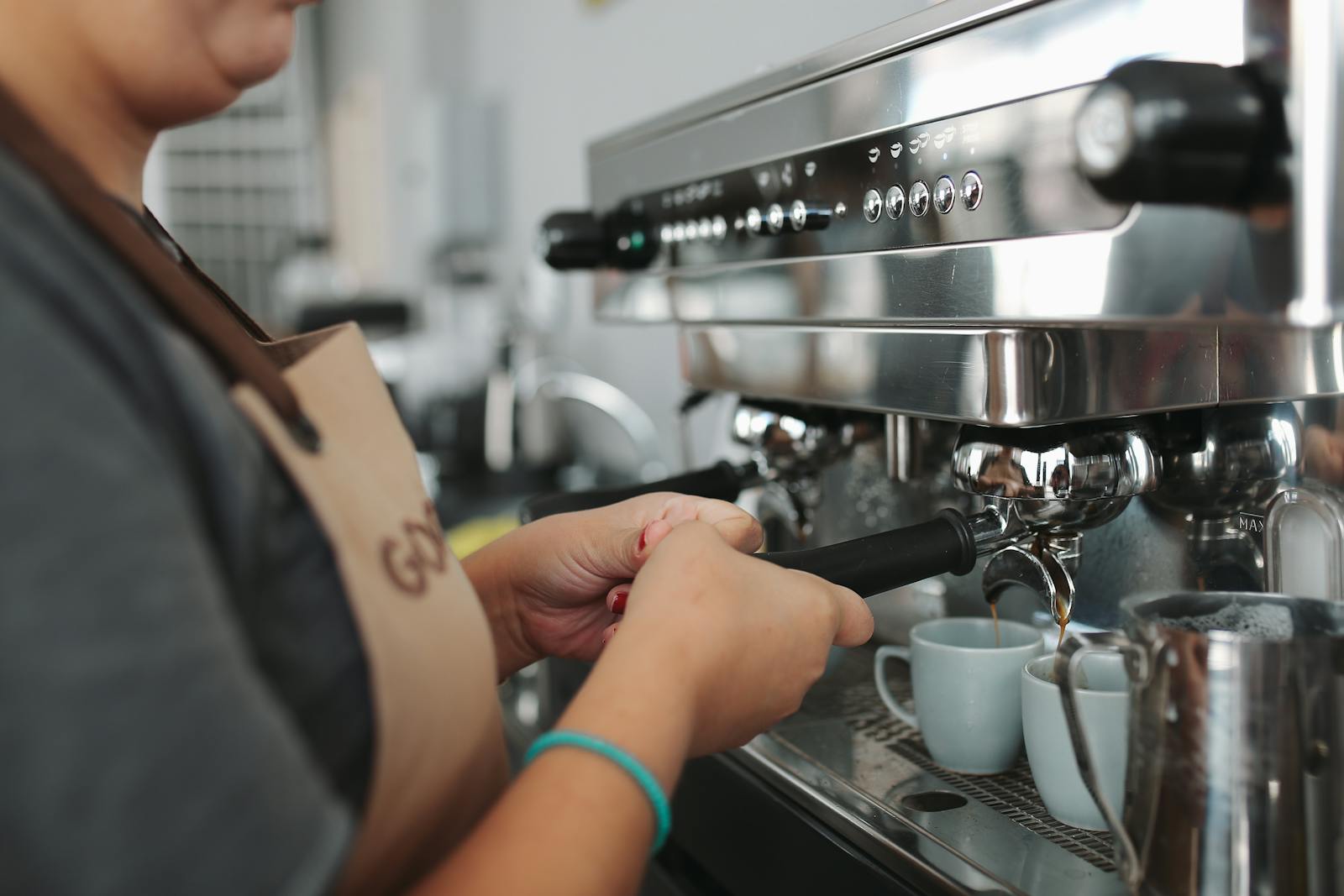
I stand at the register at my usual coffee shop, the one three blocks from my apartment, and the barista, a woman named Jess whose name I only learned last month, slides my oat milk latte across the counter with the question that follows every transaction in America. "How are you?" I pause. It's barely a second. Maybe two. Long enough that Jess looks up from the espresso machine, mildly curious. Long enough that I feel the familiar low-grade panic of having broken a social rhythm. I finally say, "Good, you?" and walk out wondering why I can't seem to do this the way other people do.
The conventional wisdom about people like me is that we're socially awkward. Maybe a little anxious. Probably overthinking it.
The actual answer is more interesting.
People who pause before answering casual questions aren't malfunctioning at small talk. They're processing the question as if it were a real one. The hesitation isn't a glitch in their social software. It's evidence that the software is doing more work than the situation technically requires.
The script most people follow without noticing
"How are you" isn't really a question in most contexts. It's a verbal handshake. The expected response is "good, you?" delivered at the speed of a reflex, and the entire exchange is meant to confirm mutual non-hostility before both parties move on with their day.
This is what cognitive psychologists call System 1 thinking: the fast, automatic, effortless cognition that handles most of our daily interactions. System 1 is why you can drive a familiar route without remembering the turns, finish your coworker's sentences, and respond to "how are you" without ever consulting your actual internal state.
System 2 is the slower one. The deliberate one. The system that asks, "wait, how AM I?" before answering.
People who hesitate are the ones whose System 2 keeps trying to take a shift it wasn't scheduled for.
The mindfulness problem nobody asked for
Psychologists studying mindfulness have distinguished between mindful and mindless behavior in a way that maps cleanly onto the "how are you" pause. Mindless behavior is scripted, automatic, and operates on cues rather than content. Mindful behavior involves actually attending to the present moment: the actual words, the actual person, the actual answer.
The trouble is that mindfulness is socially expensive in casual contexts. The barista doesn't want a mindful answer. Your coworker passing in the hallway doesn't want a mindful answer. Your neighbor checking the mail doesn't want a mindful answer.
So the people who can't quite turn off the mindful processing, the ones who hear the question as a question, end up looking like the ones who can't keep up.
They can keep up. They're just running a different program.
What the pause is actually doing
In that one or two seconds before someone answers, several things are happening. They're checking in with their actual emotional state. They're filtering it through what's appropriate for the relationship. They're calibrating what the asker actually wants to hear. They're often modeling the asker's own state, wondering if "how are you" is a real check-in or a passing pleasantry.
This last move is what psychologists call theory of mind: the capacity to model what's happening in someone else's head. It's a foundational social skill, and the people who deploy it most carefully often look the most hesitant. They're not stuck. They're calculating.
The fast responder isn't necessarily warmer or more socially skilled. They've just outsourced the interaction to a script.
The introvert misdiagnosis
The pause gets misread constantly, and the most common misreading is "introvert." But the pattern doesn't actually map cleanly onto introversion.
Most people fall somewhere in the middle of the introversion-extroversion spectrum. They're ambiverts. Introversion is frequently conflated with shyness, social anxiety, and even disliking other people, none of which are accurate. Introverts simply prefer being alone more often. That's it.
The hesitation before "how are you" isn't really an introversion marker. Plenty of extroverts pause too, particularly the ones who've trained themselves to listen before talking. The assumption that extroverts are quick talkers and introverts are slow ones is mostly folk theory, not science.
What the pausers share isn't a personality type. It's a relationship to language. They treat words as containers that should hold something true.
Where the habit comes from
I spent four years as a therapist before I started writing, and one pattern I saw repeatedly in young professionals was a particular kind of conscientiousness that bordered on exhausting. Therapists have observed that clients who struggle with reflexive responses often share certain traits: they were raised to be precise and to take questions seriously. This pattern sometimes reflects a childhood where statements were carefully scrutinized.
This isn't always healthy. Sometimes it's the residue of a childhood where every statement was scrutinized and "I'm fine" wasn't allowed to be a lazy placeholder. Sometimes it's the byproduct of being raised by parents who modeled emotional precision. Sometimes it's connected to the broader pattern I wrote about recently: children praised for being "no trouble at all" learning to monitor their own internal weather with surgical attention.
And sometimes it's just neurological wiring that processes language a half-beat slower because it's processing it more thoroughly.
The conscientiousness trap
One thing the pause is decidedly not is a sign of mental illness. But it's worth being honest that the same traits that make someone hesitate before "how are you" (high conscientiousness, attentiveness to internal states, a tendency toward introspection) can come with costs. Research from the Nathan S. Kline Institute published in the Journal of Affective Disorders found that neuroticism and introversion were the strongest predictors of depression in their machine learning analysis of 1,494 participants.
The lead authors Zhen Yang and Vilma Gabbay also pointed out that conscientiousness, the trait associated with doing things carefully, including answering questions carefully, was positively linked to anxiety in adolescence.
So the pause isn't pathological. But the cognitive style that produces it is the same one that, taken to extremes, becomes the kind of self-monitoring that wears people down. There's a version of this trait that's gift, and a version that's burden, and most people who have it experience both.
What the fast responders are actually doing
Quick responses aren't shallow by definition. Most fast responders are doing exactly what social conventions ask them to do: completing the verbal handshake, signaling friendliness, keeping the social machinery moving. This is genuinely valuable. The world doesn't run on deep processing. It runs on lubricated micro-exchanges.
Models of persuasion and information processing distinguish between careful, effortful consideration of information and processing that uses shortcuts and surface cues. Both routes have legitimate uses. You don't want deep processing for every interaction. Your brain would burn out by 11 a.m.
The fast "good, you?" is automatic processing doing exactly what it's supposed to do.
The hesitation is deliberate processing showing up in a context that didn't call for it.
Why this matters beyond the coffee shop
The "how are you" pause is a microcosm of a much larger pattern: the divide between people who follow social scripts smoothly and people who keep accidentally interrogating them.
The smooth ones are not less authentic. The interrogators are not more authentic. These are different cognitive defaults with different tradeoffs. The pauser will sometimes deliver an answer that genuinely connects with someone who needed a real check-in. They'll also sometimes annoy a barista who has fourteen more orders to make.
The smooth responder will keep a thousand interactions frictionless. They'll also occasionally miss the moment when someone they love needed them to actually hear the question.
Neither style is the answer. But the cultural assumption that the smooth version is the "normal" one, and the pausing version is a deficit to be corrected, is the part worth pushing back on.
The thing about being heard
Here's what I've noticed in my own life, mostly through being terrible at small talk and excellent at the conversations that begin once small talk ends. The people who hesitate before answering casual questions are often the same people who, when you ask them something real, give you a real answer. They've been training for that moment their whole life. They were never able to fake the small one.
This is also the population that often treats every casual interaction as if there's a real person on the other side of it. The pause and the "thank you" come from the same place: a refusal to let language go on autopilot.
Personality traits aren't fixed. They become more stable with age but only reach maximum stability after 50. Plenty of pausers learn to script faster as they get older. Plenty of fast responders develop a slower, more attentive register in their thirties or forties.
The point isn't to defend the pause as superior. It's to stop pathologizing it.
What to do with this if you're a pauser
If you're someone who has spent years feeling vaguely embarrassed by your inability to deliver "good, you?" at conversational speed, the useful thing to know is that you're not socially defective. You're just running central processing in a peripheral processing context.
You can keep doing it. The barista will survive. So will you.
The other useful thing to know (and this one is harder) is that not every "how are you" deserves the full processing. Some are handshakes. Letting them be handshakes isn't dishonesty. It's recognizing what the question is actually asking. The skill is learning to tell the difference, not learning to script faster.
And when someone you love asks "how are you" and you find yourself pausing — that's the moment the pause was always for. That's the question that actually needed System 2.
The pausers heard the question. They were just waiting for the version that meant it.