Eating the same breakfast daily isn't about deprivation—it's a powerful strategy to eliminate decision fatigue and reclaim mental energy for things that actually matter before your day even begins.
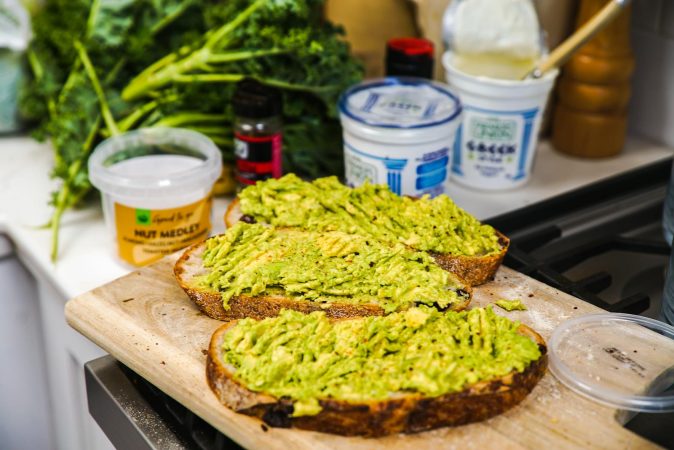
My friend Mariana eats two slices of sourdough with avocado and a handful of walnuts every single morning. She doesn't weigh anything. She doesn't consult a recipe. The bread comes out of the freezer, the avocado gets halved with a knife she keeps in the same drawer, and the walnuts sit in a jar on her counter that she refills from the bulk aisle once a month. I've watched her do this maybe forty times over the years we've lived together in Brooklyn, and the thing that strikes me isn't the repetition. It's the calm. By the time I've scrolled three delivery apps debating between açaí bowls and egg sandwiches, she's already eaten, cleaned her plate, and sat down to work.
The popular take on eating the same thing every day is that it's boring, restrictive, maybe even disordered. Variety is the spice of life, we're told. Nutritionists often remind us to eat the rainbow of colorful fruits and vegetables. Social media rewards novelty, the elaborate smoothie bowl, the from-scratch granola arranged for the camera. And there's truth in the variety argument: your microbiome benefits from diverse inputs, and nutritional balance requires more than one food group. That counterpoint deserves respect.
But nobody's talking about dinner here.
The counterargument worth taking seriously is this: what looks like monotony might actually be a strategic surrender of one low-stakes choice so you can show up sharper for the ones that matter.
The willpower bank account you didn't know was draining
Every day, before most people arrive at work, they've already made dozens of decisions. What to wear. Whether to snooze the alarm. Which route to take. What to eat. Each one feels small. None of them feel expensive. But research suggests that impulse control may be a finite resource that can be exhausted, and that suppressing impulses and making choices over time may make subsequent decisions harder to manage. The concept, rooted in experiments from psychology research, proposes that the mental energy required for decision-making draws from the same pool as self-control. When that pool runs low, you're more susceptible to impulsive choices, procrastination, and emotional reactivity. Alex Dimitriu, MD, a psychiatrist double board-certified in psychiatry and sleep medicine, has described how saying "no" to urges all day makes it harder to control those urges by evening, when your store of control has been used up. Even researchers skeptical of the strongest depletion claims tend to agree on something quieter: cognitive load is real. The brain prefers automation. And breakfast is one of the easiest places to give it what it wants.
What your brain actually does with a habit
Cognitive neuroscientists have described how our behavior is shaped by two brain systems: one that triggers automatic responses to familiar cues, and another that enables goal-directed control.
Research suggests that habits play a central role in our daily lives, from making that first cup of coffee in the morning to the route we take to work and the routine we follow to prepare for bed. Studies have revealed that good and bad habits are two sides of the same coin. Both arise when automatic responses overpower goal-directed control. The difference is whether the automation serves you.
When you eat the same breakfast without deliberating, the automatic-response system handles it. Your goal-directed system stays fresh. You preserve it for the meeting at ten, the creative problem at noon, the difficult conversation after lunch. Research suggests that depending on your neurobiology, it might make more sense to focus on certain strategies over others, but the underlying principle holds: working with how your brain naturally forms habits creates space for better choices elsewhere.
This isn't about discipline. It's about design.
The weight-loss data that accidentally proved a bigger point
Research has looked at adults enrolled in behavioral weight loss programs. The finding that got headlines was about pounds lost. But the more interesting finding, to me, was about pattern.
Participants who repeated the same foods rather than eating a wide variety showed better weight loss outcomes compared to those with more varied diets. Studies have also suggested that greater daily fluctuation in calorie intake may be associated with reduced weight loss. Health experts note that most people tend to eat the same foods repeatedly each week. The successful weight controllers in these studies simply did this more deliberately.
Nutrition experts offer an important caveat: consistency works best when the foundation is strong. If meals are nutrient-dense, they can reinforce high quality nutrition. But if they're missing key nutrients, you may consistently fall short.
So no, eating a Pop-Tart every morning doesn't count as a cognitive optimization strategy. The habit has to be built on something nutritionally sound. But once it is, the consistency itself becomes a tool.
What this actually looks like at 6 a.m.
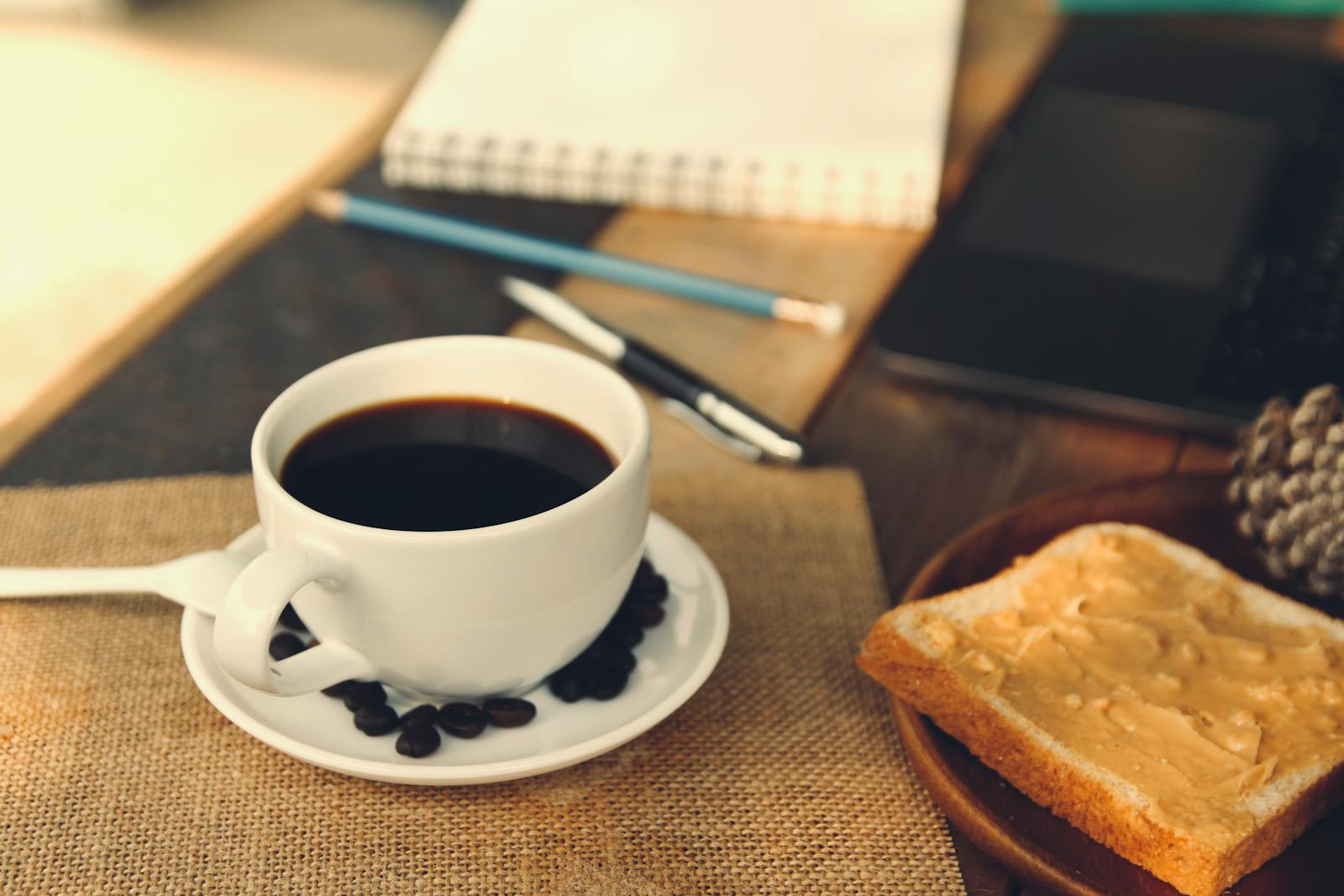
I'm a 5:30 a.m. person. Not by aspiration, just by wiring. My morning is coffee (strong, dark roast, no negotiations), then thirty minutes of writing or journaling before the world gets loud. For a long time, breakfast was a daily negotiation that interrupted that flow. I'd stand in my kitchen weighing options, checking what was in the fridge, calculating how much time I had before I needed to leave.
Somewhere in the past year, I stopped. I settled into overnight oats with whatever fruit was in the apartment, made the night before in the same jar. It takes ninety seconds of effort, split across two time zones: thirty seconds to assemble at night, sixty to eat in the morning. I didn't plan this as a productivity hack. I just got tired of the daily debate.
The shift was subtle but real. That fifteen-minute window I used to spend deciding, shopping my own cabinets, evaluating options? It became writing time. And the writing that happens between six and seven in the morning, in a quiet Brooklyn apartment before anyone else is awake, is consistently my best.
I don't think breakfast is special. I think it's just the first domino. And a growing body of evidence on decision fatigue suggests that the average day contains hundreds, sometimes thousands, of small decisions that accumulate into real cognitive wear. The morning ones set the tone.
The system, not the willpower
There's a reason this conversation keeps circling back to individual discipline when the more useful frame is structural. The food industry profits from variety-seeking. New products, seasonal launches, limited editions, rotating menus. Every notification from a delivery app is an invitation to decide again. The architecture of modern food is designed to keep you choosing, because every choice is a point of sale.
Eating the same breakfast isn't a rejection of pleasure. It's a refusal to let a low-stakes meal become a daily marketplace. The pleasure can show up at dinner, at a weekend brunch with friends, at the new restaurant you've been wanting to try. Breakfast just doesn't need to carry that weight.
I grew up watching my grandmother in São Paulo approach food with a rhythm that had nothing to do with trend cycles. She ate papaya every morning. She didn't call it a routine or a wellness practice. It was just breakfast. The concept of optimizing it would have struck her as absurd. There was no decision to make because the decision had been made decades earlier, and it freed her to spend her morning energy on things she actually cared about: her garden, her sewing, her grandchildren.
We've turned something that used to be automatic into a daily performance. The people who eat the same breakfast aren't missing out. They've just opted out of a game that was never going to reward them.
When routine becomes rigidity (and how to tell the difference)
A fair question: when does a helpful habit become a harmful fixation? The distinction matters. If you can't eat something different when circumstances change, if the routine causes anxiety when disrupted, if it starts shrinking rather than expanding your capacity, that's a different conversation. Nutrition experts make this point clearly: in the real world, with travel, stress, and changing schedules, that level of consistency isn't always realistic without structure or support.
The people I know who do this well hold it loosely. Mariana eats her sourdough-avocado-walnut plate most days. When we travel, she eats whatever is available and doesn't think twice. The habit is a home base, not a cage. It works because it reduces friction on ordinary days, not because it imposes order on chaotic ones.
Research frameworks support this flexibility, emphasizing that effective behavior change comes from working with your brain's natural systems, not forcing rigid compliance. Implementation plans (such as: if it's a weekday morning, then I eat this) work precisely because they're contextual, not absolute.
The goal isn't to eliminate all food decisions forever. That would be its own kind of exhausting. The goal is to identify which decisions drain you without giving anything back, and to quietly remove them.
The real return on a boring breakfast
I think about the small habits that shape how people feel about their mornings, and breakfast keeps coming up as the one that's easy to dismiss but hard to replace. It's not glamorous. Nobody posts about it. The return isn't visible in a before-and-after photo.
But the return is real. It shows up as ten more minutes of presence before the day claims your attention. As one fewer negotiation with yourself before 9 a.m. As a cleaner transition from sleep to wakefulness, because your body knows what's coming and doesn't have to wonder.
The research on high performers and decision fatigue consistently points to the same strategy: reduce the number of unimportant decisions so you can be more present for the important ones. CEOs who wear the same outfit. Writers who work at the same time every day. Musicians who warm up with the same scales.
Breakfast is just the most accessible version of this principle. You don't need a personal chef or a capsule wardrobe. You need a jar, some oats, and the willingness to be uninteresting about one meal so you can be fully alive for everything else.
Here's what's going to happen, though. You're going to read this, nod along, maybe even agree with the logic, and then tomorrow morning you'll open a delivery app anyway. You'll scroll past the thing you ate yesterday because it feels too boring to repeat. You'll spend twelve minutes choosing something slightly different that tastes roughly the same, and you won't notice the cost because decision fatigue doesn't announce itself. It just quietly takes.
The reason most people won't try this isn't that it's hard. It's that it's too simple. We've been trained to distrust any solution that doesn't require a subscription, a plan, or at least a modest amount of suffering. An idea this plain feels like it can't possibly work. And that instinct, that reflexive need to complicate things, to keep searching for the more interesting answer? That is the decision fatigue. You're burning willpower right now trying to decide whether this idea is worth taking seriously, when the whole point is to stop deliberating and just eat the breakfast.