Intuitive cooking isn't talent—it's thousands of small mistakes that taught your hands what your mind never needed to learn. Watch how experience transforms uncertainty into confidence.
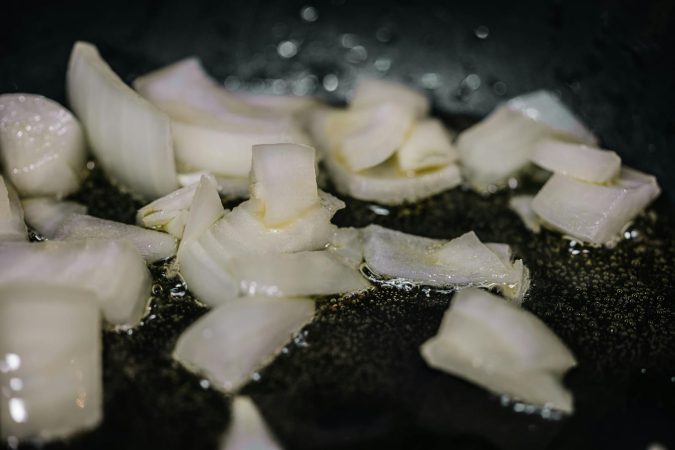
My mother Carmen stands at the counter of our kitchen in Miami, browning onions in a cast-iron pan she's had since before I was born. I ask her how much oil she used. She shrugs. I ask how long the onions should cook. She tilts the pan slightly, watches the way the edges catch color and judges doneness by sight and experience rather than using a timer. There is no timer. There is no measuring cup. There are her hands, the smell of the room, and thirty-something years of dinners behind her. She is not performing genius. She is performing memory.
The popular mythology around recipe-free cooking tends to frame it as a kind of gift, something you either have or you don't. Some people are "natural" cooks, the story goes, born with palates so precise they can season by instinct alone. The rest of us need the recipe, the YouTube tutorial, the step-by-step breakdown with grams and milliliters. It's a flattering narrative for the gifted cook and a comforting one for everyone else. If talent is innate, then failure isn't your fault.
But that framing misses what's actually happening when someone cooks without a recipe. The real mechanism isn't talent. It's accumulated failure, processed so many times by the body that it becomes something the conscious mind can barely describe, let alone teach through written instructions.
What my mother's hands know that her words don't
There's a kind of knowledge that resists language. You can call it tacit knowledge or you can call it what it is: the practical understanding of how to do something, built through experience, that guides your hands even when you can't explain the rules you're following.
Riding a bicycle is the go-to example. Nobody learns to ride by reading a manual. You learn by wobbling, falling, overcorrecting, and then one afternoon your body just… does it. Cooking has the same structure. The moment you know a soup needs acid without tasting it first, that's not magic. That's hundreds of soups, some of them terrible, teaching your senses a pattern your brain hasn't bothered to formalize.
A recipe is explicit knowledge. It tells you what to do. It doesn't tell you what to notice.
When my mother tilts the pan to check the onions, she isn't running an internal algorithm. She's comparing what she sees and smells to a library of sensory experiences stored in her muscles and her memory. The tilt itself is part of the knowledge. A slightly different angle would give her a different view and a different answer. The weight of a knife, the resistance of dough, the way steam rises from a pot at a rolling boil versus a gentle simmer — these are not abstractions. They're physical sensations her body has cataloged, compared, and stored for retrieval over thousands of unremarkable meals nobody photographed.
This is why recipe-free cooking looks effortless from the outside. The work happened years ago, in real time, over hundreds of weeknight dinners. What you're watching now is retrieval, not creation.
The farofa I can't get right
One of the best stories about tacit knowledge has nothing to do with food, but it explains everything about why your grandmother's rice is better than yours even when you follow her instructions exactly.
For two decades, physicists in Moscow and the West disagreed over measurements of sapphire quality. The stakes were real: sapphire mirrors were being considered for gravitational-wave detectors. Western labs couldn't reproduce the Russian results. Papers were published. Suspicion grew. The mystery was solved only when Western researchers realized that one member of the Russian team would run the suspension thread across the bridge of his nose or behind his ear, greasing it with a thin layer of human oil. The translated papers mentioned that a thin oily film was needed, though they didn't specify it came from a physicist's forehead.
That story has stayed with me because it captures something I've lived. My grandmother's farofa — the toasted cassava flour with herbs that I still make when I'm homesick in Brooklyn — never tastes the same when I follow her instructions to the letter. I've tried. The proportions are right. The butter is right. But Abuela Rosa's version had something my version doesn't, and I think part of it is the thousand micro-decisions she made without noticing: how long she let the butter foam before adding the flour, the exact speed of her stirring, the heat adjustments she made based on the sound of the pan. She couldn't have written those down because she didn't know she was making them.
The recipe was explicit. The cook was tacit.
Most people who cook without recipes learned by standing next to someone who also cooked without recipes. The knowledge is inherited, passed shoulder-to-shoulder in kitchens where nobody was documenting anything. I wrote recently about how immigrant parents ate whatever was available without calling it a lifestyle, and how that resourcefulness is now repackaged and sold as a premium skill. The same thing happens with recipe-free cooking. When a food influencer cooks intuitively, it's aspirational content. When my grandmother did it, it was Tuesday.
The difference isn't skill. It's framing. And the framing obscures the truth: that this kind of cooking has always been the norm for people who couldn't afford cookbooks, who didn't have the luxury of precision, who cooked the same twelve meals so many times that their hands simply took over.
My farofa will probably never taste like Abuela Rosa's. Some of those micro-decisions died with her. But each time I make it, my version gets a little more its own thing — not a copy of hers, but a descendant. That's how kitchen knowledge works. It doesn't replicate perfectly. It evolves, meal by meal, through the body of whoever's standing at the stove.
How to build cooking intuition (or: permission to fail badly)
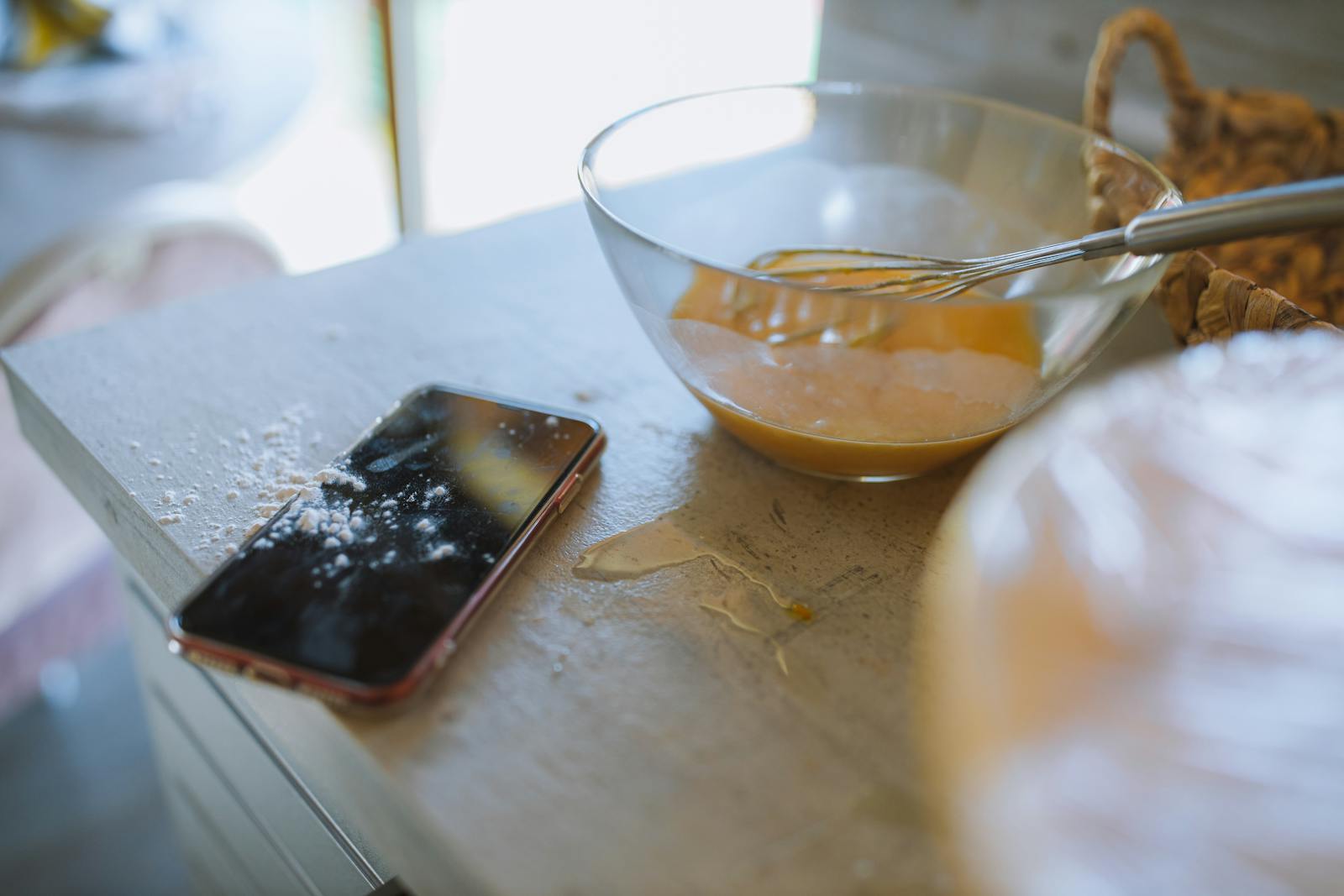
So what does this mean for anyone who wants to cook more freely? It means the path forward isn't more instruction. It's more contact. More meals that don't work. More evenings where you oversalt the beans and the rice sticks to the pot and you eat it anyway because dinner is dinner and the failure is doing its quiet work on your nervous system.
The counterargument worth taking seriously is that some failures are more expensive than others. Not everyone can afford to waste food. Not everyone has the time to cook a meal that might not turn out. These are real constraints, and pretending that everyone has equal access to the luxury of kitchen experimentation is dishonest. For some people, the recipe is the safety net that makes cooking possible at all.
But building intuition doesn't require throwing out the recipe and hoping for the best. It requires small, deliberate acts of deviation — and they can start tonight.
Use the recipe, but use your senses first. Before you add the suggested amount of salt, taste what's in the pot. Before you set the timer for the onions, look at them. Before you check whether the bread is done, touch the top and see if it springs back. Each of these tiny departures from the written instruction creates a data point your body stores. You're building a sensory library, one entry at a time.
Cook the same thing repeatedly. Intuition doesn't come from making a hundred different meals. It comes from making the same meal enough times that you stop reading and start noticing. Pick something simple — rice, a basic soup, scrambled eggs — and make it once a week. By the third week, you'll reach for the salt without measuring. By the tenth, you'll adjust the heat based on sound. That's not talent. That's repetition doing what repetition does.
When something goes wrong, eat it anyway and pay attention. The oversalted soup, the scorched garlic, the bread that didn't rise — these are not wasted meals. They're the curriculum. The mistake only becomes waste if you throw it out without tasting it. When you eat the failure, your body logs what went wrong in a language more precise than any recipe can offer. Next time, your hand will pull back a half-second earlier. You won't know why. That's the point.
Stand next to someone who cooks without recipes. If you have that person in your life — a parent, an auntie, a neighbor — ask to cook beside them. Don't ask for measurements. Watch their hands. Notice when they adjust the heat. Pay attention to when they lean in to smell the pot. You're not learning a recipe. You're learning a rhythm.
You won't notice the accumulation. That's the whole point. One day you'll be standing at the stove, reaching for the cumin before you've consciously decided the dish needs it, and you'll think you've become a better cook. You haven't. You've become a more experienced failure.
Your hands learned what your brain still can't say.
Which, if you think about it, is the oldest form of knowledge humans have. We knew how to feed each other long before we knew how to write it down. The recipe was always the translation. The cooking came first. And the cooking was always built on the quiet, patient accumulation of meals that didn't turn out — until, one unremarkable evening, they did.