When you move constantly, you don't mourn the cities themselves—you mourn the versions of yourself that only existed there, the person you were becoming before the next relocation erased her entirely.
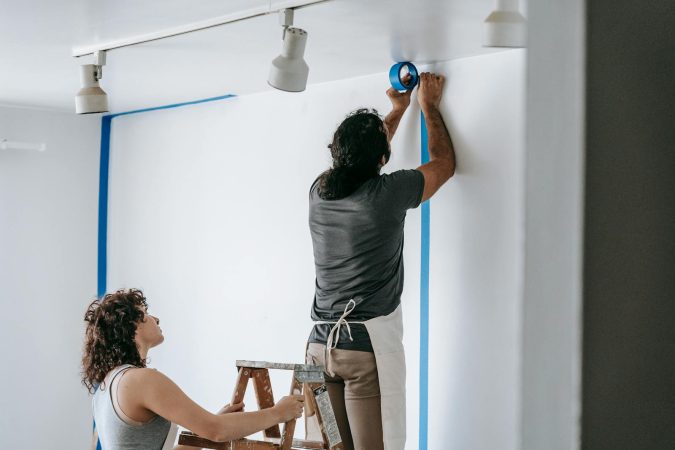
The tape gun screams across the top of the box and I'm already labeling it wrong. I write "kitchen" and then cross it out because half of what's inside came from the bedroom shelf, and the other half doesn't belong to any room in the next apartment because the next apartment doesn't have the same rooms. This is the fifth time I've done this. Fifth country, fifth set of boxes, fifth round of discovering that the stuff I can't figure out how to pack isn't stuff at all. It's the version of myself that only made sense here.
I'm taping shut the Lisbon chapter now, and somewhere between wrapping glasses in newspaper and deciding which books aren't worth the shipping cost, I can see the pattern clearly for the first time. Each move didn't just relocate me. It archived a self. The woman who baked bread on Sunday mornings in this apartment, who learned to say "com licença" with the right softness, who finally stopped flinching at silence — she's about to disappear. The next country will build a different one. It always does. I grew up split between São Paulo and Miami, never fully belonging to either, and that fracture gave me a permanent fluency in what it means to leave a place before you're done becoming who it was making you. The grief isn't for the apartment or the coffee shop or the view. The grief is for an interrupted self.
The conventional wisdom about moving is wrong
Most advice about relocation treats it as a logistics problem. Pack well. Make friends fast. Find your new grocery store, your new gym, your new route to work. The assumption is that you are a stable self being transported between containers, and adjustment is just a matter of learning the new container's layout.
But research on residential mobility in social psychology tells a different story. Variability in place stability significantly influences identity, social relationships, and wellbeing. It's not just that your address changes. Your sense of who you are shifts with it, because identity isn't formed in isolation. It's formed in relationship to specific people, specific rhythms, specific expectations a place holds for you.
Every city teaches you a different version of yourself. You're bolder in one. Quieter in another. You cook more here. You read less there. You become someone's favorite person to call at 2 a.m. in Berlin, and then you leave Berlin, and that role evaporates. The person who filled it doesn't die, exactly. But she stops being practiced. She atrophies.
The counterargument worth taking seriously is that this kind of mobility builds resilience and adaptability. People who move frequently develop what researchers call higher relational mobility, meaning they get skilled at forming new connections quickly. Studies show that higher levels of mobility can even reduce group-biased behavior, diminishing ethnocentrism and intergroup hostility. Serial movers tend to be more open, more flexible, more comfortable with difference. But I think we overvalue that flexibility because it's visible and legible, while the thing it costs — the slow, deep work of becoming someone in one place long enough to find out who that person actually is — is invisible until it's gone.
Grief without a funeral
When someone dies, we have rituals. We gather. We name the loss. When you leave a country, people throw you a going-away party and tell you to keep in touch. The loss is real but unstructured, and because everyone assumes you chose it (you did, mostly), the grief feels illegitimate. You're not allowed to mourn a life you voluntarily left.
Attachment theory helps explain why this hits so hard. Bowlby and Ainsworth proposed that our need to remain connected isn't just about people. It's a survival-oriented instinct regulated by the attachment system. Grief theorists have described grief as involving the loss of what they call the 'assumptive world' - the disruption of the assumptions and beliefs that guide our everyday life. That definition doesn't require a death certificate. It requires the destruction of a reality you had organized your life around.
When you leave a place after two or three years, you've built an assumptive world there. You know which barista remembers your order. You know the shortcut through the park. You know who to text when something funny happens. All of that dissolves, and what replaces it is a blank page that feels like freedom for the first three weeks and then feels like vertigo.
The literature on ecological grief extends this further. Psychologists studying ecological grief have documented how people mourn landscapes, environments, and places that have changed or been lost. The concept was originally applied to climate-related loss, but its mechanism maps cleanly onto the experience of serial relocation. You grieve the physical world that held a version of you in place.
And the version matters. Because you don't just miss the city. You miss the self that city was building.
The third-culture accumulation
There's a well-studied phenomenon called the Third Culture Kid, or TCK, referring to people who spend significant formative years in cultures different from their parents' nationality. Research on TCKs documents a pattern: global mobility produces individuals who are culturally intelligent and socially adaptable, but who often struggle with a persistent sense of rootlessness and difficulty answering the question "Where are you from?"
I know that question well. Growing up between two countries, two languages, two families with fundamentally different ideas about what "enough" looked like, I learned early that belonging was always partial. My Brazilian family celebrated abundance and sensory pleasure. My American side valued efficiency. I was always slightly wrong for the room I was in.
What TCK research reveals is that this isn't a personality quirk. It's a structural outcome. When you move through multiple cultures during identity formation, you develop what researchers call a "third culture," a personal blend that doesn't fully match any of the places you've lived. It's yours alone. And it can be profoundly lonely, because the suspicion that everyone knows your personality but nobody knows your mind becomes a permanent condition rather than a passing feeling.
The selves you leave behind
Adults who relocate repeatedly in their twenties and thirties develop a similar pattern to TCKs, even if they grew up in one place. Each move adds a cultural layer, each layer contains a self, and each self gets archived when the next country begins. The Bangkok version of you who woke up early and ran along the river. The Barcelona version who learned to eat dinner at 10 p.m. and stopped apologizing for being loud. The Nairobi version who finally felt comfortable being the only person in the room who looked like her.
Each of these isn't a costume you put on and took off. Each was a genuine developmental direction, a path your personality was walking down. And the move cut it short.
Research on identity and belonging in cross-cultural contexts describes an ongoing process of renegotiating identity questions that comes from living between cultures. The negotiation never ends. It just gets more layered with each move, more voices at the internal table, more drafts of a self that never reached a final version.
What the infrastructure metaphor gets right
There's a concept in infrastructure management that accidentally describes this phenomenon with uncomfortable accuracy. People who move constantly face a structural problem similar to buildings whose documentation systems fragment across ownership changes and renovations. You endure. Your body carries forward. But the documentation of who you were, the relationships, the habits, the social roles that defined you in each place, fragments across transitions. You're the building that outlasted its own records.
And just like a building whose renovation history has been lost, you start to feel uncertain about your own interior. Which walls are load-bearing? Which were added in the remodel? You genuinely forget whether you always loved hiking or only started in Chile. Whether your political views shifted in London or were already shifting before.
The friendship question
Serial relocation makes the loneliness of your thirties exponentially worse. The normal difficulty of maintaining friendships without structural proximity gets multiplied across time zones and languages. You don't just lose the ease of bumping into someone at the same bar. You lose the shared context that made the friendship legible.
Your Santiago friends don't know your Lisbon references. Your Lisbon friends have never met the person you were in Santiago. Nobody holds the full picture. And so you become the curator of your own story, constantly translating between chapters that your audience hasn't read.
This is exhausting. It's also lonely in a way that's hard to explain to people who've stayed put, because from the outside, your life looks full. You've been everywhere. You know everyone. The Instagram version is enviable. The lived version is that you're carrying five half-finished friendships in five different emotional currencies, and the conversion rate is brutal.
So what do you do with interrupted selves?
Attachment-informed grief therapy emphasizes that healthy grief involves psychological flexibility - the ability to move between engagement with loss and engagement with new responsibilities and developing new identities. The key phrase is psychological flexibility. Not resolution. Not closure. Flexibility.
For serial movers, this means something specific: stop trying to integrate every version of yourself into one coherent narrative. You don't have to reconcile Mexico City you with Amsterdam you. They can coexist without being synthesized into a brand.
Some practical things I've seen work, drawn from conversations and my own split-geography upbringing:
Name the selves. Give each era a shape in your mind. Not a judgment. Just an acknowledgment that the person you were in that place was real and mattered, even though she didn't get to finish what she started.
Keep one practice from each place. The bread-baking from Lisbon. The morning run from Bangkok. A physical habit that carries a former self forward into the current life. Not as nostalgia. As continuity.
Stop performing rootlessness as identity. "I've lived everywhere" is a fact, not a personality. The interesting question isn't where you've been. It's which version of yourself you miss most, and what she was trying to become.
Grieve out loud. Tell someone you're sad about leaving, not the place, but the person you were there. Most people haven't heard relocation grief framed this way. Naming it changes how it sits in your body.
Let one place hold you longer than feels comfortable. The instinct after years of movement is to leave before the staying gets hard. Resist it at least once. Not because permanence is the answer, but because some selves need more than two years to finish what they're building.
The person you were becoming
I think about my father's apartment in São Paulo sometimes. The version of me that existed there, the one who spoke Portuguese with a slight American accent and ate pão de queijo standing at the kitchen counter, she's not gone exactly. But she's suspended. Preserved in a context I can visit but no longer live inside.
That's the honest geography of constant movement. Not a world map with pins in it. A series of half-finished portraits, each one accurate, each one incomplete.
The grief isn't that you left. The grief is that you were becoming someone there, and now you'll never know who she would have been if she'd stayed. And the longer you live this way, the more selves accumulate — each one vivid, each one cut short, each one claiming to be the real you. You can carry them all. You just can't inhabit any of them. You stand in the new apartment, in the new city, running your hand along an unfamiliar wall, and you feel every version of yourself watching from somewhere behind you, waiting to see who you'll try to become this time.