A designer in the sustainability industry confronts how perfectionism disguised as purpose became a slow form of self-erasure. Her reckoning begins not with rest, but with uncomfortable truths about care work and whose needs actually matter.

Add VegOut to your Google News feed. 
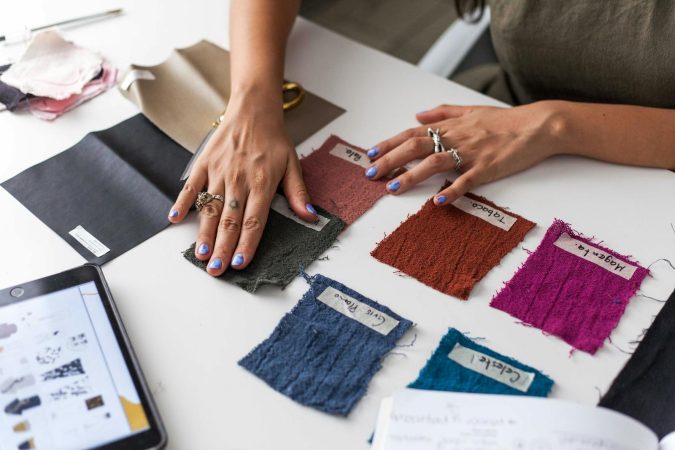
That was the last lie I told in my twenties. My roommate had asked if I was okay, and I'd said I was fine — standing in my Brooklyn apartment with a box half-packed, holding a piece of deadstock linen like it was a thing that could explain the last three years of my life. A stack of mood boards from CollectionDesign sat on top of my winter boots — swatches of organic cotton, dye samples from a cooperative in Oaxaca, a color palette I'd named Terracotta Honesty. The lie wasn't dramatic. It was reflexive. And that's exactly what made it worth examining.
The conventional wisdom about burnout in sustainability spaces goes something like this: you cared too much, you gave too much, and now you need to rest. Take a bath. Light a candle. The system chewed you up. But the counterargument worth taking seriously — the one I had to sit with for months before I could say it out loud — is that sometimes the system didn't chew you up. Sometimes you fed yourself to it willingly, because disappearing into a cause felt easier than building a self.
That distinction matters. It changed everything for me.
The architecture of self-erasure
I spent three years at a sustainable fashion startup in Brooklyn doing design and supply chain work. The company failed when the founders clashed over profit versus impact — a story so common in this space it barely registers as news. But the failure I'm talking about here isn't the company's. It's mine. Specifically, the way I built an identity so fused with my output that when the output stopped, I couldn't find the person underneath.
Research suggests that self-esteem trajectories shape mental health across different life stages. Studies have shown that self-esteem during early adolescence can predict depressive symptoms later in life, with motivational and social factors playing a mediating role. I read that and thought about how early I learned to tie my worth to what I made for other people. Environmental design school trained me to think in systems. It did not train me to notice that I'd become a system too — one optimized for external validation and entirely neglectful of its own maintenance.
I designed capsule collections with circular supply chains. I mapped textile waste streams. I could tell you the water footprint of a single cotton t-shirt down to the liter. I could not tell you what I wanted for dinner or whether the person I was dating actually liked me or just liked the idea of me.

My father, who is an architect in São Paulo, builds things that outlast him. Growing up watching him draft and redraft, I absorbed an unspoken lesson: the best thing you can make is something that serves others long after you've left the room. It's a beautiful idea. It's also, if you're not careful, a blueprint for self-abandonment.
When purpose becomes a hiding place
Here's what I've learned about people who orient their entire lives around making the world better: some of us are genuinely called to service. And some of us discovered that caring about the planet is a socially acceptable way to avoid caring about ourselves. The two aren't mutually exclusive. They coexisted in me for years.
Studies suggest that outward success can feel deeply unfulfilling when it's disconnected from an authentic sense of identity. The question isn't whether sustainability work is meaningful — of course it is. The question is whether I was using that meaning as a shield. I picked emotionally unavailable partners and then told myself the work was more important than the relationship. I skipped meals during production deadlines and called it dedication. I ignored a creeping numbness that settled into my chest somewhere around year two and called it focus. Every act of self-neglect was repackaged as sacrifice for the mission.
And the mission was real. That's the tricky part. The Oaxacan dye cooperative was real. The women who benefited from fair wages were real. The fact that I was slowly hollowing myself out to fund this beautiful thing — that was real too. Both truths existed at the same time. The hardest part of burnout recovery isn't rest — it's figuring out which part of your identity got welded to your productivity and prying them apart with your bare hands.
The economics of self-sacrifice
I want to be honest about the structural dimension here, because blaming myself entirely would be just another form of disappearing — this time into guilt instead of purpose.
The sustainability industry has a self-sacrifice problem, and it's not accidental. Mission-driven organizations routinely underpay workers, expecting passion to close the gap. Young designers and activists absorb the message that caring about money or boundaries makes you less committed. The entire ecosystem rewards depletion. When CollectionDesign was hemorrhaging cash, I took a pay cut before anyone asked me to. I volunteered my weekends. I stopped seeing friends. And I was praised for all of it.
The United Nations recognizes mental health as a universal human right and an essential foundation of human development — yet millions remain without access to the support they need. That gap isn't just about geography or income. It's about culture too. In cause-driven communities, seeking help can feel like admitting your commitment isn't enough. Like your love for the planet should sustain you. Like needing therapy is a failure of values.
I believed that for a long time. I believed it while I was losing weight I couldn't afford to lose. I believed it while lying awake at 3 a.m. running inventory numbers in my head. I believed it right up until the company folded and I was left standing in an apartment full of mood boards with no idea who I was outside of what I'd built.
What honesty actually looked like
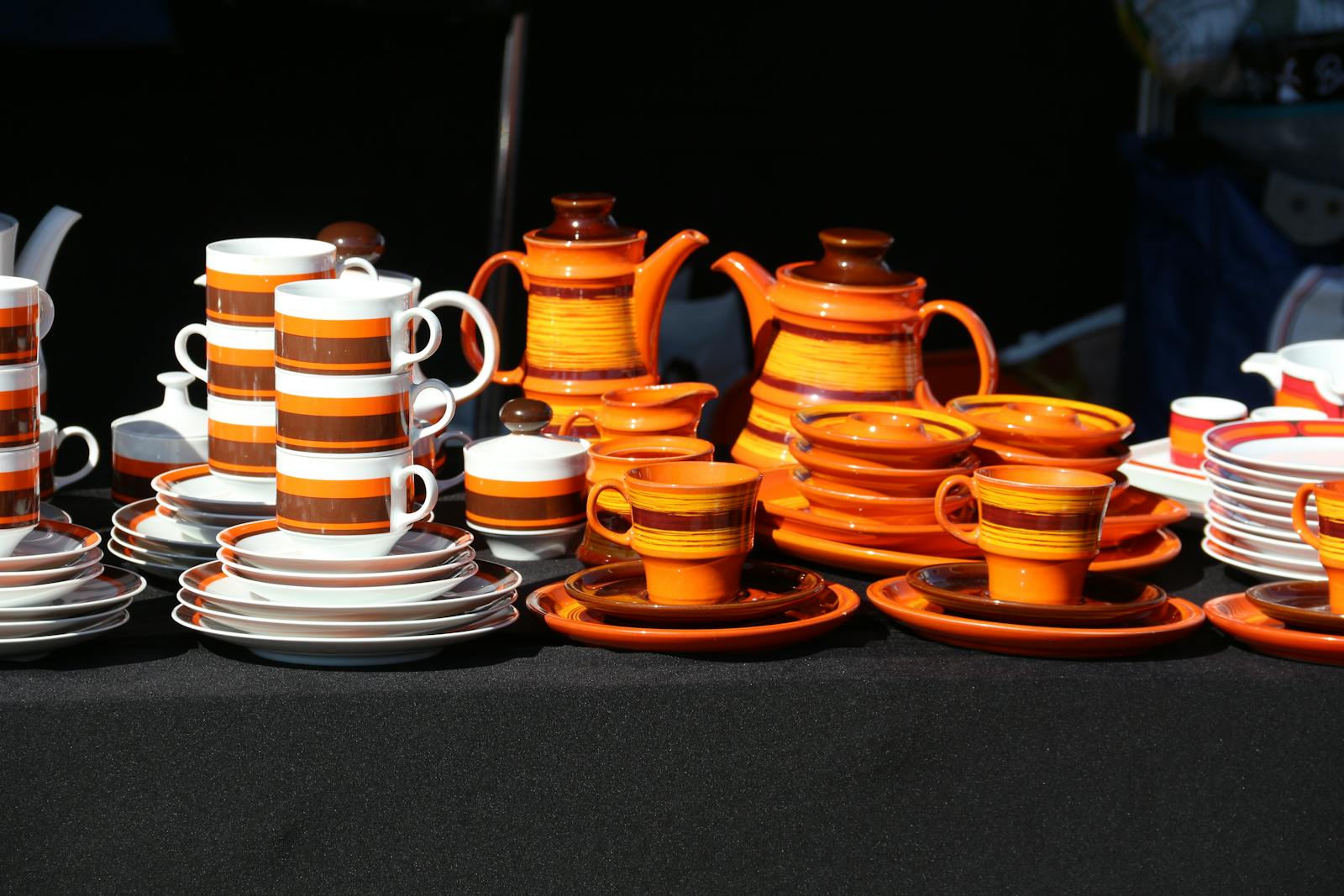
The first honest act wasn't dramatic. There was no epiphany on a mountaintop. I was at a flea market in Brooklyn — my usual weekend ritual — holding a ceramic mug made by someone who clearly loved making ceramic mugs, and I thought: when was the last time I made something just because I wanted to? Not for a brand. Not for a supply chain report. Not to prove I was the kind of person who cares.
I couldn't remember.
That was the crack in the wall. From there, honesty came in small, unglamorous increments. I told a friend I'd been pretending to be okay. I admitted to my therapist that I'd chosen my last three relationships specifically because they wouldn't demand emotional availability from me — which meant I never had to be present in my own life. I said out loud, for the first time, that I was exhausted in a way that sleep couldn't fix.
Research at UT Austin has found that community-based mental health programs can significantly reduce depression and anxiety symptoms in participants, with many no longer meeting clinical thresholds after intervention. One of the researchers, Gabriela Livas, noted the importance of understanding the lived experience of each particular person. The program worked partly because community health workers shared their own experiences within professional boundaries — because vulnerability, modeled honestly, gave others permission to be vulnerable too.
I think about that a lot. How the most sustainable thing I've ever done wasn't sourcing organic cotton or mapping waste streams. It was letting someone see me without the mission statement in front of my face.
Sustainability starts with not destroying yourself
I still wear the black leather jacket I bought at 19. People in sustainability circles sometimes raise an eyebrow at that. But I've always believed sustainability means keeping what you have, not performing purity by buying the next green thing. That jacket has outlasted three apartments, two relationships, and one failed startup. It's the most sustainable garment I own because I actually kept it.
The same principle applies to the self. You can't sustain what you won't maintain. You can't design systems of care for the planet while running your own body and mind like a disposable resource. That's not dedication. That's a supply chain with a missing link.
Recent research from Swansea compared different wellbeing-focused interventions and found that the modality matters less than the consistency — that showing up for yourself in some form, regularly, is what moves the needle. Exercise, nature exposure, mindfulness — all effective, as long as you actually do them instead of designing a perfect wellness protocol and then ignoring it because you're too busy saving the world.
I recognize myself in that sentence. I designed beautiful wellness routines for other people. I built product lines around self-care. I never sat still long enough to use any of it.
Turning 30 with my eyes open
I turn 30 this year. The number doesn't scare me. What scares me is the version of 30 I was heading toward — the one where I'd started another venture, poured myself into it completely, and woken up at 35 wondering where a decade went. There's an emptiness that lives inside certain kinds of success, the kind where the life looks right from every angle except the one you see from inside it.
I don't have a neat resolution. I'm not going to tell you I've figured it out, because that would be the same performance in a different outfit. What I have is a practice. I check in with myself before I check in with a project. I eat meals at a table instead of over a cutting board in a sample room. I'm learning to date people who are actually present, which means I have to be present too. Terrifying. Worth it.
I still care about sustainable design. I still believe in circular supply chains and fair wages and the quiet power of a well-made garment. But I've stopped believing that caring about those things exempts me from caring about myself. The two were never supposed to be in competition.
The most radical thing I did in my twenties wasn't building a sustainable fashion brand. It was admitting, at the very end, that I'd been designing beautiful systems of care that had a person-shaped hole right in the middle.
The person was me.
And the first honest act of my thirties was simply saying: I've been here the whole time, curating a version of myself that was impossible to connect with. I'm done. I'd like to come back now.
Not as a brand. Not as a mission. Just as a person who wants to be in the room — fully, imperfectly, without a mood board to hide behind.
That's the design I'm working on now. It's the hardest thing I've ever made. It's also the only thing that's actually mine. And for the first time, I'm not drafting it for someone else's approval. There's no pitch deck, no investor update, no Instagram grid to arrange it on. It's just me, learning to inhabit my own life the way I used to inhabit a design brief — with attention, with intention, but this time with the understanding that the person doing the making also deserves to be made whole.
I kept that piece of deadstock linen, by the way. It's draped over the back of my desk chair now. Not because it means anything grand. But because it reminds me of the moment I stopped packing and started asking questions I should have asked years ago. It's not a mood board. It's not a swatch for a collection that will never exist. It's just a piece of fabric that was there when I finally told the truth.
And that's enough. That's more than enough.