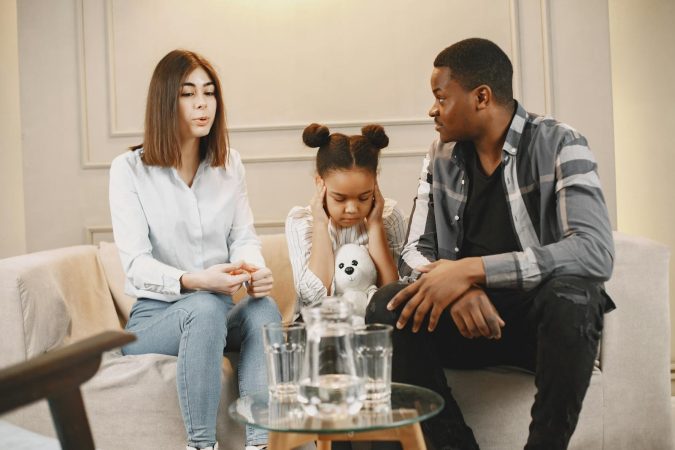
Being praised as "no trouble at all" teaches children that their needs are inconvenient, leading many adults to suppress their own desires rather than risk becoming a burden to others.
Every family has one: the child teachers loved, the one relatives praised at holidays, the one whose parents could say, with visible relief, "Oh, she's no trouble at all." That phrase was never neutral. It was a contract, signed before the child could read.
The conventional wisdom says this kind of praise is harmless, even positive. Who wouldn't want to raise a child that doesn't make life harder? The counterargument worth taking seriously is that most parents saying no trouble at all weren't being manipulative. They were exhausted. They were dealing with a difficult sibling, a crumbling marriage, financial stress, or their own unprocessed grief. The praise was genuine. But the effect on the child didn't depend on the parent's intent. It depended on what the child learned to do to keep earning it.
The invisible child's bargain
Family therapists have a term for this: the invisible child. In family role patterns, these children were often described as easy or trouble-free. They learned early not to ask for much, to handle things on their own, to stay out of the way during conflict. They spent time alone. They were sometimes forgotten at events. And they internalized something specific: that love had to be rationed carefully, and their portion would come only if they didn't ask for more.
This wasn't a single traumatic event. It was atmospheric. A sibling with behavioral problems consuming the household's emotional oxygen. A parent going through depression who couldn't absorb one more need. A family culture where stoicism was the highest virtue. The child who adapted by becoming low-maintenance wasn't broken. They were smart. They read the room, understood what was available, and adjusted their expectations downward.
The problem is that "downward" has no floor.

By the time these children reach adulthood, many have lost the ability to distinguish between not needing something and not allowing themselves to need it. The suppression has become so automatic that it doesn't feel like suppression anymore. It feels like identity. Many describe themselves as not being high-maintenance people, a framing that becomes a personality trait rather than a survival strategy.
What the praise was actually rewarding
Think about the specific language. Parents would use phrases like expressing that their child was no trouble, that they didn't need to worry about them, or that their child was so mature for their age. Each phrase contains an implicit instruction: keep doing this, and we'll keep approving of you. Stop doing this, and the approval disappears.
Research suggests that when attention felt scarce in a family, children learned that being low-maintenance was safer than risking rejection or burdening others. The family may have been overwhelmed by other children's needs, crises, or adult problems, leaving little emotional space for the quiet one. What got rewarded wasn't the child's contentment. It was the child's willingness to pretend they were content.
There's a related pattern worth naming. Children praised for being mature often find, decades later, that early competence borrows from a future that eventually asks to be repaid. Being trouble-free and being "so mature" are close cousins. Both involve a child performing adulthood before they have the internal resources to sustain it.
And both carry a hidden cost: the child learns that their worth is conditional on their usefulness, or at least on their lack of inconvenience.
How this shows up at 28, at 35, at 50
The adult version of the invisible child is easy to miss, because they've spent a lifetime making themselves easy to miss. They're the friend who always asks how you're doing but deflects when you ask them the same question. They're the partner who consistently defers to others' preferences so often that their own preferences become invisible. They're the employee who takes on extra work without complaint and then quietly burns out.
In romantic relationships, this pattern becomes particularly corrosive. Research on childhood patterns and adult relationships shows that early experiences of emotional neglect don't just create sadness. They shape the entire architecture of how someone attaches, asks, and trusts. A person who learned that their needs were optional will often gravitate toward partners who confirm that belief — not because they enjoy pain, but because emotional distance feels like home. They mistake unavailability for safety, and then narrate their own tolerance as strength rather than recognizing it as a wound wearing a costume. The unsettling possibility worth sitting with is that choosing emotionally distant partners might not reflect resilience at all. It might reflect a deep conviction that you don't deserve someone who actually shows up.
The gap between "I don't need anything" and "I can't ask for anything"
There's a meaningful difference between genuine independence and compulsive self-sufficiency. Genuine independence means you can take care of yourself and you can ask for help when you need it. Compulsive self-sufficiency means you've walled off the asking part so completely that receiving care from others feels physically uncomfortable.
Many adults who grew up as the invisible child deflect offers of help, minimize their struggles, and tell others they don't need to help them. A helpful starting point is simple but difficult: notice when you deflect. Practice saying "thank you" instead of waving the gesture away. Ask for something small from someone safe and then pay attention to what happens in your body. That last part matters. Because for many people who grew up as the easy child, receiving care triggers a genuine nervous system response. It can feel like danger. Like exposure. Like the moment when someone might realize you have needs and decide you're too much after all.
Nobody taught you to feel that way on purpose.
People who've spent years managing everyone else's emotional needs at the expense of their own often lose access to their own desires entirely. Not just big desires. Small ones. What do you want for dinner? Where do you want to sit? What movie do you actually want to watch? If you've spent thirty years defaulting to letting others choose, you might genuinely not know anymore. The preference muscle has atrophied.
The family system that made it logical
It would be easy to frame this as a story about bad parents. It's more accurate, and more useful, to see it as a story about families under pressure and the roles children take on to keep the system functioning.
Research has found that a significant number of adults are estranged from a family member. Behind each of those numbers is a history of roles that calcified over time, where one child became the problem, another became the caretaker, and another became invisible. These weren't assignments anyone chose deliberately. They emerged from the family's particular pressures and stayed because nobody questioned them.
As family historian Stephanie Coontz has observed, for most of history, family relationships were based on mutual obligations rather than mutual understanding. The idea that a family member could be faulted for failing to affirm someone's emotional experience would have been incomprehensible to earlier generations. This doesn't make those earlier families healthier. It just means our current expectations for family life are historically unusual, and the gap between those expectations and what our parents could actually deliver is where a lot of this pain lives.

Parents who praised a child for being trouble-free often genuinely believed they were saying something kind. Some were doing the best they could with limited emotional bandwidth. Clinical psychologist Dr. Jeffrey Bernstein notes that a common challenge is parents who fail to acknowledge that their children grew up, continuing to relate to them through outdated dynamics. The "easy" child may remain cast as easy long after they've developed complex adult needs that deserve complex adult attention.
What recovery actually looks like
Recovery from being the easy child doesn't look dramatic. It looks small and awkward and mundane. It looks like telling a waiter that your order came out wrong instead of eating it anyway. It looks like texting a friend that you're having a hard day without immediately reassuring them that you're fine. It looks like sitting with the discomfort of someone doing something for you and not rushing to reciprocate.
One of the signs that children were developing people-pleasing patterns is when their kindness becomes performance rather than choice. The same is true in reverse during recovery: the goal isn't to become demanding or difficult. The goal is to make asking a choice rather than an impossibility.
Therapists suggest starting with low-stakes situations. Share one opinion in a conversation. Express a preference about where to eat. Contribute an idea in a meeting without waiting to be asked. Notice that the catastrophic reaction you expect almost never arrives. Most people respond neutrally. Some respond warmly. The punishment you've been bracing for since childhood simply doesn't come.
That absence of punishment can itself feel disorienting. If no one is upset that you have needs, then what were you protecting yourself from all those years? The answer is: something real, but something that's no longer happening. The threat was genuine when you were seven and dependent. It's a memory now, even if your body hasn't caught up.
The quiet work of becoming visible
I think about my mother Carmen sometimes when I write about these patterns. She grew up in a large Cuban family where there was always someone louder, someone more urgent, someone whose crisis took precedence. She learned to be easy. And then she spent decades unlearning it, teaching herself to say what she wanted, to take up space in rooms that hadn't expected her to, to cook exactly what she felt like cooking even if nobody asked for it. When I visit her in Miami now and we stand together in her kitchen, she'll hand me a spoon and ask me to taste what she's cooking and give feedback, showing me what it looks like to trust your own desires enough to share them.
But here's the thing I keep circling back to, the thing that makes this harder than any recovery narrative wants to admit: my mother spent decades doing that work, and she still hesitates. Still catches herself mid-sentence, still edits her wants down before voicing them. The pattern doesn't get erased. It gets managed. And managing it requires you to accept something deeply uncomfortable — that the child who learned to be no trouble at all didn't just develop a bad habit. They developed a self. The quiet, accommodating person you became isn't a mask over some truer, louder version of you waiting to emerge. It's who you actually are now. Recovery doesn't mean finding the person you would have been. That person doesn't exist. It means building someone new from materials that were shaped, permanently, by what you survived.
So the question isn't whether you can learn to ask for what you need. It's whether you can tolerate becoming someone your family wouldn't recognize — and whether the version of love you were raised on will let you.