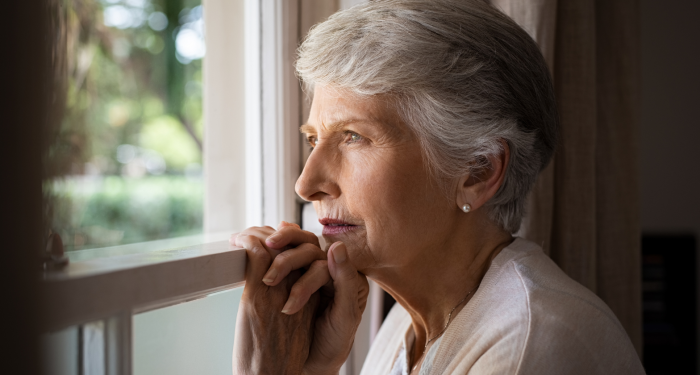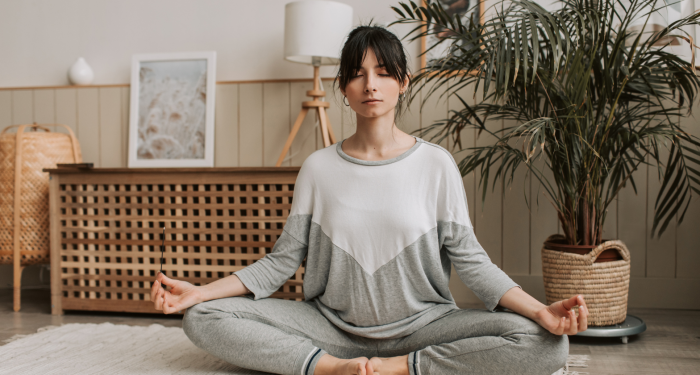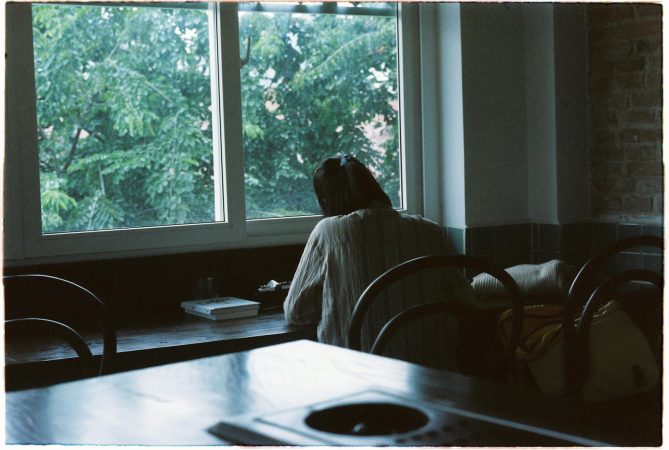
Someone truly comfortable alone doesn't perform their solitude for others—they simply exist in it without needing the world to witness or validate their choice to be by themselves.

Add VegOut to your Google News feed. 
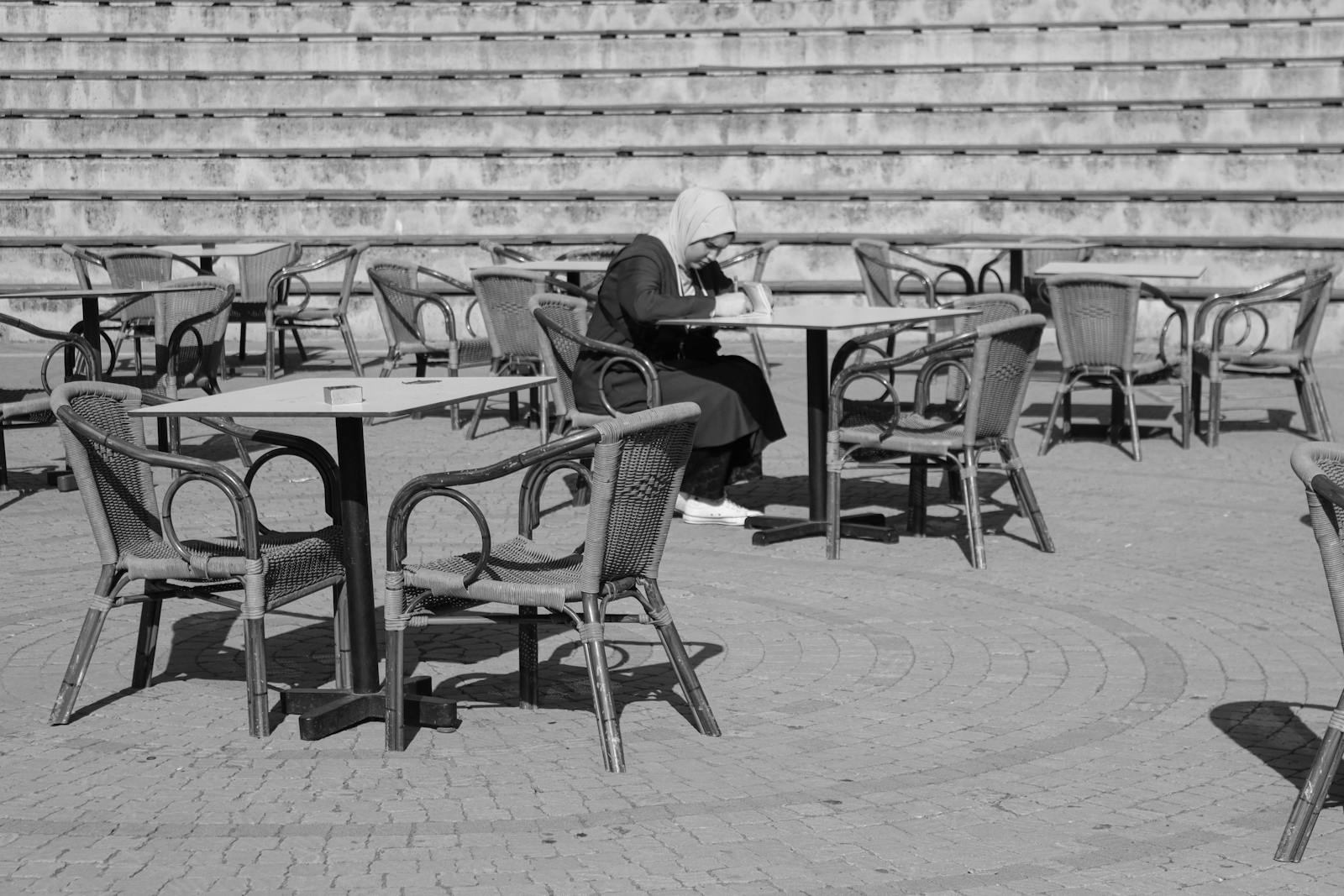
Last spring in Lisbon, I watched a woman sit alone at a café in Alfama for close to two hours. She had a book, a glass of something golden, and no phone on the table. People walked past. She didn't look up to check if anyone noticed her. She didn't perform the aloneness. She just existed in it, like someone settling into a chair that fit her body exactly. I remember thinking: that's what it looks like when solitude isn't a statement.
The cultural read on spending time alone has shifted dramatically in the last few years. Where aloneness once triggered concern (what's wrong with them?), it now triggers applause (they're so self-sufficient!). Both reactions miss the point. The conventional wisdom says that someone who's comfortable alone has "done the work," has reached some plateau of emotional evolution. But comfort with solitude can also be a fortress. A very well-decorated fortress, but a fortress nonetheless. The counterargument worth taking seriously: not everyone who looks peaceful alone actually is.
So how do you tell the difference? Research suggests that solitude falls on a spectrum, and that less intense forms of it (reading in a café, listening to music on a commute) tend to be more restorative than deep isolation. The implication is that healthy solitude doesn't usually look like disappearing. It looks like someone who can be alone without needing to be unreachable.
What follows are nine markers I've noticed, in others and sometimes in myself, that separate genuine ease with aloneness from its convincing understudy.
1. They don't narrate their solitude
People with a genuinely healthy relationship with being alone rarely talk about how much they love being alone. The identity isn't the point. The experience is. When someone frequently announces their preference for solitude, often in contrast to others ("I just don't need people like most people do"), it's worth asking who the announcement is for.
A person at peace with aloneness treats it like breathing. Unremarkable. Just the thing they do.
2. They say yes to invitations they could easily decline
This one surprises people. The assumption is that someone skilled at being alone is someone who turns things down, who guards their calendar like a bouncer. But one key question for distinguishing healthy solitude from avoidance is whether you're choosing aloneness freely or using it to dodge discomfort.
People who are genuinely good at being alone can move fluidly between solitude and connection. They accept the dinner invitation. They go to the party even when staying home sounds easier. The ease with which they return to people tells you everything about how honestly they left.
People who are genuinely content on their own tend to maintain rich social lives precisely because they aren't clinging to anyone in them.
3. Their alone time has texture, not just absence
Healthy solitude is filled with something. Cooking a meal slowly. Walking a route they've walked fifty times and noticing the one new thing. Writing, reading, sitting with music that asks something of them. It's active, even when it looks still.
Avoidant aloneness, by contrast, tends to feel hollow. Scrolling without interest. Sleeping too much. Staying in because going out requires a version of yourself you don't have the energy to perform. There's no texture, just the flat hum of withdrawal.
My own test: I ask myself what I did with the time. If I can describe it with specificity (the walk down Abbot Kinney where the jasmine was almost unbearable, the chapter of the book that rearranged my thinking), it was real solitude. If the hours just evaporated and I can barely account for them, something else was going on.
4. They tolerate boredom without reaching for noise
Boredom is solitude's quality control test. People who are genuinely at home with themselves can sit in a quiet room and not immediately fill it. They don't panic at the gap between stimulations.
This is harder than it sounds. The instinct to reach for a phone, a podcast, background television, anything, is almost pre-conscious. Someone who can let the quiet stay quiet, even for twenty minutes, has a relationship with their own inner life that goes beyond tolerance.
5. They're curious about other people
This is the clearest dividing line. People hiding from connection tend to lose interest in others. Their world narrows. They stop asking questions at dinner. They become observers of their own life rather than participants in shared ones.
People with healthy solitude practices are often the most curious people in the room. They've spent time with their own thoughts, so they're genuinely interested in someone else's. Solitude can function like medicine when it sends you back to the world restored rather than further retreated from it.
I've noticed this pattern for years: the best conversationalists I've met are people who spend a lot of time alone. Not because they've been rehearsing, but because they've been listening to themselves long enough to become genuinely interested in what someone else might say.
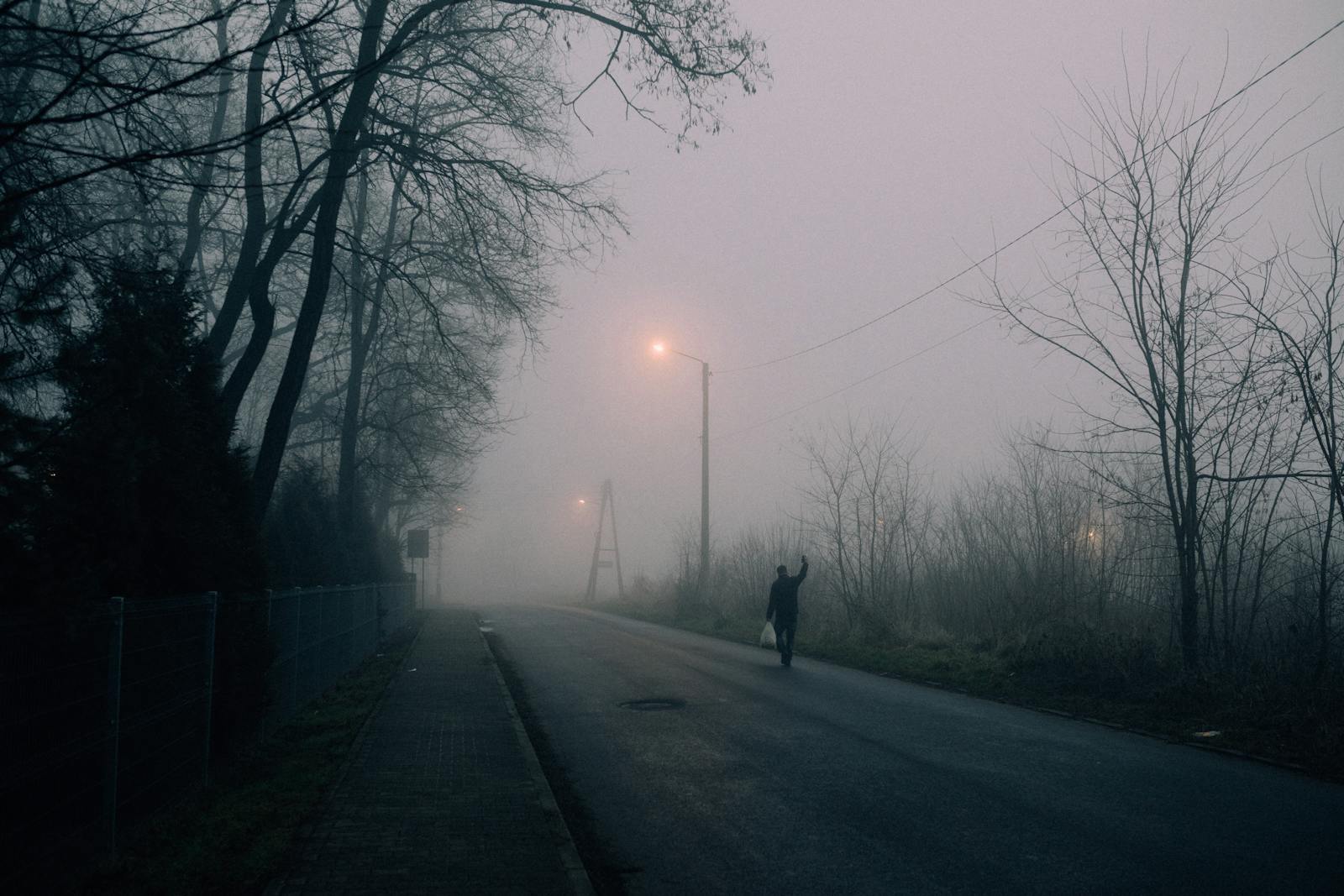
6. They don't romanticize loneliness
There's a genre of solitude content online that wraps isolation in gauze: the lone wolf aesthetic, the "I'm a storm and most people can't handle me" energy. It looks self-aware. It reads as cope.
Genuinely healthy aloneness isn't romantic. It's ordinary. The person experiencing it doesn't need it to mean anything grand. They aren't the protagonist of a French film. They're just someone who went grocery shopping alone and enjoyed it.
The moment solitude becomes an identity narrative (the introvert who's too deep for small talk, the lone traveler who doesn't need anyone), it starts serving a protective function. And protection, by definition, implies a threat you're not facing.
7. They can name what they're avoiding when they're avoiding it
Everyone uses alone time to hide sometimes. A difficult conversation, a social obligation that fills them with dread, an emotional reckoning they aren't ready for. The difference is self-awareness.
Someone with a healthy relationship with solitude can say, out loud or at least to themselves: "I'm not choosing to be alone right now. I'm choosing not to deal with that." The honesty doesn't always change the behavior. But it keeps the aloneness from calcifying into a habit they mistake for a preference.
Research reinforces this distinction. Studies suggest that solitude's benefits depend heavily on the degree and context of the aloneness, suggesting that self-knowledge about why you're alone matters as much as the fact that you are.
8. They maintain rituals that connect them to the world
I have a habit, wherever I am, of going to the same coffee shop three days in a row. Not to become a regular exactly, but because repetition builds a thread between you and a place. The barista starts to recognize you. You notice things you missed the first time. You become, in a small way, part of the texture of someone else's day.
People with healthy solitude practices tend to have rituals like this. A weekly call with someone they love. A morning walk through the same neighborhood. A standing dinner with friends they don't cancel lightly. These rituals aren't social obligations. They're anchors, small acts that keep solitude from drifting into isolation.
The distinction matters. Choosing a quiet Saturday isn't antisocial. But choosing every Saturday, and losing the thread of connection entirely, is a different pattern.
9. They don't need you to understand it
The final indicator is the quietest. Someone who has genuinely made peace with being alone doesn't need your approval of how they spend their time. They don't explain. They don't justify. They don't get defensive when someone suggests they should "get out more."
They might smile. They might shrug. They might change the subject with the relaxed confidence of someone who knows their own life from the inside.
Because healthy solitude isn't a position you argue. It's a state you inhabit. And the people who truly live in it have stopped trying to prove it exists.
The real question isn't whether you're alone
We've become fluent in the language of solitude as self-care. Entire aesthetics have been built around it. And much of that is genuinely good: the destigmatization of eating alone, traveling alone, spending a weekend doing absolutely nothing with no one. These are real freedoms that previous generations, especially women, often couldn't access without judgment.
But fluency in the language doesn't guarantee fluency in the practice. The question isn't whether you enjoy being alone. Almost everyone enjoys it sometimes. The question is whether your aloneness makes you more available to life or less. Whether it opens the aperture or narrows it.
The woman in Lisbon eventually stood up, left some coins on the table, and walked into the crowd on Rua Augusta. She didn't hesitate at the threshold between solitude and the world. She just stepped through it, as if both sides were hers.
That fluidity, the ease of moving between alone and together, is the thing. Not the solitude itself. The door it leaves open.