Peacekeepers learned early to manage their family's emotions by reading invisible signals, and that hypervigilance now shapes how they navigate every relationship—often without realizing why.
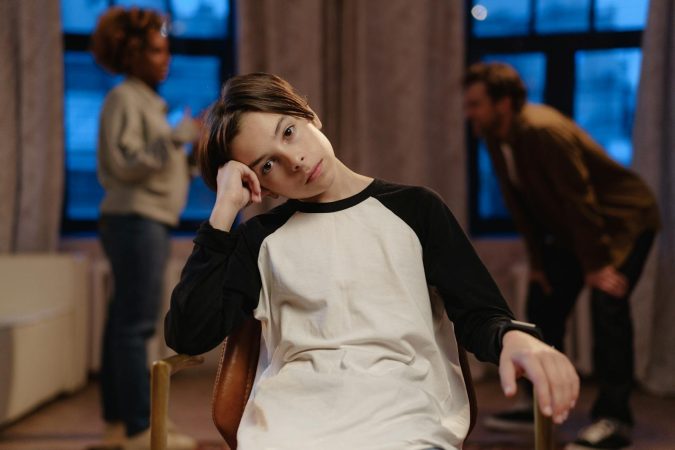
Most people assume the peacekeeper in a family was the gentle one, the soft-spoken kid who hated conflict. That assumption misses the full picture. The peacekeeper was often the most hypervigilant person in the room, the child who learned to read micro-shifts in tone the way other kids learned to read chapter books. They weren't avoiding conflict because they were timid. They were managing it because, at some point, they decided the emotional stability of the household depended on them.
Bowen family systems theory explains why that decision sticks. Psychiatrist Murray Bowen's work showed that families operate as emotional units, and individual members take on specific roles to manage the system's anxiety. The peacekeeper isn't expressing who they naturally are. They're performing a function the family system required. The role gets assigned through a mix of birth order, temperament, and circumstance, and once a child accepts it, they build their entire relational identity around it. That identity, formed at seven or nine or twelve, has a way of following a person into every friendship, every partnership, every work dynamic they touch for decades.
The strongest objection to this framing is that some people genuinely are more empathetic, more attuned to others. That's true. But there's a difference between someone who naturally feels compassion and someone who learned to feel everyone else's feelings because not doing so felt dangerous. The peacekeeper's skill set looks like emotional intelligence from the outside. From the inside, it often feels like a job they never applied for and can't quit.
Here are eight small signs that someone grew up carrying this role and still hasn't set it down.

1. They apologize before they've figured out what happened
The reflexive "I'm sorry" comes before the disagreement has even been defined. Before they've assessed whether they did something wrong, before they've heard the full story, they're already smoothing. This isn't politeness. It's a survival pattern. In their childhood home, the fastest way to defuse tension was to absorb blame, so they became experts at taking responsibility for things that weren't theirs to carry.
In adult relationships, this shows up as an almost physical discomfort with unresolved tension. They'd rather be wrong than let a silence stretch. A longitudinal study on attachment found that people who had more conflict with their primary caregivers in childhood tended to feel more insecure in their adult relationships. For the peacekeeper, that insecurity crystallizes into a specific behavior: apologize first, process later. The apology isn't about being wrong. It's about restoring equilibrium as fast as possible, because as a child, equilibrium meant safety.
2. They can tell you exactly what everyone else in the room is feeling but go blank when asked about themselves
Ask them how their partner is doing. Detailed answer. Ask how their coworker handled the layoffs. Thoughtful, specific observations. Ask how they feel about any of it. Pause. They might respond with something vague like saying they're fine or that they don't know.
This isn't emotional shallowness. It's the result of years spent with their attention pointed outward. The peacekeeper's childhood trained them to be exquisitely sensitive to other people's emotional states because those states determined the household climate. Their own feelings became background noise, something to be dealt with later, or not at all. Research on family communication patterns confirms what this looks like at scale: the way a family handles emotional expression shapes how individual members learn to identify and articulate their own internal experiences. In families that rewarded managing others' emotions over understanding your own, that hierarchy becomes the child's default operating system. They grow into adults who can map an entire room's emotional landscape but draw a blank on their own interior.
3. They rewrite their own needs as preferences
They might minimize their desires by saying they don't really need something, just that it would be nice. They might express complete flexibility about decisions like where to eat. They frequently downplay situations by insisting something isn't a big deal. The peacekeeper learned early that having strong needs created friction. So they softened everything. Needs became preferences. Preferences became suggestions. Suggestions became silence.
In a romantic relationship, this can look like extraordinary flexibility. Everyone loves the partner who's easy, who never makes a fuss. But underneath that ease is often someone who has genuinely lost track of what they want, because wanting things felt like a liability. I wrote recently about the difference between kindness and self-abandonment, and the peacekeeper lives at the center of that distinction. Their generosity is real. But it's built on a foundation of erased boundaries.
4. They physically tense up when two people they love disagree
Not in a casual way where they simply note the awkwardness. In a full-body activation way. Heart rate spikes. Jaw tightens. They might laugh nervously or try to redirect the conversation. When two friends start debating something at dinner, even playfully, the former peacekeeper's nervous system treats it like an emergency.
This reaction has roots that go deeper than habit. Childhood emotional regulation research shows that a child who spent years mediating family conflict develops a stress response calibrated specifically to interpersonal tension. The body learns that conflict between the people you depend on is a threat, and that lesson gets encoded at a level deeper than conscious thought. The prefrontal cortex might understand that two friends disagreeing about politics at a restaurant is harmless. But the nervous system, trained in a childhood kitchen where rising voices meant the night was about to go sideways, fires the same alarm bells it learned twenty years ago.
5. They're the first person everyone calls with a problem but the last person to call anyone with their own
Their phone is a confessional. Friends text them paragraphs at midnight. Coworkers pull them aside after meetings. Family members use them as a sounding board before making any major decision. And they handle all of it with grace, because this is the skill they've been practicing since childhood.
But when they're struggling? They go quiet. They don't want to burden anyone. They process alone, or they don't process at all. The same longitudinal attachment study from the University of Missouri helps explain why. Lead researcher Keely Dugan found that early dynamics with primary caregivers predicted future attachment styles across all primary relationships in participants' lives. The peacekeeper often develops what researchers call attachment avoidance in their own moments of vulnerability, not because they don't feel deeply, but because asking for support reverses a power dynamic they've never practiced. They're comfortable being needed. Being needy feels like a foreign language.
If you recognize this in someone close to you, they might be slowly withdrawing and hoping you'll notice before they have to explain why.

6. They over-explain simple decisions
They might launch into an elaborate explanation when canceling plans, detailing every reason and apologizing profusely for a simple schedule change. All that for canceling a casual coffee. The peacekeeper over-explains because in their family, simple decisions could trigger disproportionate reactions. Saying "no" without a detailed defense felt reckless.
So they build cases. They offer evidence. They pre-empt every possible objection before the other person has even processed the original statement. It's exhausting for them and often confusing for the people around them, who would have been perfectly fine with a simple statement about needing to reschedule.
7. They feel responsible for other people's emotional reactions
If a friend is upset after a conversation, the peacekeeper doesn't just feel empathy. They feel culpability. Even when they weren't involved. Even when the friend's mood has nothing to do with them. There's a persistent, low-grade belief that if someone around them is unhappy, they've failed at their job.
This is one of the most corrosive legacies of the peacekeeper role. Research on how childhood coping mechanisms persist into adulthood shows that adaptive behaviors formed in response to early relational stress don't just disappear when the original context changes. The child who believed they could prevent a parent's anger by being good enough becomes the adult who believes they can prevent a partner's sadness by being attentive enough. The goalpost never stops moving because the goal was never achievable in the first place.
8. They struggle to identify what a relationship looks like without a role to play
This might be the quietest sign and the most telling one. The peacekeeper knows how to be the mediator, the listener, the steady one, the person who holds space. What they don't always know is how to just be in a relationship without performing a function.
If the friend group is doing well, no drama, no crisis, the peacekeeper can feel oddly adrift. If the relationship is calm and stable, they might unconsciously create small problems to solve, because problem-solving is the only relational mode that feels familiar. They don't do this out of malice or manipulation. They do it because stillness, in their childhood, was never neutral. Stillness was the pause before the storm. So they stay busy fixing things, even when nothing is broken, because a relationship without a role to play feels like a relationship where they have no reason to be kept around. They confuse being useful with being loved. And when they stop being useful, a part of them braces for abandonment.
The role isn't permanent
Dugan's research offers something worth holding onto. She emphasized that adult attachment styles are not fixed. They can shift in response to later life events and even fluctuate month to month based on positive and negative relationship experiences. Research suggests that people can develop secure, healthy adult relationships even if their parental relationships were troubled.
That matters. The peacekeeper's story isn't a life sentence. But changing the pattern requires first seeing it clearly, recognizing the moments when you're managing a room instead of being in it, when you're editing your needs instead of stating them, when your body tightens at the first sign of someone else's displeasure.
Attachment-based therapy is one of the more effective approaches for people who recognize these patterns in themselves. It works by helping a person understand how their attachment style developed in childhood and then practice forming more secure connections in the present. It's not about blaming your parents or rewriting history. It's about understanding the logic of the system you grew up in so you can stop running that same operating system in every new relationship.
I think about this pattern sometimes in my own life. Growing up between two cities, two cultures, two households with different emotional vocabularies, I got very good at reading a room and adjusting. It looked like adaptability. A lot of it was. But some of it was a quiet fear that if I didn't make myself useful, if I didn't smooth the edges between my parents' different worlds, I'd lose my place in both.
The shift doesn't happen all at once. It happens the first time you let two friends argue without intervening. The first time you directly state your needs without hedging or softening the language. The first time you sit with someone's discomfort and don't make it your problem to solve.
It feels wrong at first. Like you're being selfish, or negligent, or cold. You're not. You're just learning what a relationship feels like when you're not working so hard to keep it intact.
That quiet, unperformed version of showing up might be the most honest thing the peacekeeper has ever done.
If You Were a Healing Herb, Which Would You Be?
Each herb holds a unique kind of magic — soothing, awakening, grounding, or clarifying.
This 9-question quiz reveals the healing plant that mirrors your energy right now and what it says about your natural rhythm.
✨ Instant results. Deeply insightful.