
People rarely update their perception of family members, even when transformative growth happens right in front of them. The gap between who you've actually become and the role your family still assigns you creates a quietly painful dynamic that persists for years.
Research on family systems consistently finds that the roles assigned in childhood tend to calcify. Once a family labels someone the "responsible one" or the "problem child" or the "sensitive one with the weird diet," that label persists for decades, even when the person underneath it has fundamentally changed. One study on family dynamics found that members resist updating their mental models of each other not out of cruelty but out of structural necessity. The roles function like load-bearing walls. Pulling one out threatens the whole architecture.
This rigidity hits especially hard in the plant-based community, where choosing to live by your values about food, animals, and the planet often gets dismissed as rebellion rather than recognized as maturity. Someone can spend a decade building a life around compassion and intentional living and still get introduced at every family barbecue as "the picky one." They handle the jokes about bacon with a calm smile, bring a stunning plant-based spread to Thanksgiving, and then get a call at midnight when someone's marriage is falling apart. Because somehow, without anyone acknowledging it, they became the most emotionally stable person in the room.
The conventional wisdom says that if you do the work, people will eventually see it. That personal growth is its own reward, and the people who love you will naturally adjust. But families operate on a different timeline than the rest of your life. The roles assigned in childhood function like structural supports that nobody wants to test. So families resist updating, not out of malice but out of self-preservation.
What follows are seven signs that someone has quietly become the most grounded person in their family while everyone around them keeps responding to a ghost.
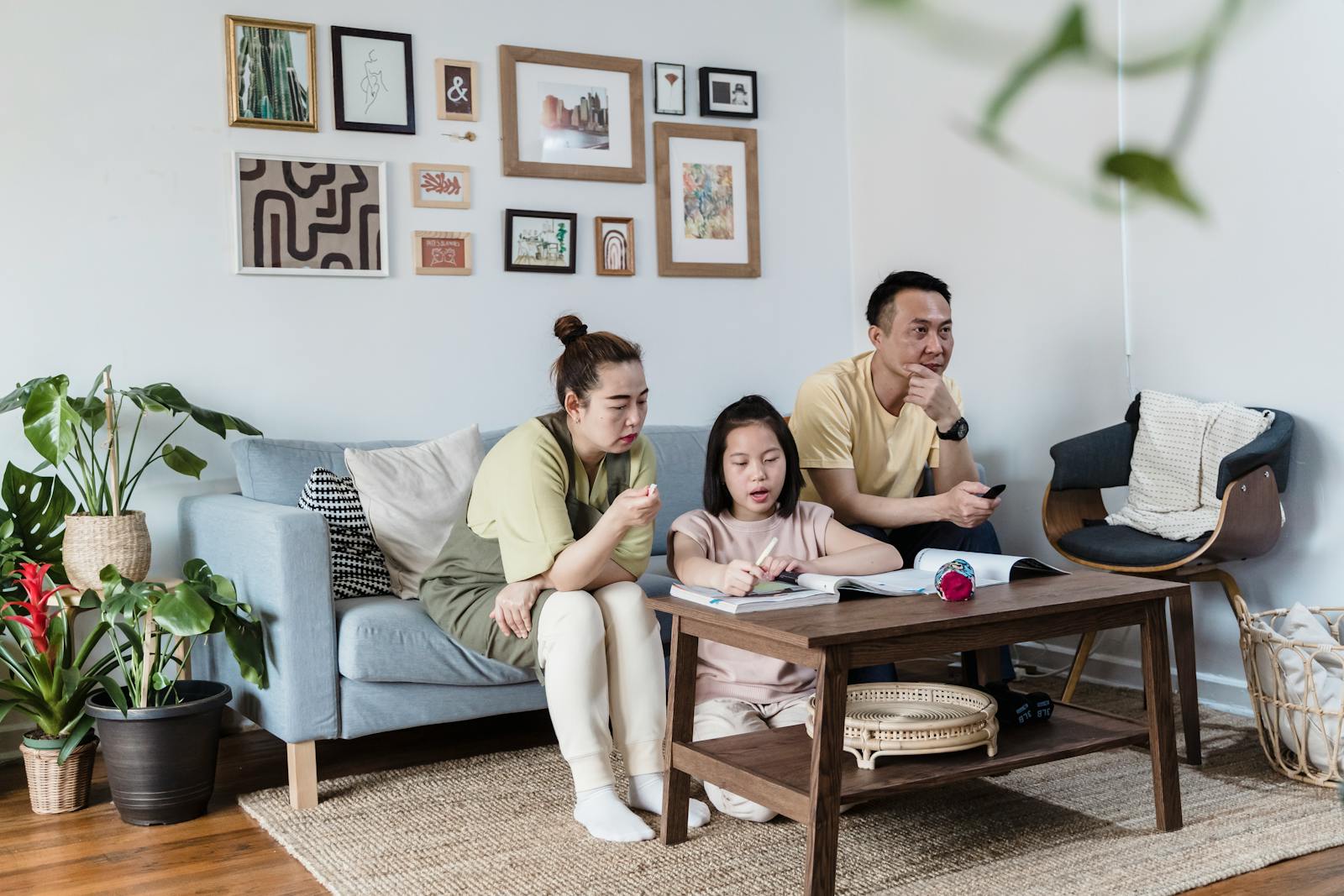
1. They've stopped defending themselves against outdated narratives
There's a specific kind of fatigue that comes from correcting a story about yourself for the twentieth time. The grounded person has stopped doing it. Not because they've given up, but because they've realized that the correction was never really for the other person. It was for their own sense of being seen.
If you've been plant-based for any length of time, you know this feeling intimately. The questions that aren't really questions. "But where do you get your protein?" The retelling of the time you accidentally ate something with dairy and got sick, as if it disproves your entire lifestyle. At some point, the grounded person stops re-litigating. Someone brings up the time they dropped out of school or dated someone terrible or "went through that vegan phase," and instead of launching into a rebuttal, they let it pass. They know the story. They also know it's not current.
This looks like passivity from the outside. Relatives might interpret silence as agreement. But it's actually the opposite: a deep, settled confidence that doesn't require external confirmation. Psychology research on genuine happiness shows that people who feel emotionally steady tend to recover from minor provocations quickly without spiraling. They don't ignore their feelings. They just choose where to spend them.
2. They're the one everyone calls during a crisis but nobody checks in on after
Pay attention to the family member whose phone rings when things fall apart. The one who talks a sibling through a panic attack at 11 p.m. or manages the logistics when a parent gets sick. That person didn't stumble into the role. They grew into a level of emotional regulation that the rest of the family now depends on, often without acknowledgment.
The tricky part: because this person was likely assigned a different role originally — the flaky one, the sensitive one, the youngest, the one who "cares too much about animals" — the family doesn't frame them as the stable center. They just use them as one. The calls come in, the calm gets borrowed, and at the next holiday dinner someone still makes the same old joke about how they can't get their life together.
Nobody thinks to reverse the current.
The most generous people in your life often have the hardest time receiving, and this dynamic is exactly where that pattern takes root. Giving becomes so tied to their sense of purpose that no one thinks to ask what they need in return.
3. They've quietly restructured their life around values, not performance
Families that assign roles often measure success in narrow, visible terms: income, titles, relationship status, home ownership. The grounded family member has usually stepped off that particular treadmill. They might live in a smaller apartment than their siblings. Drive an older car. Work a job that doesn't translate well into holiday small talk. Shop at farmers' markets instead of luxury stores. Spend their weekends volunteering at an animal sanctuary instead of posting vacation photos.
This is something the plant-based community understands on a structural level. Choosing to eat, shop, and live in alignment with your values rather than in alignment with what looks impressive is a radical act in a culture that equates consumption with success. The grounded person in a family isn't performing groundedness for an audience. They've simply reorganized their priorities around what actually works for their nervous system, their relationships, their daily sense of peace, and often their ethics about how they relate to the planet and other living beings.
The family rarely notices this because it doesn't announce itself. There's no promotion to celebrate, no big purchase to admire. Just a person who seems oddly content without any of the conventional proof.
4. They respond to family conflict with curiosity instead of reactivity
This is the one that confuses people the most. When a family argument erupts, the grounded person doesn't take sides, escalate, or withdraw entirely. They ask questions. They name what's actually happening beneath the surface tension. They might say something that acknowledges the deeper emotional issue, such as noting that the frustration seems to be about more than just the surface-level disagreement.
Anyone who's navigated being the only vegan at a family table has had to develop some version of this skill. When Uncle Dave waves a steak in your direction and says something about the "circle of life," the reactive response is to argue. The grounded response is to recognize that the provocation isn't really about food. It's about discomfort with someone who made a choice that implicitly challenges the family's norms. Research on cognitive biases in relationships points to the fundamental attribution error as a persistent problem. We assume other people's behavior reflects their character while excusing our own behavior as situational. The grounded family member has trained themselves to pause before making that leap. They consider context before assigning blame.
Family members who are still operating from old roles often find this unsettling. Curiosity in a system that runs on reactivity feels like betrayal. Family members may express frustration that feels like a demand for allegiance rather than genuine agreement.

5. They've built a life outside the family that the family doesn't fully understand
Friendships. A creative practice. A spiritual life. A community garden plot. A plant-based cooking collective. A circle of people who share their values about sustainability, compassion, and conscious living. The grounded family member has cultivated a world beyond the family system, and that world is where they recharge, reflect, and feel most like themselves.
This outside life often goes unmentioned at family gatherings because it doesn't fit the existing narrative. Nobody asks about the meditation retreat or the friend group that's become a chosen family or the community-supported agriculture share they split with neighbors. The questions are still about dating, career advancement, and when they plan to settle down. The grounded person answers politely and changes the subject, knowing that the life they've actually built wouldn't translate even if they tried to explain it.
Research on genuinely happy people consistently shows that meaningful conversations and close, trusted relationships matter far more than social status or external markers of success. Studies on adult development have followed participants for decades and found that the quality of close relationships was one of the strongest predictors of long-term well-being. The grounded person figured this out early. They just built it where the family wasn't looking.
6. They've stopped trying to fix the family system
This might be the hardest sign to spot because it looks like disengagement. The grounded person used to be the one sending articles about communication styles to the group chat. Suggesting family therapy. Trying to mediate between parents. Gently pointing out patterns that everyone else pretended not to see. Maybe they also used to be the one forwarding documentaries about factory farming, hoping someone — anyone — would watch.
At some point, they stopped. Not because they care less, but because they recognized a structural truth: you cannot single-handedly rewire a system that doesn't want to change. The energy they once spent trying to heal the family now goes toward maintaining their own emotional health and being available in ways that are actually useful. It's the same lesson many people in the plant-based community eventually learn about advocacy itself. Living your values consistently and showing up with compassion is more sustainable than burning out trying to convert everyone at the table.
This is where the difference between performing wellness and actually living it becomes visible. Performing wellness looks like constantly advocating for change. Living it looks like quietly building boundaries and showing up as a stable presence without needing the system to validate the effort.
The family might interpret this as coldness or lack of care about family relationships. The opposite is true. They care enough to stop participating in patterns that hurt everyone, including themselves.
7. They hold space for the family's version of them without internalizing it
This is the sign that separates growth from performance. The truly grounded person can sit at a table where they're still treated as the family screwup or the baby or the difficult one, or the one who "makes everything complicated" by asking what's in the sauce. They don't crumble. They also don't explode. They hold both realities simultaneously: the person their family sees and the person they know themselves to be.
That's an extraordinarily difficult skill. Most people, when confronted with a version of themselves that feels outdated or unfair, either fight it or absorb it. The grounded person does neither. They let the family's version exist in the room without granting it authority over their self-concept.
Psychology research on how respect shows up in relationships suggests it lives in the quieter moments, in how someone treats you when nothing is at stake. The grounded family member has learned to extend that kind of quiet respect to themselves. They don't need the family to catch up. They've already arrived.
The lag is the hardest part
Growing up between two cultures taught me something about this particular kind of invisibility. In São Paulo, I was the American kid. In Miami, I was the Brazilian one. Neither place fully updated its read on me, no matter how fluently I moved through each world. The lag between who you are and who people believe you to be can feel permanent if you let it define you.
It's the same lag that anyone who's made a values-driven lifestyle shift knows well. You've been plant-based for a decade, you've built a life rooted in sustainability and intention, and your mom still asks if you're "still doing that thing." The family system remembers the version of you that was easiest to categorize, and it holds on tight.
But here's the uncomfortable question most people avoid: Are you sure you're not doing the same thing to someone in your family? The grounded person in your life may have outgrown their role years ago. You might still be treating them like the person they were at nineteen. Not out of cruelty. Out of the same structural convenience that every family relies on. Think about who you call when things fall apart. Now think about the last time you asked that person how they were doing without needing something. If you can't remember, that silence is the answer. And the longer it goes unexamined, the more it costs the person holding everything together while you keep responding to a version of them that no longer exists.
What’s Your Plant-Powered Archetype?
Ever wonder what your everyday habits say about your deeper purpose—and how they ripple out to impact the planet?
This 90-second quiz reveals the plant-powered role you’re here to play, and the tiny shift that makes it even more powerful.
12 fun questions. Instant results. Surprisingly accurate.