A decade-long study reveals that astrocytes, long dismissed as mere support cells, play an active role in telling the brain when to stop eating — opening a potential new therapeutic target for obesity that could complement drugs like Ozempic.
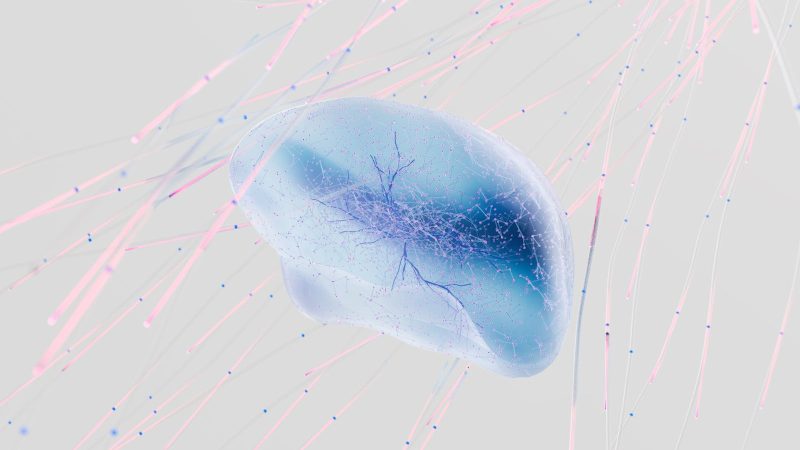
After a meal, when blood sugar rises, specialized cells lining a cavity deep in the brain detect the change and convert glucose into lactate. That lactate doesn't signal neurons directly. It hits star-shaped brain cells called astrocytes first. The astrocytes then relay the message to appetite-suppressing neurons, generating the sensation of fullness. A team of researchers has now mapped this entire chain for the first time, revealing that the cells long dismissed as passive support staff are active middlemen in deciding when you stop eating.
This matters because the standard model of appetite held that neurons ran the show. Astrocytes were background players: structural, metabolic, helpful, but fundamentally inert when it came to hunger and satiety. The new research says that picture was incomplete. An entire class of brain cells was overlooked in the quest to understand why people overeat.
Billions of dollars in obesity research, decades of clinical trials, and a worldwide epidemic that shows no signs of slowing. The field was building its understanding of appetite on a map that was missing a major landmark.
The strongest objection to get out of the way: this is still early-stage science, conducted primarily in animal models. Tanycytes and astrocytes exist in all mammals, which suggests the mechanism could apply to humans, but that translation hasn't been confirmed yet. What makes the study compelling despite that caveat is the specificity of the molecular pathway it maps and the fact that it points to a concrete, previously invisible piece of the appetite puzzle.
How the Signaling Chain Works
The pathway starts with tanycytes, specialized cells that line a fluid-filled cavity deep within the brain. Tanycytes monitor glucose levels in the cerebrospinal fluid. After a meal, when glucose rises, tanycytes process that sugar and convert it into lactate.
Here's where the old understanding breaks down. Scientists previously assumed that lactate from tanycytes communicated directly with neurons involved in appetite control. A straight line: tanycyte to neuron.
But research has found something different. The lactate doesn't go straight to neurons. It hits astrocytes first.
Astrocytes carry a receptor called HCAR1 that detects lactate. When lactate binds to HCAR1, the astrocytes wake up. They become activated and release glutamate, a chemical messenger that then signals appetite-suppressing POMC neurons. Those neurons generate the sensation of fullness.
That chain is worth spelling out again: glucose enters the brain, tanycytes convert it to lactate, astrocytes detect the lactate and fire off glutamate, and POMC neurons tell you to put the fork down.
In one particularly striking experiment, the scientists introduced glucose into a single tanycyte while observing nearby astrocytes. Even that localized change triggered activity in multiple surrounding astrocytes, demonstrating how one small glucose signal gets amplified through the network.
A whole relay system was operating in plain sight.
Why Astrocytes Matter More Than We Thought
The reclassification of astrocytes from passive support cells to active regulators of appetite is a bigger deal than it might sound. Brain science has been gradually expanding its understanding of glial cells (the non-neuron cells in the brain) for years, but appetite regulation was still thought to be firmly in neuron territory. I think about this every time I notice my own hunger shift mid-meal, that moment where something in your body quietly flips from "keep eating" to "you're done" and you don't consciously choose it. That flip, it turns out, involves cellular machinery nobody was looking at.
Research indicates that astrocytes, once thought of as just secondary support cells, are also participating in how our brains regulate how much we eat.
This is the kind of discovery that should prompt a reassessment of assumptions. If the neuron-centric model of appetite was missing an entire cellular intermediary, what else has that model gotten wrong? How many failed drug candidates targeted neuronal pathways while this astrocyte relay went unaddressed? How many clinical studies designed their interventions around an incomplete map of how the brain decides you've had enough to eat?
The cross-continental nature of collaborative research in this area speaks to the scope of what researchers are trying to demonstrate: a complete, previously invisible signaling chain operating right alongside the pathways neuroscience already knew about.
What This Means for Obesity Treatments
The discovery lands in a medical landscape that has been reshaped by GLP-1 receptor agonists like Ozempic and Mounjaro. Those drugs work by mimicking gut hormones that affect appetite through a different mechanism. They've been enormously effective for many patients, but they come with side effects, questions about long-term use, and the reality that they don't work equally well for everyone.
Scientists see the HCAR1 receptor on astrocytes as a potential new angle of attack. Not a replacement for existing approaches but an addition to the toolkit, one that targets a mechanism the field didn't even know existed until now.
This represents a different mechanism where researchers might be able to target astrocytes or specifically this HCAR1 receptor. Researchers suggest this could complement existing therapies like Ozempic.
That word "complement" matters. The current generation of weight-management drugs primarily targets gut-brain signaling. This new research identifies a separate, brain-internal pathway. If both pathways can be addressed, treatments could potentially become more effective or work for patients who don't respond well to GLP-1 drugs alone. The discovery essentially opens a door that researchers didn't know was there.
But there's a long road between identifying a receptor and developing a drug that safely targets it. The HCAR1 receptor sits on astrocytes throughout the brain, not just in appetite-related regions. Any therapeutic intervention would need to be precise enough to affect satiety signaling without causing unintended consequences elsewhere.
Why Willpower Was Never the Full Story
For a society that has spent decades framing overeating primarily as a failure of discipline, each new biological mechanism discovered makes that framing harder to defend. This discovery adds another layer. If the brain's fullness switch involves a cell type that wasn't even being studied in the context of appetite until recently, it's reasonable to wonder what else we've been missing.
The science keeps revealing systems that operate below conscious awareness, involving cell types that weren't even considered relevant a generation ago. You can't willpower your way through a signaling chain you didn't know existed. And you certainly can't blame someone for a broken relay system that the entire research establishment only just found.
This doesn't change what you should eat for dinner tonight. But it does shift the conversation about why some people struggle with feeling full and why willpower-based approaches to eating so often fail. The machinery governing satiety is more complex and more distributed than the old models accounted for. That complexity has real consequences for how we judge and treat people who struggle with their weight.
What Comes Next
The immediate next step for this research is confirming the pathway operates the same way in humans as it does in the animal models studied. The biological components are all present in human brains. Tanycytes and astrocytes are standard mammalian equipment. But confirming function, not just presence, requires a different kind of study.
If the pathway does hold up in humans, pharmaceutical interest will follow quickly. The HCAR1 receptor is a specific, identifiable target, which is exactly what drug development programs need to get started. And the appetite-management drug market has shown an enormous appetite (pun acknowledged) for new mechanisms of action.
Here's where I land on this, though. Understanding a mechanism and treating it are separated by years, sometimes decades. The history of obesity research is littered with elegant discoveries that never became therapies. We now know astrocytes matter for satiety. That's genuinely important. But the test isn't whether this finding is interesting. The test is whether it changes outcomes for the millions of people who need better options than what exists today. If this pathway can't be targeted with the kind of precision that avoids wrecking other astrocyte functions across the brain, it stays an academic insight. And academic insights, however brilliant, don't help someone whose body won't tell them they're full. The discovery deserves attention. It also deserves skepticism about how quickly attention turns into anything people can actually use.
If You Were a Healing Herb, Which Would You Be?
Each herb holds a unique kind of magic — soothing, awakening, grounding, or clarifying.
This 9-question quiz reveals the healing plant that mirrors your energy right now and what it says about your natural rhythm.
✨ Instant results. Deeply insightful.

Adam Kelton
Adam Kelton is a writer and culinary professional with deep experience in luxury food and beverage. He began his career in fine-dining restaurants and boutique hotels, training under seasoned chefs and learning classical European technique, menu development, and service precision. He later managed small kitchen teams, coordinated wine programs, and designed seasonal tasting menus that balanced creativity with consistency.
After more than a decade in hospitality, Adam transitioned into private-chef work and food consulting. His clients have included executives, wellness retreats, and lifestyle brands looking to develop flavor-forward, plant-focused menus. He has also advised on recipe testing, product launches, and brand storytelling for food and beverage startups.
At VegOut, Adam brings this experience to his writing on personal development, entrepreneurship, relationships, and food culture. He connects lessons from the kitchen with principles of growth, discipline, and self-mastery.
Outside of work, Adam enjoys strength training, exploring food scenes around the world, and reading nonfiction about psychology, leadership, and creativity. He believes that excellence in cooking and in life comes from attention to detail, curiosity, and consistent practice.
More Articles by Adam