In southeastern Ecuador, local residents trained as 'paraecologists' are documenting biodiversity and winning court cases against mining companies by leveraging the country's constitutional rights of nature.
Local residents in southeastern Ecuador are using species inventories and water samples to beat mining companies in court, and it's working because the country's legal system treats nature as a rights-bearing entity. The approach, built around a network of community members trained in ecological monitoring, known locally as paraecologists, is turning biodiversity data into legal ammunition in a region rich with copper deposits, endangered wildlife, and medicinal plants.
The conventional wisdom around environmental protection in resource-rich regions of Latin America tends to center on protest, international pressure campaigns, or government regulation. Locals show up, outsiders amplify, and everyone hopes a distant bureaucracy steps in. But what's happening in Ecuador's copper-laden mountains flips that script. The people living on the land are doing their own scientific fieldwork, and their findings are holding up as court-admissible evidence.
The strongest objection to this model is obvious: can community-collected data really stand up against the legal resources of mining operations? Apparently, yes. The track record is growing.
What a Paraecologist Actually Does
The term sounds clinical, but the work is hands-on and deeply local. Paraecologists are residents of communities in southeastern Ecuador who have been trained to conduct scientific documentation of biodiversity in their own territories. They catalog species. They take water samples. They record what lives where and in what condition.
This data collection isn't academic hobbyism. Every inventory, every sample vial, every recorded species serves a specific legal purpose. The data paraecologists collect is translated into evidence that carries weight in courts.
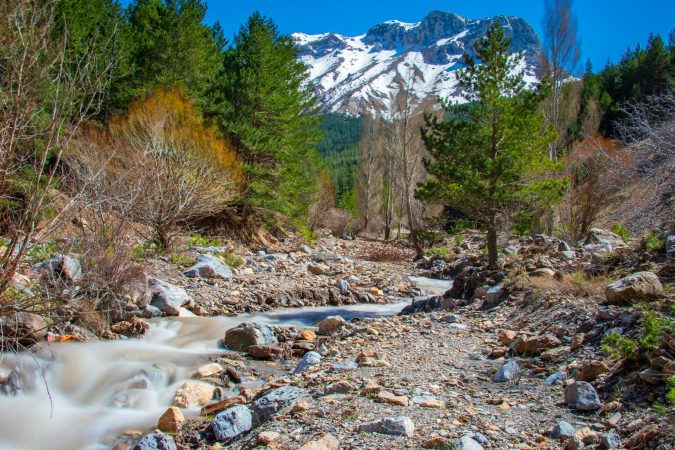
The region itself gives them plenty to document. It's home to endangered species, waterfalls, and plants long used in traditional medicine. The biodiversity is both ecologically significant and legally useful, which matters enormously given Ecuador's unique constitutional framework.
Think of it as conservation with legal teeth. These aren't researchers publishing papers that get cited in policy debates a decade later. They're building case files in real time.
Ecuador's Legal Edge: Nature Has Rights
Ecuador's constitution recognizes the rights of nature, a legal framework adopted in 2008. That decision seemed largely symbolic at the time to many observers. It doesn't seem symbolic anymore.
Because Ecuador's legal system recognizes nature as having rights, environmental data isn't just informational. It becomes evidence of harm to a legal entity. When a paraecologist documents a species in a mining zone or collects water samples showing contamination, that data can be presented in court on behalf of nature itself.
This legal framework is what separates the paraecologist model from, say, a citizen science project in the United States or Europe. In most countries, environmental data might support a regulatory complaint or public awareness campaign. In Ecuador, it goes directly into litigation. And according to reporting by Katie Surma of Inside Climate News, who traveled to the community of Maikiuants to cover the story, that litigation is increasingly successful.
The cases are being won. Not just filed. Won.
Mining Versus Biodiversity: The Tension
Southeastern Ecuador sits on significant copper reserves. Mining interests have long eyed the region, and the economic pressure to extract is real. Copper is essential for electronics, renewable energy infrastructure, and electric vehicles. Global demand is rising sharply, and countries with reserves face enormous incentives to dig.
That creates a genuinely difficult conflict. The same minerals needed for the global energy transition sit beneath land that supports endangered species and intact water systems. The paraecologist model doesn't pretend this tension doesn't exist. It just changes who gets to present evidence about what's at stake.
For decades, mining companies have had the resources to commission environmental impact assessments that, unsurprisingly, tend to minimize ecological costs. The paraecologist approach gives the other side of the argument a scientific foundation. Community residents who know the land better than any outside consultant are now producing data that courts accept.
The power dynamics shift when the people most affected can generate their own admissible evidence rather than relying entirely on outside experts or government agencies.
Why This Model Matters Beyond Ecuador
Rights-of-nature legislation has been spreading internationally. Legal frameworks recognizing nature's rights have been adopted in various jurisdictions, including in New Zealand and Bolivia. Some U.S. municipalities have also experimented with local rights-of-nature ordinances. But Ecuador remains the most developed example of this framework being used in active litigation, and the paraecologist model offers a blueprint for making those legal rights operational.
A law on paper means nothing without enforceable evidence. That's the gap the paraecologists fill. They make the rights of nature something that can actually be argued in a courtroom, with data, not just philosophy.
The model also raises interesting questions about who counts as a credible scientific observer. Traditional conservation science has long been dominated by institutions based in wealthy countries, flying researchers in and out of field sites. The paraecologist approach inverts that hierarchy. The experts are the people who already live there.
This doesn't mean outside scientists are irrelevant. Training, methodology, and quality control still matter. But the assumption that scientific credibility requires an institutional affiliation from a university in the Global North is being challenged directly by court outcomes in Ecuador.
What Comes Next
The immediate question is scale. If paraecologist-collected evidence keeps winning cases in Ecuador, other communities facing resource extraction will likely adopt similar approaches. The model is replicable: train locals, document biodiversity, present findings in court.
Mining companies will adapt too. Legal challenges to the admissibility of community-collected data seem inevitable. So does lobbying to weaken Ecuador's rights-of-nature provisions. The copper in those mountains isn't going to become less valuable.
But for now, the people of southeastern Ecuador have found something that works. Not a protest movement. Not an international awareness campaign. A system where the land itself gets a legal voice, and the people who know it best are the ones doing the talking.
Inside Climate News, which has covered this story through its reporting and podcast coverage, describes the situation as involving complex relationships between human rights and the rights of nature. That complexity is the point. Environmental protection rarely comes in clean narratives. The paraecologist model succeeds precisely because it works within existing legal systems rather than trying to build new ones from scratch.
Progress doesn't always look like a march or a hashtag. Sometimes it looks like a person with a notebook, standing in a river, counting what's alive.