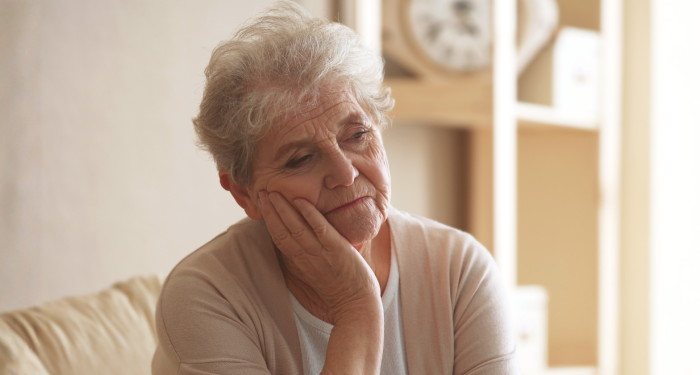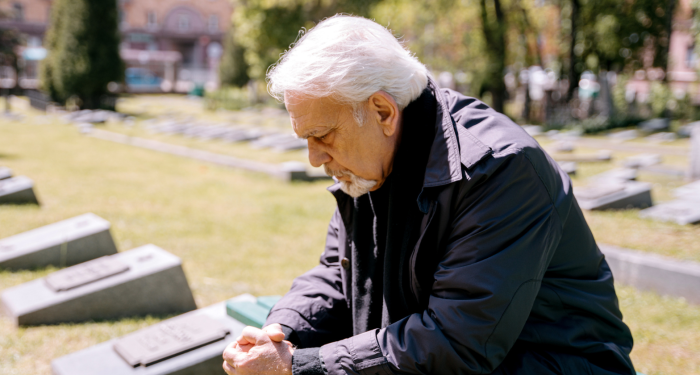
Research reveals that the deepest loneliness after 65 comes not from empty houses but from full ones—where decades of marriage have quietly transformed into silent partnerships of perfectly coordinated routines and forgotten conversations.
What does it mean when Psychology Today Staff tells us that "Even some people who are surrounded by others throughout the day—or are in a long-lasting marriage—still experience a deep and pervasive loneliness"? It means that proximity isn't intimacy, and sharing a zip code doesn't mean sharing a life.
I remember the exact moment I understood this. It was a Thursday evening in my first marriage, and my then-husband and I were discussing the grocery list with the same enthusiasm we'd once reserved for planning our future. We knew each other's coffee orders, sock drawer organization, and which side of the bed we preferred. But when I tried to tell him about a student who'd written something extraordinary that day, his eyes glazed over the way they do when you're watching television but thinking about tomorrow's meetings.
The transformation happens so gradually you don't notice until one day you realize you're living with a highly efficient roommate. You can coordinate pickup times for the kids with military precision. You know who handles the taxes and who calls the plumber. But you can't remember the last time you talked about something that wasn't purely transactional.
According to Margaret Foley, "One in six married adults report feeling lonely in their intimate relationship." But I suspect that number is conservative. How many of us would admit, even to ourselves, that the person sleeping next to us has become a stranger?
The paradox of shared solitude
Here's what nobody tells you about loneliness in marriage: it feels different from being alone. When you're alone, you expect solitude. But when you're lonely next to someone who promised to know you forever, it's like being homesick in your own home.
During my years of single motherhood after my divorce, between teaching high school English all day and grading papers until 2 AM, I discovered something unexpected. Yes, I was exhausted. Yes, I was overwhelmed. But I wasn't lonely in that hollow, aching way I'd been during my marriage. There's a difference between being alone with purpose and being together without connection.
Why living alone doesn't mean being lonely
Research from the National Academies of Sciences, Engineering, and Medicine found that approximately one-quarter of Americans aged 65 and older are considered socially isolated. But here's what the statistics don't capture: how many of those isolated seniors are actually married?
My book club is filled with women over sixty who live alone. We meet at the library, argue passionately about unreliable narrators, and share stories that would make our grandchildren blush. These women know each other's fears about falling, hopes for their grandchildren, and opinions about everything from sourdough starters to starting over.
Contrast this with a couple I know who've been married decades. They can navigate their morning routine without speaking, each knowing exactly how the other takes their coffee, when they shower, which sections of the newspaper they read first. It's a beautifully choreographed dance of avoidance. They haven't had a real conversation in years.
The slow drift from conversation to coordination
Hopeful Minds Research indicates that long-term couples may experience communication breakdowns over time, leading to emotional distance and feelings of isolation, even when living together. But "communication breakdown" sounds too sudden, too dramatic. What really happens is more like erosion. You stop sharing the small moments first. Then the medium ones. Eventually, you're left with only the essential exchanges.
I watched it happen in my own marriage like watching paint fade. First, we stopped telling each other about the interesting things we'd read. Then we stopped asking about each other's days with genuine curiosity. By year five, we could plan a family vacation with spreadsheet efficiency but couldn't talk about why we'd stopped holding hands.
The most heartbreaking part? We were proud of our efficiency. We thought being able to run a household together meant we had a successful marriage. We confused competence with connection, logistics with love.
Finding connection in unexpected places
"Even in the closest, most committed marriages, loneliness can creep in," notes Davia Sills. But what she doesn't mention is that sometimes, loneliness doesn't creep. Sometimes it moves in gradually, so politely that you don't notice until it's rearranged all the furniture.
My second marriage taught me what connection actually looks like. We met at a school fundraiser auction, both of us carrying enough baggage to stock a luggage store. But we talked. Really talked. About our failures, our fears, the way grief had carved us into different people. Even in his final years, when Parkinson's stole his words, we found ways to communicate that transcended speech.
Now, at seventy, widowed for two years, I live alone but am rarely lonely. My life is full of chosen connections: morning coffee with my neighbor every Thursday for fifteen years and we've never run out of conversation. Monthly dinners with former colleagues where we discuss books and politics with the passion of people who still believe ideas matter. Afternoons with grandchildren who know I'll always have time for their stories.
The courage to keep knowing each other
Mark Travers Ph.D. reminds us that "Resilient love is built on consistent effort." But what kind of effort? Not the effort of maintaining a household together. Not the effort of staying together for the children or the mortgage or the health insurance. The effort of continuing to know each other, year after year, change after change.
Recently, I've been writing letters to my grandchildren for their future birthdays. In them, I try to explain what I've learned about the difference between longevity and connection. A twenty-year marriage isn't necessarily a successful one if you stopped seeing each other years ago. A ten-year marriage that ends with both people still known and knowing might be the greater achievement.
Final thoughts
The loneliest dinner I ever ate wasn't my first one as a widow, with that empty chair across from me like a presence. It was an ordinary Wednesday in my first marriage, sitting across from someone who looked through me while discussing the car insurance, both of us pretending this was enough.
If you wake up next to someone every morning, ask yourself: When did we last talk about something that wasn't logistics? When did we last surprise each other? When did we last share something beyond schedules and responsibilities? Because twenty years of shared life should mean twenty years of continued discovery, not twenty years of running out of things to say. The saddest part about loneliness in marriage isn't that it happens. It's that we often don't notice until it's too late to find our way back to each other.