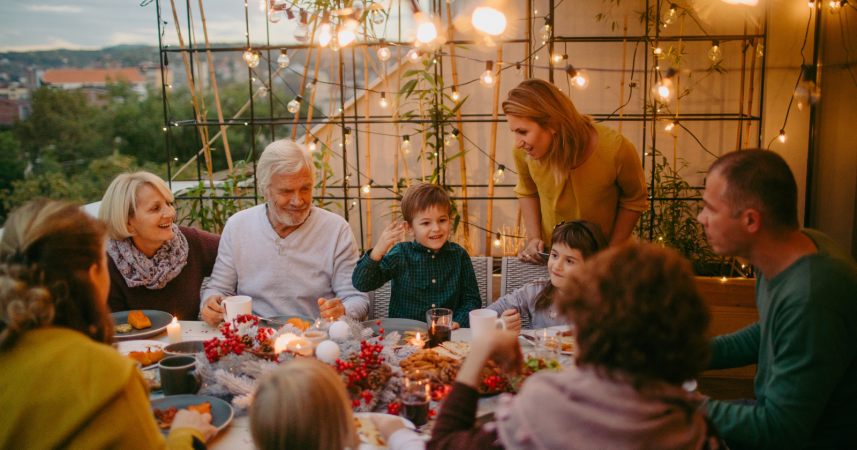
Every Sunday, three generations gather in my mother's kitchen to make tortillas and wage quiet wars. We pass dishes like peace offerings, hoping that if we keep our hands busy enough, our hearts might stop aching.

Add VegOut to your Google News feed. 
The tortilla press sits between us like a referee. My mother works masa with practiced violence—heel of palm, fold, press, turn—while I stand at the comal, flipping each disc at the exact moment it puffs with steam. We've done this dance a thousand times, our bodies remembering what our mouths can't say. Behind us, my father chops cilantro with the precision of a man avoiding conversation. My brother texts from the living room, waiting to be called when the work is done. [I'll share this family recipe—three generations in the making—below]
This is how we prepare for Sunday dinner: in careful choreography, each of us occupying our designated territory in the kitchen of my childhood home. The same kitchen where my grandmother once commanded an army of daughters, where recipes were passed down like genetic code, where every meal was both communion and combat zone.
I've spent years trying to understand why something as simple as sharing food with family can feel like navigating a minefield. Why the dinner table—that supposed sanctuary of connection—becomes the place where old wounds open, red and raw as split chiles.
The battlefield we call a table
Last month, my cousin Maria announced her pregnancy over pozole. The news landed like a match in gasoline. My aunt's face tightened—Maria isn't married. My uncle reached for his third beer. Someone changed the subject to the weather. Maria's hand found her belly, protective, while her mother ladled soup with the determination of a woman holding her family together by sheer will.
I watched this scene unfold and recognized it like a song I'd heard my whole life. The way silence can be louder than shouting. The way a compliment about the food becomes code for everything we can't discuss. The way we pass dishes like peace offerings, hoping that if we keep our hands busy enough, our hearts might stop aching.
Every family has its own unique chemistry of dysfunction, but there's something universal about the way we weaponize the dinner table. It's where we perform our most elaborate theater: the successful daughter who's dying inside, the son who can't admit he's lost, the parent who mistakes control for love, the grandparent who watches their legacy fracture like ice on warm water.
The table remembers everything. It holds the echo of every argument, every disappointed sigh, every moment someone got up and left their plate untouched. It knows which topics are landmines: politics, money, that thing that happened in 1987 that no one discusses but everyone remembers.
What we're really hungry for
My friend Sarah, a therapist who specializes in family systems, once told me that most family conflicts aren't about what they appear to be about. The fight over who makes better tamales isn't about tamales. The argument about money isn't about money. The silence after someone mentions college or marriage or career choices isn't about those choices.
"We come to the table carrying every version of ourselves," she said. "The child who wasn't heard, the teenager who was misunderstood, the adult who still seeks approval. We're not just feeding our bodies. We're trying to feed all those hungry ghosts."
This aligns with what researchers call "family projection process"—the way unresolved emotional patterns transmit across generations like a game of telephone, each iteration slightly distorted but recognizably connected to its source.
I think about this when my mother criticizes how I hold the tortilla press—not the way she taught me, not the way her mother taught her. In that moment, she's not really talking about tortillas. She's talking about tradition, about continuity, about the fear that something essential is being lost. She's asking: Will you carry this forward? Will you remember?
And when I bristle at her correction, I'm not really defending my tortilla technique. I'm asserting my autonomy, my right to adapt and evolve. I'm saying: I am not you. I am my own person. Can you love me anyway?
We perform this drama over and over, meal after meal, each of us seeking something we can't quite name: recognition, acceptance, the freedom to be ourselves, the comfort of belonging.
The inheritance of silence
Growing up, I learned that love in my family was expressed through food, not words. My grandmother, who fled poverty in Michoacán, believed that a full stomach was the highest form of care. She couldn't say "I love you" in any language that mattered, but she could spend fourteen hours making mole negro for your birthday, grinding chiles and chocolate until her hands cramped.
This translation of love into labor created its own kind of silence. We learned to read the emotional weather through food: rapid chopping meant anger, slow stirring meant sadness, the appearance of tres leches cake meant someone needed forgiveness.
But silence, I've learned, is its own inheritance. It passes down through generations like a family heirloom no one wants but everyone keeps. My grandmother's unspoken losses became my mother's unacknowledged struggles became my own swallowed words.
At our table, the most important conversations happen in the spaces between words. The pause after someone asks about your job. The moment of hesitation before passing the salsa. The way eyes meet across the table, holding entire conversations in a glance.
Last Thanksgiving, my teenage nephew asked why we never talk about my grandmother's first husband, the one who died before she came to America. The table went quiet. Forks suspended. Everyone waiting to see who would speak first.
"Some stories," my mother finally said, "are too heavy for the table."
But I wonder: What happens to stories deemed too heavy? Where do they go? They don't disappear. They settle into our bones, into the way we season our food, into habits we can't explain. They become the reason we flinch at certain tones of voice, why we over-prepare food as if preparing for a siege, why we equate love with worry and worry with control.
The paradox of proximity
There's a particular cruelty to family dynamics: the people who know us best are often the ones who see us least clearly. They look at us and see the child who was afraid of the dark, the teenager who slammed doors, the young adult who made that terrible decision everyone predicted.
My brother still introduces me as his "little sister who can't even boil water"—a joke from when I was twelve and forgot a pot on the stove. Never mind that I've since trained at the Culinary Institute, that I've run a kitchen that served hundreds, that I once made a perfect soufflé for a James Beard Award winner who asked for my card. In his eyes, I'm frozen in time, forever twelve and careless.
This is the paradox of family proximity: we're so close that we can't see each other change. We're looking through layers of history, through the sediment of every previous version of ourselves. The person across from us is simultaneously five and fifteen and fifty, all their ages collapsed into one overwhelming present.
It's why family dinners can feel like time travel, like being pulled backward through your own history. You sit down as an adult and suddenly you're eight years old again, competing for attention, for validation, for the right to be heard.
The meal as metaphor
Every family meal is a reflection of the family itself. The way we cook together (or don't) mirrors how we cooperate (or don't). The dishes we choose tell stories about aspiration and tradition, about who we think we are versus who we actually are.
Consider the politics of the potluck: who brings what reveals everything. The overachiever brings something elaborate that makes everyone else's contributions look simple. The rebel brings store-bought chips and claims it's a statement about rejecting domestic labor. The peacemaker brings something everyone likes, safe and uncontroversial. The ghost brings nothing but expects to eat.
Even the cleanup ritual has meaning. There are those who immediately start clearing plates—the ones who need to be useful to feel valuable. There are those who disappear—the ones who learned that absence is safer than presence. There are those who linger, unwilling to let the moment end, even if the moment was imperfect.
In my professional kitchen, I've learned that mise en place—everything in its place—creates harmony. But family kitchens resist such order. They're archaeological sites where past and present collide, where my grandmother's molcajete sits next to my mother's food processor, where tradition and innovation eye each other warily across the counter.
What I learned from the empty chair
Two years ago, my grandfather died. At the first family dinner after his funeral, we set his place anyway. No one could bear to acknowledge the empty chair, so we put a plate there, silverware, a glass. We served food to the absence as if it were a presence.
In Mexican tradition, we build ofrendas for Día de los Muertos, creating space for the dead to visit. But this was different. This wasn't ritual; it was denial.
For months, we maintained this practice. It was easier than admitting he was gone, easier than reorganizing our geography. The empty chair became a shrine to our inability to process change.
One Sunday, my eight-year-old cousin sat in the chair. The adults gasped. Her mother started to scold her, but the girl looked around with the clarity that only children possess and said, "He's not coming back. Someone should sit here."
The truth of it hit like cold water. We'd been having dinner with a ghost, setting a place for our own denial. The child was right: someone should sit there. Life should move forward. The table should accommodate the living.
But knowing this and doing it are different things. We made her move. We kept the chair empty for three more months. Because families, I've learned, prefer familiar dysfunction to uncertain health. We'd rather maintain painful patterns than risk the vulnerability of change.
The reconciliation that comes with age
Something shifts when you start seeing your parents as people. Not parents, but people—flawed, struggling, carrying their own wounds from their own tables. My mother, I realized one day, was once a daughter at a difficult table too. She learned her patterns somewhere. The criticism that feels like judgment might actually be fear. The control that feels like suffocation might actually be love with nowhere else to go.
This shift in perspective doesn't erase the hurt, but it contextualizes it. It allows for a different kind of conversation, one that can happen only between adults who've both been bruised by life. Though understanding doesn't always lead to change—sometimes we understand perfectly and still find ourselves trapped in the same loops, the same reactions, the same hurt.
Last month, while making tamales for Christmas, my mother and I found ourselves alone in the kitchen. The work created a rhythm that made talking easier—spread, fill, fold, tie. The scent of corn and lard, of guajillo and cumin, seemed to soften the edges of our usual defenses.
Between tamales, she told me about her father, how he'd drink at family dinners until he became someone else, someone mean. How she learned to cook as a way to control something, anything. How feeding people became her language because words had failed her too many times.
I told her about my own struggles, the ways I'd felt unseen at our table, the pressure to be perfect enough to justify taking up space. We didn't solve anything that day. The patterns didn't magically dissolve. But we saw each other, maybe for the first time, as fellow travelers through the complicated terrain of family.
What everyone's really seeking
After years of observing and participating in these dinner table dramas, I think I finally understand what we're all seeking. It's not about the food or the politics or the life choices we critique. It's about something much more fundamental: the right to be complex.
We want to be seen as more than our roles—more than the responsible one, the difficult one, the successful one, the disappointment. We want our contradictions to be held with tenderness. We want to change and grow without losing our place.
But families are museums of memory. They preserve us in amber, and breaking free feels like betrayal. To change is to suggest that what was wasn't enough, that the people who raised us didn't do it right. And so we get stuck, performing the same scenes, having the same arguments, carrying the same wounds to every meal.
The real battle isn't between family members—it's between the past and the present, between who we were and who we're becoming. The dinner table is just where this tension becomes visible, where tradition and evolution play out over plates and portions.
Setting a new table
I host dinners now in my own apartment, carefully curating guests who know how to laugh without cutting, how to disagree without dismissing, how to share space without competing for it. These chosen families, these intentional gatherings, they've taught me what's possible when people come together by choice rather than obligation.
But I still go home for family dinners. I still stand at the comal while my mother works the masa. I still navigate the landmines, dodge the triggers, translate the silences. Because leaving doesn't solve anything. It just moves the problem to a different room.
Instead, I'm learning to set boundaries at the boundary-less table. To let certain comments pass through me like wind. To offer my own stories without needing them to be received in any particular way. To love my family without needing them to be different than they are.
This is the work: to show up knowing it will be imperfect, knowing that old patterns will emerge like muscle memory, knowing that healing happens slowly, in increments so small they're almost invisible.
I think about that empty chair, how we eventually let it be filled. Not because we stopped grieving, but because we learned that honoring the past doesn't require preserving it in amber. We can carry forward what serves us and leave behind what doesn't. We can set a new table while honoring the old one.
The tortilla press still sits between my mother and me, but now I see it differently. Not as a referee but as a bridge. Each tortilla we make is an act of translation—taking something ancient and making it new, keeping the essence while allowing for evolution.
[Editor's note: Maya shares her family's three-generation tortilla recipe, with all its complexities and contradictions, here.]
The meal ends. The dishes get washed. Everyone goes home to their separate lives. But something remains—the trace of connection, imperfect but real. The knowledge that next week, or next month, or next year, we'll gather again. We'll try again. We'll fail better.
And maybe that's enough. Maybe the victory isn't in fixing the family dinner but in continuing to show up for it, in believing that the table can hold our whole selves, even when we're not sure it can. Maybe the fight itself is the point—not because we're trying to win, but because we're trying to stay connected despite all the forces pulling us apart.