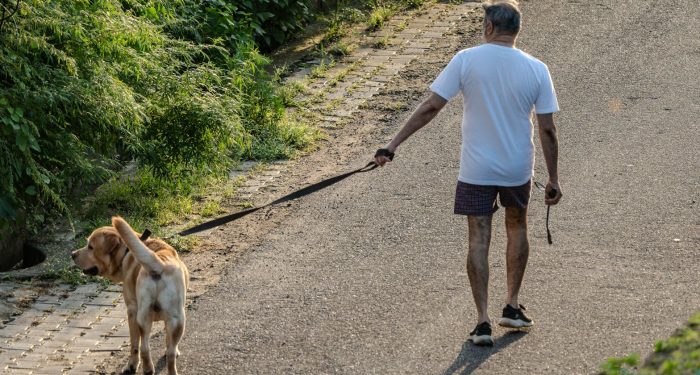
Three years into retirement, she discovered the dinner party stories about yoga classes and book clubs were only half the truth—the other half lived in those peculiar moments of standing motionless in her own home, wondering how someone who once commanded thirty teenagers' attention could now lose entire afternoons to the simple question of what comes next.

Add VegOut to your Google News feed. 
Last Thursday, I found myself standing in my kitchen at 3 in the afternoon, holding a coffee mug I'd already washed, dried, and put away once that morning.
The dishwasher hummed its familiar cycle, the afternoon light slanted through the blinds just so, and for a moment, I couldn't remember why I was there or what I'd meant to do next. This wasn't dementia setting in. This was retirement in its raw, unfiltered form.
We all know the polished version of retirement stories. The ones we share over wine with friends, full of morning yoga classes, volunteer work at the library, and finally having time to read all those books. But there's another story running parallel to that one, quieter and more honest.
It's the story of standing in your laundry room on a random Wednesday afternoon, refolding the same towel for the third time because the vast expanse of unstructured time ahead feels like trying to navigate an ocean without a compass.
The silence that nobody warns you about
When I took early retirement at 64, my knees simply couldn't handle another year of standing in front of a classroom. I'd prepared financially, mentally, emotionally. Or so I thought. What I hadn't prepared for was the particular quality of silence that fills a house at 10:30 on a Monday morning when everyone else is at work.
It's not peaceful at first. It's accusatory. It asks you what you're doing with yourself, why you're not being productive, whether you matter anymore now that thirty-two years of lesson plans and parent conferences have evaporated into memory.
The silence makes you hyperaware of every small action. Loading the dishwasher becomes an event. Checking the mail turns into the highlight of your morning.
Have you ever noticed how time moves differently when you have too much of it? During my teaching years, I'd fantasize about having endless hours to read, to garden, to simply be. But when those hours materialized, they felt less like freedom and more like being untethered from gravity itself, floating in a space where Monday blends into Thursday and March might as well be October.
When your identity goes missing
"Who are you now?" That's the question retirement asks, usually around month three when the novelty has worn off and the reality has settled in like morning fog. For decades, I was Mrs. Henderson, the English teacher. I had a purpose that got me up at 5:30 every morning, a reason to iron my clothes, a community that needed me.
Then suddenly, I wasn't. The world kept spinning without my red pen marking essays, without my voice explaining the beauty of metaphor in poetry. This shift hit me hardest during what should have been the first week of school that September.
I found myself driving past the high school at 7:45 AM, watching teachers hurry in with their coffee and bags full of hope for the new year. I sat in my car and cried, mourning not just a job but an entire sense of self.
Virginia Woolf once wrote about the importance of having a room of one's own. But what happens when your whole life becomes that room, and you're not sure what to fill it with? After my second husband died, I spent six months barely leaving the house, not because I couldn't, but because I couldn't think of a reason to.
The grocery store? Food would appear if I ordered online. Friends? They were patient, but I wasn't ready. The outside world felt both too big and too small simultaneously.
The unexpected geography of empty time
Here's what they don't tell you about retirement: you'll develop strange new habits just to create structure. I now know exactly how long it takes for the coffee to brew (4 minutes and 37 seconds). I've memorized the mail carrier's schedule down to a five-minute window. These tiny anchors become surprisingly important when you're trying to navigate days that stretch out like blank pages.
Some mornings, I catch myself inventing tasks. Reorganizing the spice drawer alphabetically. Cleaning windows that are already clean. Ironing pillowcases. Once, I spent an entire afternoon arranging my books by color instead of author, then immediately put them back the way they were. It wasn't about the books. It was about having something, anything, that required my attention and decision-making.
Do you know what saves us from drowning in all this formless time? Small rituals. I still wake at 5:30 naturally, and I've learned to protect that first hour fiercely. Tea, not coffee. Journal, not phone. Silence, not news. This hour belongs to me in a way that's different from having the whole day belong to me. It's intentional rather than default.
Finding grace in the ordinary moments
Slowly, almost imperceptibly, something shifts. The empty hours that once felt oppressive begin to reveal their own rhythm. I discovered that reading for an hour every afternoon in my sunroom isn't just killing time; it's luxuriating in time. The difference is subtle but profound.
Grandparenting, I've found, offers a particular kind of redemption. It's parenting with more wisdom and less exhaustion, yes, but it's also a chance to be fully present in a way I couldn't be when I was juggling lesson plans and mortgage payments. When my granddaughter asks why the sky is blue, I have time to really answer, to look it up together, to make it an adventure rather than a hurried response between tasks.
The laundry room moments still happen. Last week, I stood in my garage for a full minute, unable to remember why I'd walked out there. But now I can laugh at these moments rather than fear them. They're not signs of decline; they're signs of a mind that's finally allowed to wander, to be inefficient, to exist without constant purpose.
Final thoughts
Retirement, I've learned, isn't one experience but many, cycling through like seasons. Some days, you're the person at the dinner party sharing stories about your watercolor class and your thriving garden.
Other days, you're standing in your bathroom at noon, still in your pajamas, wondering if this is all there is. Both versions are true. Both versions are valid. The grace lies not in avoiding the quiet, strange moments but in accepting them as part of this new geography you're learning to navigate.
After all, even explorers sometimes stand still, compass in hand, figuring out which way to go next.
What’s Your Plant-Powered Archetype?
Ever wonder what your everyday habits say about your deeper purpose—and how they ripple out to impact the planet?
This 90-second quiz reveals the plant-powered role you’re here to play, and the tiny shift that makes it even more powerful.
12 fun questions. Instant results. Surprisingly accurate.