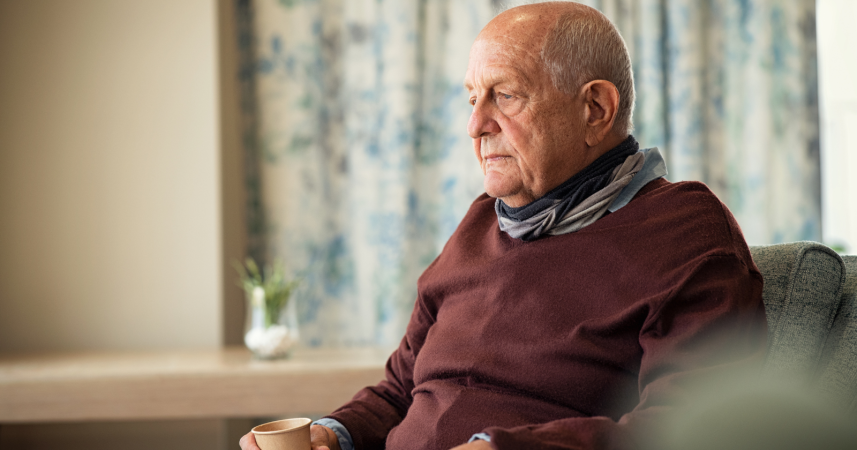
She fixed her neighbor's gate, organized charity drives, and taught her grandson to cook over video call — yet spent three evenings that same week wondering if anyone would notice if she simply vanished, trapped in the cruel paradox of being so capable that no one thinks to ask if she's okay.
Last week, I fixed my neighbor's broken gate latch, organized a charity book drive, and taught my grandson how to make a proper béchamel sauce over video call.
That same week, I sat alone for three evenings wondering if anyone would notice if I simply disappeared into thin air. This is the paradox of being seventy and capable: the very competence that makes you valuable to others renders you invisible as someone who might need care yourself.
I remember teaching both my children to cook elaborate meals from scratch when they were barely tall enough to reach the counter. Every skill I passed on – balancing a checkbook, changing a tire, navigating disappointment with grace – felt like a victory.
I believed self-sufficiency was the greatest gift I could give them. What I didn't realize was that I was also teaching myself to never appear vulnerable, to always be the one offering help rather than asking for it.
The architecture of our own isolation
There's a cruel irony in how well we've succeeded. We're the generation who prided ourselves on not being a burden, on handling everything ourselves. We refinanced mortgages alone, figured out technology without asking millennials for help, and learned to navigate widowhood or divorce with our chins up. We became so good at appearing fine that everyone believes we are.
When I spent fifteen years as a single mother, I learned to juggle everything with such apparent ease that people stopped asking if I needed anything. The compliments came often: "I don't know how you do it all!" But rarely did anyone think to ask, "Would you like me to do some of it with you?"
Being both lonely and completely fulfilled became my normal state of being, like wearing shoes that almost fit – uncomfortable but manageable enough that you forget to mention it.
The competence we display becomes a wall between us and genuine connection. When you're the person who still drives everyone else to appointments, who hosts the holiday dinners, who remembers birthdays and sends cards, you become a service rather than a person. Your functionality overshadows your humanity.
When independence becomes invisibility
Virginia Woolf wrote about women needing a room of their own, but what happens when that room becomes a fortress no one thinks to breach?
I've discovered that the independence I fought so hard to build and maintain has become oddly isolating. People call when they need advice about their marriages or help with their résumés, but rarely just to ask about my day or share a funny story that serves no purpose except connection.
Do you know what it's like to be everyone's rock while feeling like you're slowly turning to sand? The phone rings, and it's always about something practical: Can you watch the kids? Do you have that recipe? Can you help with the school fundraiser? These aren't bad things – I love being useful – but sometimes I wonder if anyone sees past the function to the person.
I've struggled with feeling invisible as an older woman, but this invisibility is different from being overlooked in a store or talked over in meetings. This is the invisibility of being too competent to worry about. It's being so reliably okay that no one thinks to check if you actually are.
The weight of being "fine"
Being a single mother taught me that asking for help isn't weakness, it's wisdom, but somewhere along the way, I forgot my own lesson. Or perhaps the world forgot to keep offering. When you've been strong for so long, people assume strength is your permanent state, like eye color or height. They don't realize it's a choice you make every morning, sometimes through gritted teeth.
I think about this when friends mention their elderly parents with concern: "Mom's getting forgetful," or "Dad shouldn't be driving anymore." There's something almost enviable about reaching a point where your vulnerabilities are obvious enough to warrant attention. When you're sharp and capable at seventy, your struggles are internal, invisible, and therefore easy to overlook.
The competent elderly occupy a strange no-man's land. Too independent for regular check-ins, too proud to admit loneliness, too practiced at appearing fine to signal distress. We've become victims of our own success story.
Breaking the pattern we created
Recently, I've been thinking about a piece I wrote on finding purpose later in life, and I realize now that part of that purpose might be learning to be vulnerable again. It's terrifying to admit you need something as simple as a conversation that isn't about solving someone else's problem. But I'm starting to practice.
Last month, I called a friend and said, "I don't need anything. I just wanted to hear your voice and talk about absolutely nothing important." The surprise in her voice quickly melted into warmth. We talked for an hour about books, terrible TV shows, and whether birds have regional accents. It was the best conversation I'd had in months.
I'm learning to let the mask slip occasionally. When someone asks how I am, I sometimes tell the truth: "Competent but lonely," or "Managing everything and wishing I didn't have to." The sky doesn't fall. People don't run away. Sometimes, they even say, "Me too."
Discovering the value of having a small, close circle of friends over many acquaintances has helped. These are the people I'm slowly teaching to see past my capability to my humanity. It's like teaching someone a new language – the language of checking in without needing something, of offering company without requiring entertainment, of seeing competence not as a wall but as one facet of a complex person.
Final thoughts
If you're reading this and recognize yourself – the competent one, the reliable one, the one who never seems to need anything – know that your independence is both your achievement and your challenge.
You built something remarkable, but you don't have to live trapped inside it. And if you know someone like this, maybe make that phone call that isn't about logistics. Ask them about their dreams, their fears, or what made them laugh recently.
Look past the competence to find the person who might be sitting alone, wondering if anyone would notice if they just stopped being so capable for a while.
The specific loneliness of being seventy and competent doesn't have to be permanent. We engineered our invisibility, which means we can also engineer our way back to being seen. It just requires the one thing we've trained ourselves never to do: admit we need something as simple and essential as genuine human connection.