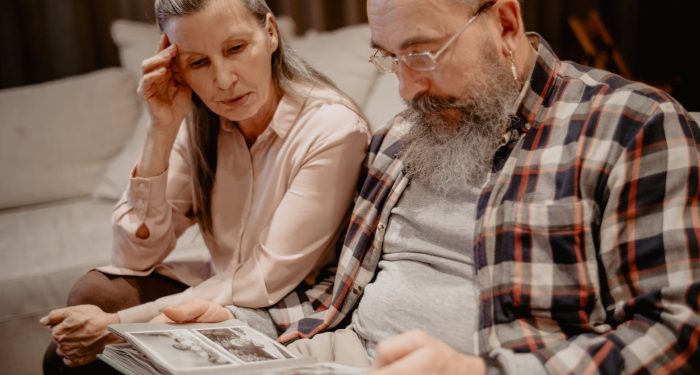
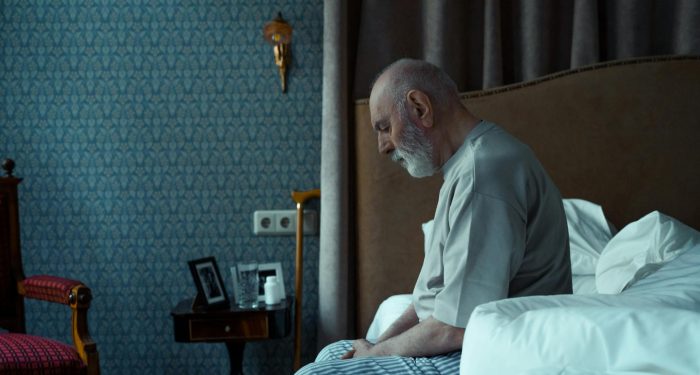
After decades of being everyone's emotional shock absorber, these women's bodies finally rebel with mysterious illnesses that doctors struggle to explain — because you can't diagnose forty years of unspoken truths trying to claw their way out.

Add VegOut to your Google News feed. 
Last week at the grocery store, I watched a woman about my age lean heavily against her cart while waiting in line. Not from physical exhaustion, but from something deeper.
When the cashier asked how she was, she straightened up immediately, smiled brightly, and said "Oh, wonderful! Can't complain!"
But I'd seen her face moments before. I recognized that particular brand of tired that lives in the bones of women who've carried everyone else's burdens for decades.
It reminded me of my own mother, who developed rheumatoid arthritis at 68 after spending forty years as the family peacekeeper, secret-keeper, and emotional shock absorber. The timing wasn't random. Her body had finally started speaking the truths she'd swallowed for everyone else's comfort.
The body keeps the score, especially for the family stronghold
Have you ever noticed how the "strong women" in families rarely get sick until they hit a certain age? They power through flu seasons, skip doctor appointments, minimize their own pain.
Then suddenly, around their late sixties, their bodies stage a rebellion. Autoimmune disorders appear. Chronic fatigue sets in. Mysterious pains that doctors struggle to diagnose become daily companions.
During my years caring for my aging parents while raising my children alone, I became an expert at ignoring my own body's signals.
Headaches were pushed aside with aspirin. Exhaustion was countered with more coffee. That persistent ache in my chest when I thought about all the things I wanted to say but couldn't? Well, that was just part of being responsible.
I remember one Thanksgiving when I was juggling my mother's dementia episodes, my teenage son's rebellion, and hosting dinner for fifteen relatives. My sister called to say she couldn't make it because she was "too stressed." I wanted to laugh. Or cry. Or throw the phone across the room.
Instead, I said, "Of course, take care of yourself." Then I hung up and felt that familiar tightness in my throat, the one that comes from swallowing words that desperately want to be spoken.
Why we become the designated emotional containers
Women of my generation were trained from birth to be emotional alchemists. We learned to transform rage into patience, disappointment into understanding, our own needs into everyone else's comfort. We became so good at it that our families never even realized what we were doing.
Think about it: who in your family held the emotional center when things fell apart? Who smoothed over conflicts, absorbed the anger, translated between family members who refused to speak directly? If you're reading this and recognizing yourself, you already know the answer.
The role usually starts innocently enough. Maybe you're naturally empathetic. Perhaps you're the oldest daughter. Or you married into a family that needed someone to fill this role.
Before you know it, you're the one everyone calls when they need to vent, but somehow never the one who gets asked, "How are you holding up?"
I spent fifteen years as a single mother, and during that time, I made the mistake of leaning too heavily on my eldest son, expecting him to be "the man of the house" when he was just a boy.
But I also absorbed every worry, every fear, every frustration my children had, believing that protecting them from my own struggles was love. It wasn't until therapy in my fifties that I learned there's a difference between being strong and being a human dam, holding back everyone else's emotional floods.
The science of suppressed emotions and physical illness
Recent research confirms what our bodies have been trying to tell us all along: chronic emotional suppression directly impacts our physical health.
When we consistently silence our own needs and feelings, our stress hormones remain elevated. Our immune systems weaken. Inflammation increases throughout our bodies.
Dr. Gabor Maté writes extensively about how emotional stress manifests as physical illness, particularly in people who are "compulsively self-sacrificing."
Sound familiar? The constant state of hypervigilance required to manage everyone else's emotions while suppressing our own creates a perfect storm for illness.
After both my knee replacements at 65 and 67, I had plenty of time to reflect during physical therapy. The therapist kept telling me to "listen to my body" and "respect its limits." I almost laughed.
Here I was at 65, learning lessons my body had been trying to teach me for decades. The arthritis that necessitated those surgeries? It had been building for years while I powered through, ignoring the warning signs.
Breaking the pattern before the body breaks down
The good news is that it's never too late to start listening to what your body and soul have been trying to tell you. After my second knee surgery, I made a promise to myself: no more automatic "yes" when I meant "no." No more absorbing other people's emotions like I was some kind of family sponge.
Setting boundaries in your sixties after a lifetime of having none feels like learning to walk again, which, coincidentally, I was also doing post-surgery.
Family members who've grown comfortable with you as their emotional dumping ground don't always react well. Some accused me of becoming "selfish" or "changing." They were right about the changing part.
Virginia Woolf once wrote, "The eyes of others our prisons; their thoughts our cages."
For decades, I lived in the prison of being the strong one, the reliable one, the one who never complained. Breaking free meant disappointing people.
It meant saying, "I can't take that on right now." It meant letting other family members figure out their own conflicts instead of automatically stepping in as mediator.
The physical changes were almost immediate. The chronic tension in my shoulders began to ease. The mysterious stomach issues that had plagued me for years suddenly improved. Even my sleep, which had been fractured for decades, began to deepen.
Final thoughts
If you recognize yourself in these words, know that your body's rebellion isn't a betrayal. It's a desperate attempt at communication. All those years of being the strong one, the one who held everyone together, came at a cost. Your body absorbed what you couldn't say, held what you couldn't release, and now it's asking for its due.
The path forward isn't about becoming selfish or abandoning the people we love. It's about recognizing that we can't pour from an empty cup, and more importantly, that we deserve to drink from that cup too.
Our families learned to depend on our silence. Now they can learn to respect our voices. The conversation might be decades overdue, but it's never too late to start speaking your truth, even if your voice shakes.
What’s Your Plant-Powered Archetype?
Ever wonder what your everyday habits say about your deeper purpose—and how they ripple out to impact the planet?
This 90-second quiz reveals the plant-powered role you’re here to play, and the tiny shift that makes it even more powerful.
12 fun questions. Instant results. Surprisingly accurate.