While women enter retirement with decades of cultivated friendships, book clubs, and neighbors who became family, men often discover they've accidentally outsourced their entire social existence to office hallways and conference rooms—leaving them with clean cars, empty calendars, and a devastating silence where connection should be.

Add VegOut to your Google News feed. 
Last week, I watched my neighbor Bill stand in his driveway for twenty minutes, washing an already clean car. His wife later told me he does this every morning since retiring six months ago.
"He doesn't know what else to do with himself," she whispered, and in that moment, I saw my late husband's struggle reflected back at me.
After thirty-two years teaching high school English, I thought I understood retirement's challenges. But nothing prepared me for the stark difference between how my female friends and male colleagues handled this transition.
While we women often struggled initially, most of us found our footing. The men? Many seemed to simply... disappear.
The weight of a vanishing identity
When chronic knee pain forced me to leave the classroom at sixty-four, I spent six months barely leaving my house. The loss of my teacher identity felt like a death.
But here's what saved me: My friend Carol showed up one Thursday morning with coffee and declared, "We have a standing date now. Every Thursday. Non-negotiable."
Carol was one of five women I'd been meeting with for weekly dinners for years. Through single motherhood, remarriage, my second husband's death from Parkinson's, these women remained constant. When my professional identity crumbled, they caught me.
My late husband had no such net. His friends were all work friends. When he retired, they evaporated like morning mist.
The only person he really talked to was me, and when Parkinson's began its slow theft of his abilities, his isolation deepened. He saw accepting help as failure. I saw it as the highest form of love.
Building connections beyond the conference room
Think about your typical Tuesday. Mine starts at 5:30 with journaling and tea, a ritual I began after my husband's death.
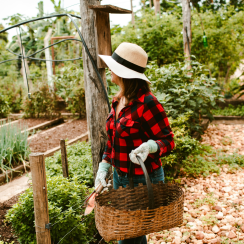
I tend my garden, volunteer at the women's shelter teaching resume writing, have coffee with my neighbor of fifteen years, and end with a call to my widowed friend Ruth. Not one of these connections depends on my former career.
Men often tell me they don't have time for such relationships while working. But I maintained these friendships while teaching full-time, raising children alone, and later caring for my husband through his illness.
The difference? I understood from my divorce at twenty-eight that independence is a myth. When my first husband left me with two toddlers, I needed other mothers to trade babysitting, colleagues who understood sick-child emergencies, neighbors with extra cups of sugar.
Necessity taught me that survival means interdependence.
The pandemic revealed these differences starkly. While isolation devastated many retired men who'd lost their primary social outlet, my network adapted seamlessly. Phone calls replaced coffee dates. Book club went virtual. My granddaughter taught me video calling.
We already knew how to maintain relationships across distance and difficulty. We'd been doing it our whole lives.
The invisible work women have always done
"Men think we just chat," I often say about women's friendships. But we're performing emotional surgery on each other, one conversation at a time. This emotional labor, this constant tending of relationships, is work women do invisibly throughout their lives.
When I needed knee replacements, I had friends rotating meal delivery, driving me to physical therapy, sitting through difficult nights. When my husband was diagnosed with Parkinson's, he wanted to handle it alone.
The contrast broke my heart. He'd been taught that real men don't burden others with their struggles. Provide, protect, achieve, but never admit you're drowning.
My friendships aren't just crisis management networks. They're sources of joy, growth, and meaning. My widow's support group became a hiking club. Library volunteering led to teaching adult literacy.
Church grief counseling opened into leading writing workshops. Each connection spawns others, creating what I call a garden of relationships that keeps growing even when I can't.
Starting the conversation about connection
Recently, I discovered Jeanette Brown's course "Your Retirement Your Way," and I wish I'd had it when I first retired. The course reminded me that retirement isn't an ending but a beginning for reinvention. What struck me most was Jeanette's guidance about identity existing beyond career titles.
For years, I'd watched my husband struggle with exactly this, unable to see himself as anything other than his former job title.
The course inspired me to start reaching out to the retired men in my neighborhood differently. Instead of inviting them to coffee (which they'd decline), I mentioned Bill's garage workshop where men fix things together. They barely talk, but they show up. That's what matters.
When showing up becomes everything
Thirty-two years in the classroom taught me that showing up is ninety percent of love. My standing Sunday calls with my daughter, Thursday coffee with Carol, Saturday library visits with grandchildren—these aren't obligations but lifelines, for me as much as them.
Relationships are like gardens. You have to tend them constantly, especially when they look dormant. But this requires vulnerability, something I had to learn the hard way. After my divorce, I wanted to appear strong, needless.
When my car died with forty-seven dollars in my bank account, I had no choice but to accept help. A fellow teacher organized a collection. Parents sent grocery cards. The shame I expected never came. Instead, I found myself woven more deeply into community.
Men are taught that needing others equals weakness. They'd rather suffer alone than admit loneliness. The statistics suggest many do exactly that. Men over sixty-five have the highest suicide rates of any demographic. Depression affects retired men at nearly twice the rate of retired women.
Finding stories beyond the resume
I lead a writing workshop at the community center. Women arrive with stories about grandchildren, gardens, grief. The few men who attend write about their careers. Even in retirement, that's their only story.
Recently, though, one man wrote about teaching his granddaughter to fish. That's when I knew he might make it. He'd found a story that wasn't about what he used to do, but who he is now.
The tragedy is that men have so much to offer in retirement. All that knowledge, those skills. But they've spent so long being their job that they don't know how to just be human with other humans.
My seventy-one-year-old life offers a different model. I maintain connections across generations: Grandchildren who teach me technology and receive handwritten letters, women friends who've witnessed my entire adult life, literacy students who remind me teaching never ends, church members who share grief and joy, neighbors who've become family through proximity and time.
Final thoughts
The real retirement crisis isn't financial. It's relational. Unlike money, relationships can't be saved up and withdrawn later. They must be tended all along. Start now, not when you retire. Join something. Show up repeatedly. Let people know you—really know you, not your resume.
As I watch Bill's workshop group gathering in his garage, men arriving with broken toasters and wounded spirits, I see hope.
They're learning what women have always known: We survive through connection, not achievement. The question is whether they're learning it in time.
What’s Your Plant-Powered Archetype?
Ever wonder what your everyday habits say about your deeper purpose—and how they ripple out to impact the planet?
This 90-second quiz reveals the plant-powered role you’re here to play, and the tiny shift that makes it even more powerful.
12 fun questions. Instant results. Surprisingly accurate.