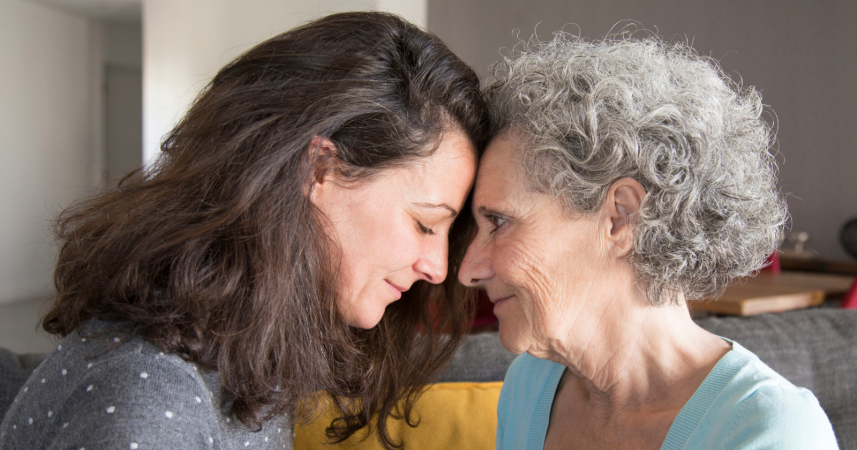
As she watches her adult children master the art of selective sharing and calculated distance, she discovers the most profound truth about love: sometimes it survives not through closeness, but through the careful spaces we create between us.

Add VegOut to your Google News feed. 
Last Thursday, I stood in my kitchen holding my phone, staring at a text from my son that read: "Can't make it this weekend. Work's crazy. Maybe next month?"
The coffee in my hand had gone cold, but I kept holding it, reading those eight words over and over. Not because they were cruel or unusual, but because they weren't.
This gentle pulling away, this careful rationing of time and emotional energy, has become the rhythm of our relationship. And if I'm being honest, I understand it completely.
When we talk about aging, we focus on the physical changes. The creaking knees, the reading glasses left in every room, the way getting up from the couch has become a two-stage process.
But nobody really prepares you for the emotional reckoning that comes with watching your adult children develop their own complex lives while you gradually shift from central character to supporting role in their story.
1) When love becomes logistics
Remember when your children would tell you everything? Every scraped knee was a crisis that needed your kiss, every friend drama required your full attention over milk and cookies.
Now, conversations feel carefully edited. My daughter calls every Sunday evening, and I've learned to read the spaces between her words.
She tells me about her promotion, her vacation plans, the new restaurant she tried. What she doesn't tell me anymore are the fights with her partner, the anxiety that keeps her up at night, or the way she sometimes doubts every decision she's made.
I catch myself doing the same thing in reverse. When she asks how I'm doing, I say "fine" even when my back has been aching for three days, or when the loneliness sits so heavy I can barely breathe.
We've both become curators of our own lives, showing each other only the pieces we think the other can handle.
This isn't cruelty. It's protection. She's protecting me from worry, and she's protecting herself from the weight of problems she can't solve. The distance between us isn't measured in miles but in all the things we've stopped saying.
2) The inheritance of emotional patterns
Virginia Woolf once wrote that "we think back through our mothers if we are women." Watching my daughter navigate her forties, I see echoes of my younger self in ways that both comfort and haunt me.
She stays too long in relationships that drain her, just as I did. She apologizes for taking up space, minimizes her own needs, and carries other people's emotions like they're her responsibility.
A few months ago, she called me crying after another breakup with someone who couldn't commit. I wanted to say, "I know this dance because I taught you the steps."
Instead, I listened, offered comfort, and bit my tongue when she said she was considering giving him another chance. The hardest part wasn't watching her make mistakes I recognized.
It was knowing that my adult children have had to create boundaries with me partially because they're still untangling themselves from the patterns I unknowingly passed down.
I spent years in survival mode when they were young, working multiple jobs, managing a difficult first marriage, trying to keep us all afloat. I've apologized to both of them for the ways that survival mode made me less present than I wanted to be.
They've forgiven me, but forgiveness doesn't erase the impact. Now they need space to figure out who they are without my anxiety, my patterns, my unhealed wounds shaping their choices.
3) The weight of watching us decline
Seven years ago, I watched my second husband slowly disappear into Parkinson's disease. My children watched me watch him. They saw me become a caregiver, saw my world shrink to medication schedules and doctor's appointments.
They offered to help, but I could see the toll it took on them, trying to support me while managing their own careers, relationships, and responsibilities.
After he passed, my son said something that broke my heart: "Mom, I wanted to be there more, but I didn't know how to watch you go through that without drowning in it myself."
He wasn't being selfish. He was being honest about the impossible balance adult children face when their parents begin to need them in ways that reverse the natural order of things.
Now, at 73, I'm still independent, still driving, still managing my own life. But I see the careful way my children assess me during visits.
Did I repeat that story? Am I walking slower? Is the house still tidy? They're preparing themselves for what's coming, creating emotional buffers that will help them cope when I need more than they can give without losing themselves.
4) Finding grace in the letting go
There's a strange freedom in accepting this shift. Once I stopped taking it personally, I could see it for what it is: A natural progression, maybe even a healthy one.
My children are supposed to build their own lives, form their own families of choice, create boundaries that allow them to thrive. The fact that they need some distance from me doesn't diminish the love between us. If anything, it preserves it.
I've started finding richness in unexpected places. Friendships with other women my age who understand this particular ache. Books that I finally have time to read. Mornings that belong entirely to me.
In my recent post about rediscovering purpose after loss, I wrote about how grief can sometimes clear space for unexpected growth. The same is true for this gradual separation from our adult children.
Final thoughts
The title of this piece might sound melancholic, but I don't mean it that way. Watching your adult children decide how much of you they can handle is painful, yes, but it's also a testament to their wisdom and self-awareness.
They're doing what they need to do to stay whole. And maybe, if we're brave enough to admit it, we're doing the same thing with them. Love doesn't always mean holding on tight.
Sometimes it means knowing when to loosen your grip, even when every instinct tells you otherwise.
If You Were a Healing Herb, Which Would You Be?
Each herb holds a unique kind of magic — soothing, awakening, grounding, or clarifying.
This 9-question quiz reveals the healing plant that mirrors your energy right now and what it says about your natural rhythm.
✨ Instant results. Deeply insightful.
Marlene Martin
Marlene is a retired high school English teacher and longtime writer who draws on decades of lived experience to explore personal development, relationships, resilience, and finding purpose in life’s second act. When she’s not at her laptop, she’s usually in the garden at dawn, baking Sunday bread, taking watercolor classes, playing piano, or volunteering at a local women’s shelter teaching life skills.
More Articles by Marlene