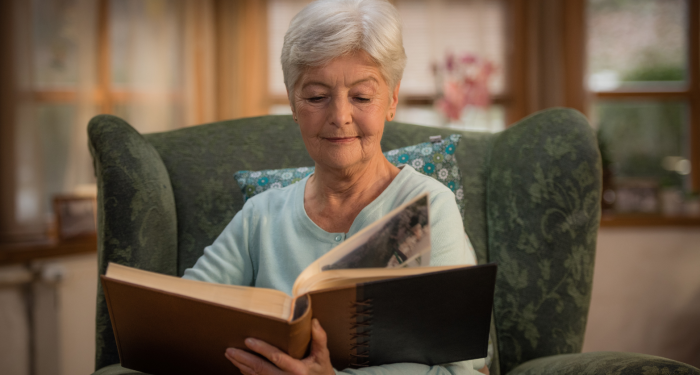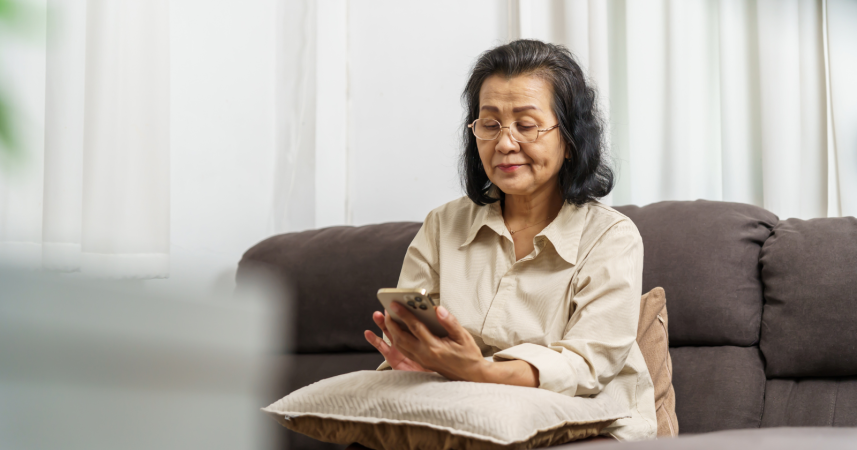
The technology that promised to connect us instead turned into a one-way mirror for older generations, who learned just enough to watch their families' lives unfold in group chats they weren't added to and digital gatherings they discovered only through photos posted afterward.

Add VegOut to your Google News feed. 
Last Sunday morning, I sat at my kitchen table with my phone propped against the sugar bowl, watching my granddaughter's college graduation through a livestream.
The audio kept cutting out, and the video froze just as she crossed the stage. I could see the hearts floating up the screen from other viewers, mostly names I didn't recognize.
Later, scrolling through social media, I found dozens of photos from the celebration afterward. A party I hadn't known about. Not because anyone meant to exclude me, but because the invitation lived somewhere in a group chat I'd never been added to, in an app I didn't know existed.
This is the particular ache of our digital age for those of us over sixty. We've learned just enough technology to witness the vibrant life happening in pixels and notifications, but not quite enough to fully participate in it.
We're standing at the window of a party we weren't exactly not invited to, we just didn't know where the door was.
The illusion of inclusion
When people talk about the digital divide, they often paint it as a simple binary: those who can use technology and those who can't. But the reality is far more nuanced and, frankly, more painful.
Many of us have conquered the basics. We can send texts, post photos, even navigate video calls when our grandchildren patiently walk us through it for the third time. We've taken those computer classes at the senior center, fumbling with passwords we write on sticky notes despite being told not to.
But there's a difference between having access to technology and being woven into its social fabric. We can see the Facebook event for the neighborhood barbecue after it happened, complete with photos of all our neighbors laughing together.
We notice the group text we weren't included in when someone mentions it casually over coffee. We discover our adult children have entire conversations about family plans in apps we've never heard of, then wonder why we're confused about the details they assumed we knew.
The cruelest part? We have just enough visibility to know what we're missing. It's like being given a telescope to watch a dance we're not invited to join. We can see our loved ones connecting, planning, sharing moments in real-time, but we're experiencing it all in past tense, through the artifacts they leave behind.
When connection becomes performance
Virginia Woolf once wrote about the cotton wool of daily life, those unmemorable moments that make up most of our existence. But now, even the cotton wool has moved online, into quick exchanges and reactions that accumulate into relationships we're not quite part of.
We get the highlight reel on Facebook, carefully curated for public consumption, while the real conversations happen in WhatsApp groups or Discord servers or whatever new platform emerged while I was still figuring out how to unmute myself on Zoom.
I've noticed something interesting though. Sometimes, when I do manage to join these digital spaces, the conversation shifts. It becomes more formal, more polite, less authentic.
My presence changes the dynamic, not because anyone dislikes me, but because I represent a different generation, one that makes people self-conscious about their casual digital intimacy. They explain jokes that don't need explaining, apologize for references I might not get, and suddenly the easy flow becomes stilted.
Have you noticed this too? That moment when the group chat goes quiet after you join, or when your comment on a photo gets a polite "thanks!" while everyone else gets inside jokes and lengthy exchanges?
We become observers at our own family gatherings, present but not quite participating, included but not quite integrated.
The effort gap nobody talks about
Here's what younger generations don't always understand: the energy it takes for us to stay digitally connected is exponentially higher than it is for them.
When my granddaughter sends me a video on some new app, I first have to figure out how to download the app, create an account, remember another password, navigate an interface designed by someone who assumes I know what "swipe up" means, and then figure out how to respond appropriately.
By the time I've done all that, the moment has passed, the conversation has moved on, and my carefully typed response feels outdated and irrelevant.
Meanwhile, she's already shared it with six other people, had three conversations about it, and moved on to the next thing. The pace of digital life moves at a speed that exhausts me just thinking about it.
Every platform has its own language, its own etiquette, its own unspoken rules that everyone seems to know except us.
When did double-tapping become the way to show appreciation? Why does a period at the end of a text message suddenly make me seem angry? How did everyone decide that phone calls without warning became rude?
In one of my previous posts about staying connected with distant family, I wrote about the importance of being intentional with our efforts.
But sometimes, the effort required feels Sisyphean. We push the boulder of digital literacy up the mountain, only to find the mountain has grown taller overnight with some new update that changed everything we just learned.
Finding our own doors
But here's what I've discovered: we don't have to play by rules we didn't write. After my divorce, when I found myself suddenly excluded from couple-centered gatherings, I learned something valuable about creating my own spaces.
The same principle applies to our digital lives. We can't force our way into group chats we weren't invited to, but we can create our own forms of connection.
I've started calling people without texting first, regardless of current etiquette. I send handwritten notes alongside digital messages.
When I learned about events after the fact, I started creating my own, sending proper invitations through whatever medium I choose. I became the friend who shows up at your door with soup when you're sick, not just the one who texts a heart emoji.
There's power in refusing to chase every new platform, in saying "I don't use that app, but I'd love to hear about it over coffee." There's dignity in admitting we can't keep up with the digital pace and asking for connection on our terms.
When we stop trying to squeeze ourselves into spaces designed without us in mind, we can create spaces that actually fit us.
Final thoughts
Technology promised to bring us closer together, and in many ways, it has. I can see my grandchildren grow up from across the country, maintain friendships that would have faded with distance, and access worlds of information and connection I never imagined.
But it's also created new forms of loneliness, especially for those of us caught in the gap between complete digital fluency and complete disconnection.
The answer isn't to rage against the technology or resign ourselves to isolation. It's to recognize that meaningful connection has always required intention, whether digital or analog.
We may not be in every group chat or tagged in every photo, but we can still choose to show up for the people who matter, in whatever way we can manage. Sometimes the most radical act is simply refusing to be invisible, even when the world seems designed to look right through us.
What’s Your Plant-Powered Archetype?
Ever wonder what your everyday habits say about your deeper purpose—and how they ripple out to impact the planet?
This 90-second quiz reveals the plant-powered role you’re here to play, and the tiny shift that makes it even more powerful.
12 fun questions. Instant results. Surprisingly accurate.