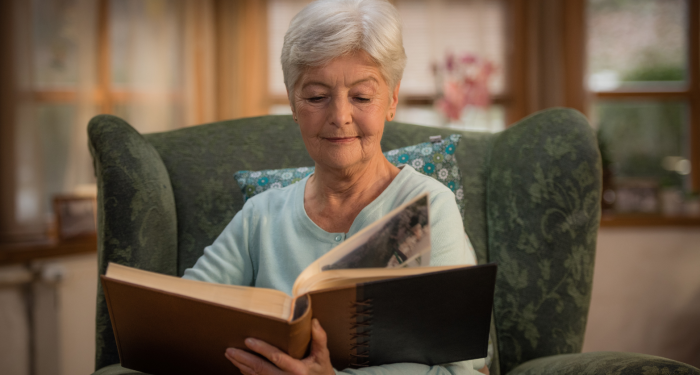
While society rushes past them in grocery store lines and conversations drift around them at family dinners, people over 70 are quietly making profound daily choices that transform aging from a descent into irrelevance into an ascent toward wisdom—decisions so private that even their closest loved ones never witness the deliberate construction of their dignity.

Add VegOut to your Google News feed. 
Last week at the grocery store, I watched an elderly gentleman carefully selecting apples. He picked up each one, turned it slowly in his weathered hands, and either placed it in his bag or gently set it back. The whole process took maybe ten minutes.
Behind him, a younger shopper shifted impatiently, eventually choosing a different checkout line. What struck me wasn't the man's slowness but his complete lack of apology for it. He moved through the world at his own pace, unbothered by the rush around him.
That moment crystallized something I've been thinking about since turning seventy myself.
Dignity in aging isn't about maintaining a youthful appearance or keeping up with technology. It's built through countless small, private decisions we make every single day. Decisions that nobody else sees or applauds, but that shape who we become in our later years.
1. They choose curiosity over certainty
You'd think after seven decades on this planet, we'd have most things figured out.
But here's what I've noticed about the most dignified elders I know: they ask more questions now than they did at forty. They read books that challenge their long-held beliefs. They listen to their grandchildren explain new ideas without immediately dismissing them as nonsense.
I recently joined a philosophy discussion group at our local library. Half of us are over seventy, and we tackle everything from artificial intelligence to ancient Greek ethics.
Last month, a retired engineer admitted he'd been wrong about climate change for years. "I finally read the actual research," he said, shrugging. "Changed my mind." That takes courage at any age, but especially when you've held an opinion for decades.
The decision to remain intellectually humble, to admit you don't know everything, keeps your mind supple and your conversations interesting. Nobody wants to be around someone who stopped learning in 1985.
2. They practice selective forgetting
Every morning, I make a conscious choice about what to remember and what to release. This isn't about actual memory loss. It's about deciding which grudges, disappointments, and old wounds deserve real estate in my mind.
My neighbor still brings up a property line dispute from fifteen years ago. Every conversation somehow winds back to that fence.
Meanwhile, another friend lost her retirement savings to a dishonest financial advisor, yet she speaks of it matter-of-factly, without bitterness. "Dwelling on it won't bring the money back," she told me. "But it will steal whatever good years I have left."
When you're seventy-plus, you realize how much mental energy revenge fantasies consume. The dignified choice is to remember the lessons but forget the anger.
3. They refuse to become invisible
Society has a way of looking through older people, especially women. Sales clerks address your adult children instead of you. Doctors explain your own symptoms to your younger companion. It would be easy to fade into the background, to accept this erasure.
But I've decided to take up space. I speak clearly in restaurants, even when the server seems surprised I'm ordering for myself. I wear the bright colors I love, not the muted tones that would help me disappear. I contribute to conversations about current events, technology, and culture, not just health problems and grandchildren.
This isn't about demanding attention. It's about refusing to participate in your own disappearance.
4. They establish non-negotiable routines
Waking at 5:30 AM isn't something I do to impress anyone. Nobody sees me in that quiet hour with my tea and journal. But this routine anchors my entire day. It's my time to think, plan, and simply exist without anyone needing anything from me.
After my knee replacements, I learned how crucial daily physical therapy exercises were. Not the dramatic kind that anyone would notice, just small, persistent movements that keep me mobile. I do them every single morning after my tea, before heading out to tend my garden.
The garden itself is another private ritual. Nobody sees me pulling weeds or deadheading roses before the heat sets in, but this daily communion with growing things reminds me I'm still capable of nurturing life.
These routines might seem rigid to younger people, but they're actually liberating. They're promises we keep to ourselves.
5. They invest in future memories, not things
At my age, I don't need more stuff. My closets are full, my bookshelves are overflowing, and I've already given away half of what I once thought was essential. But experiences? Those I collect greedily.
Last year, instead of buying new living room furniture, I spent the money on a trip to see the Northern Lights. Was it practical? No. Did my knees complain about the cold? Absolutely. But now I have that green fire dancing across the Arctic sky burned into my memory.
I see peers making different choices, saving everything for some future that might never come.
But after my cancer scare at fifty-two taught me how quickly everything can change, I decided joy shouldn't be postponed. The dignified approach isn't reckless spending; it's thoughtful investment in experiences that will warm you during the long winters ahead.
6. They protect their energy like gold
Have you noticed how some older people seem perpetually exhausted while others radiate vitality? The difference often lies in how they manage their energy. I've become ruthless about this. If a relationship drains me, I limit contact. If an activity leaves me depleted rather than energized, I stop doing it.
This might sound selfish, but it's actually generous. When I protect my energy, I have more to give to the people and causes that truly matter. I can play with grandchildren, volunteer at the literacy center, and support friends through their own challenges because I'm not wasting my reserves on obligation and guilt.
7. They tell the truth (kindly)
Something shifts after seventy. The need to please everyone evaporates. But this doesn't mean becoming cruel or tactless. It means speaking truthfully, with compassion but without unnecessary cushioning.
When a friend asks if her new boyfriend seems trustworthy, I tell her about the red flags I notice. When my adult children make financial decisions I think are risky, I share my concerns once, clearly, then let it go. The dignity comes from balancing honesty with respect for others' autonomy.
8. They prepare for the end without obsessing over it
This is perhaps the most private decision of all. Every day, we choose how much mental space to give our mortality. I've updated my will, discussed my wishes with my children, and even picked out songs for my memorial service. But then I file it all away and get on with living.
I know people who check their obituaries section before the headlines, who discuss nothing but ailments and medications. That's not dignity; it's surrender. The dignified approach acknowledges death as a future certainty while refusing to let it dominate present moments.
Final thoughts
Dignity in aging isn't granted automatically with gray hair and wrinkles. It's earned through thousands of small, daily decisions that nobody else witnesses or validates. It's choosing growth over stagnation, engagement over withdrawal, and joy over fear.
Tomorrow morning, I'll wake again at 5:30, make my tea, and sit with my journal. Nobody will see this small act of self-respect, this promise kept to myself.
But these invisible decisions, accumulated over years, are what allow us to move through our final chapters with grace, purpose, and yes, dignity. They're available to anyone willing to make them, starting today, regardless of age.