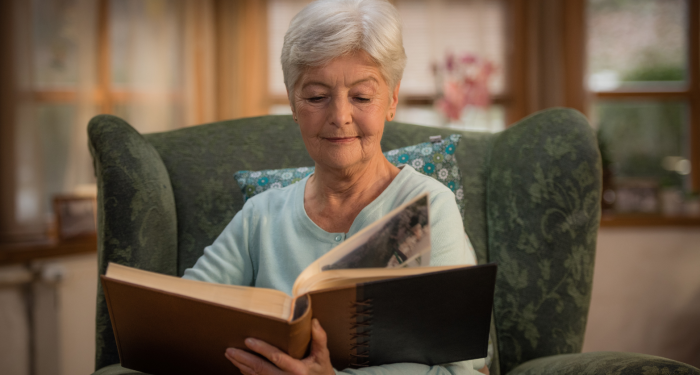
When she catches herself drafting medical reports for patients she'll never see again, she's not stuck in the past — she's speaking the only language forty years of saving lives ever taught her soul.

Add VegOut to your Google News feed. 
The coffee maker still starts at 6:47 AM, just like it has for the past forty years. The morning light filters through the kitchen window at the same angle, and somewhere in the neighborhood, a dog barks its daily greeting to the dawn.
But now, instead of rushing to beat traffic, you find yourself sitting at your laptop, scrolling through LinkedIn updates from former colleagues, wearing the same type of button-down shirt you always wore to the office, even though nobody will see you today.
If this sounds familiar, you're not alone. And despite what well-meaning friends might say about "letting go" or "embracing your freedom," what you're doing makes perfect psychological sense. You're not stuck. You're grieving, and you're doing it in the only language your professional self ever learned to speak.
The morning ritual that won't let go
When I first retired from teaching two years ago, I found myself setting my alarm for 5:30 AM, brewing my tea, and sitting down to read education journals online.
My husband would wander into the kitchen at seven and ask why I was dressed in my teaching clothes on a Wednesday morning. I'd look down at my cardigan and slacks, genuinely surprised. It wasn't conscious. My body simply knew what to wear when my mind engaged with lesson plans and pedagogical theories.
This isn't weakness or inability to adapt. According to Psychology Today, "Retirement, while often viewed as a period of well-deserved rest, can also be a time of significant identity loss." That identity doesn't just evaporate because HR processed your final paperwork. It lives in your muscle memory, in the rhythm of your mornings, in the very structure of how you organize time.
Have you noticed how your hand still reaches for your work phone at certain times? Or how you automatically think about tomorrow's meetings before remembering there aren't any? These phantom limb sensations of professional life are real, and they deserve respect, not ridicule.
When productivity becomes prayer
The act of checking industry news or organizing emails isn't really about the information anymore. It's become something else entirely: a form of meditation, a way of honoring who you were. Think about religious rituals for a moment.
People light candles, repeat prayers, perform ceremonies not because these actions accomplish tangible goals, but because they connect us to meaning, to identity, to belonging.
Your morning review of professional journals serves the same purpose. You're not planning to use that information. You're communing with a version of yourself that mattered, that contributed, that was needed. Some mornings, I still find myself mentally editing student essays that don't exist, crafting feedback for papers nobody wrote. It's not confusion. It's remembrance.
The body keeps the schedule
Our bodies are remarkable timekeepers. They remember when to feel hungry based on when lunch breaks used to be. They wake us at ungodly hours because that's when we rose for decades. This physical memory runs deeper than conscious thought.
I recently wrote about how purpose shapes our daily rhythms, and nowhere is this clearer than in early retirement.
Research published in the Journal of Affective Disorders revealed that retirees experience "Monday anxiety," with higher stress hormone levels on Mondays, indicating that work-related stress responses can persist post-retirement. Your nervous system doesn't know you've retired. It's still preparing for meetings that won't happen, deadlines that don't exist.
Rather than fighting these rhythms, what if we honored them? What if that urge to check email at 8 AM became a cue for something nurturing instead? The framework is already there. We just need to slowly, gently, redirect its focus.
Grief speaks in routine
When we lose someone we love, we often maintain their routines. We make their favorite meal, sit in their chair, keep their coffee mug exactly where they left it. These acts aren't denial; they're how humans process loss. The loss of professional identity follows the same patterns.
You spent decades becoming an expert at something. You developed specialized knowledge, unique skills, a particular way of seeing problems. That expertise shaped not just what you did but who you were. Now, checking those industry websites each morning isn't about staying current. It's about staying connected to a self that knew things, that solved problems, that mattered in specific ways.
A friend recently told me she still drafts medical reports in her head, three years after retiring from nursing. "I can't help it," she said. "My brain just does it automatically." But when she looked closer, she realized these mental reports had transformed. They'd become a way of processing her day, of organizing her thoughts, of making sense of the world using the tools she'd spent a lifetime sharpening.
The slow transformation of purpose
Here's what nobody tells you about this process: it's not about stopping these behaviors. It's about watching them transform. Kiplinger notes that "Retirement is presented as an opportunity to reinvent oneself, maintain relevance, and find joy in new pursuits." But reinvention doesn't mean erasure. It means evolution.
Those teaching clothes I wore while reading education journals? I still put them on some mornings. But now I wear them to mentor young teachers at the local community center. The journals I read sparked ideas for essays I now write. The early morning ritual remains, but its purpose has shifted.
What work rituals are you still performing? Instead of judging them, get curious. What need are they meeting? What part of you are they keeping alive? Maybe that compulsive email checking could become morning correspondence with friends. Maybe that industry news review could transform into research for a blog or volunteer work. The structure is sound; it just needs a new mission.
Final thoughts
If you're sitting at your computer right now, dressed for an office you no longer visit, reviewing emails from a job you no longer have, you're not failing at retirement. You're succeeding at being human. You're grieving with your whole body, honoring your past with your present moments, speaking loss in the language of routine.
Give yourself time. Let the rituals exist. Watch them with compassion as they slowly, inevitably, begin to shift toward something new. Your identity isn't lost; it's composting, breaking down into rich soil from which new purpose will grow.
Trust the process. Trust yourself. And maybe, just maybe, keep wearing those work clothes a little while longer. They look good on you.
If You Were a Healing Herb, Which Would You Be?
Each herb holds a unique kind of magic — soothing, awakening, grounding, or clarifying.
This 9-question quiz reveals the healing plant that mirrors your energy right now and what it says about your natural rhythm.
✨ Instant results. Deeply insightful.

Marlene Martin
Marlene is a retired high school English teacher and longtime writer who draws on decades of lived experience to explore personal development, relationships, resilience, and finding purpose in life’s second act. When she’s not at her laptop, she’s usually in the garden at dawn, baking Sunday bread, taking watercolor classes, playing piano, or volunteering at a local women’s shelter teaching life skills.
More Articles by Marlene