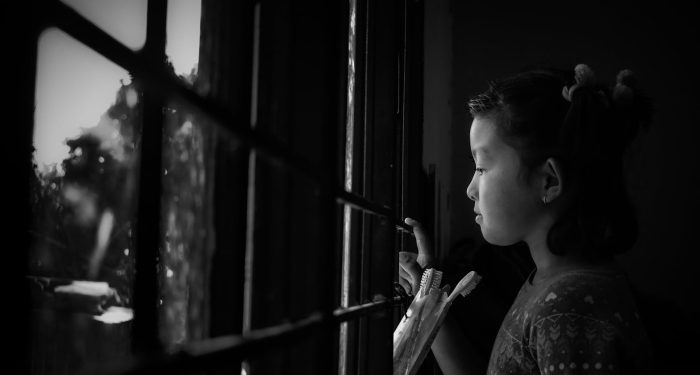
Discomfort with the birthday song isn’t about shyness. It’s often a quiet sign of someone inwardly grounded and selective about when they’re seen.

Add VegOut to your Google News feed. 
If you’re someone who quietly dreads the moment when a group of people claps, smiles, and starts singing Happy Birthday directly at you, you’re not broken.
You’re also not rude, ungrateful, or antisocial.
You’re probably just more self-aware than most.
I’ve lost count of how many times I’ve seen someone physically tense up when the candles come out.
Eyes darting.
Shoulders stiff.
Half-smile locked in place.
Waiting for it to be over.
Psychology actually has a lot to say about this reaction.
And it’s not about being a buzzkill.
It’s about attention, vulnerability, and how comfortable someone is being emotionally visible.
Let’s break it down.
1) You are highly aware of attention shifts
Have you ever noticed how quickly the mood changes when a room turns its focus onto one person?
For some people, that shift feels exciting.
Energizing, even.
For others, it’s jarring.
If you hate being sung to, there’s a good chance you’re extremely sensitive to changes in attention.
Not in an insecure way.
In a perceptive way.
You notice when the spotlight moves.
You feel the weight of eyes on you.
You’re aware of the social energy in the room.
Psychologists often link this to high social attunement.
You’re good at reading situations, reading people, and understanding unspoken dynamics.
The downside is that when all that attention lands on you, it can feel overwhelming rather than flattering.
It’s not that you don’t like people.
You just don’t love being the center of a forced, prolonged moment.
Especially one you didn’t ask for.
2) You value authenticity over performance
Let’s be honest.
The birthday song is not exactly a natural interaction.
Everyone sings the same words.
At the same tempo.
With the same awkward ending.
If you’re someone who values authenticity, this can feel oddly performative.
I’ve mentioned this before, but a lot of social discomfort comes from situations where we’re expected to play a role rather than be real.
Standing there while people sing at you doesn’t invite conversation or connection.
It asks you to perform gratitude on cue.
Smile. Nod. Blow out candles. Clap.
For people who prefer organic moments, this can feel hollow.
Psychology research on self-concept suggests that people with a strong internal sense of identity are more uncomfortable with rituals that feel scripted.
Not because they’re ungrateful.
But because the ritual doesn’t match how they naturally express emotion.
You’d probably rather have a real conversation than a chorus.
3) You are cautious with emotional exposure
Here’s the part people don’t always talk about.
Being sung Happy Birthday is a vulnerable moment.
You’re alone in the spotlight.
People are watching your reaction.
Your face. Your body language. Your response.
If you dislike it, there’s a good chance you’re selective about when and how you show emotion.
You don’t broadcast feelings casually.
You open up intentionally.
That’s actually a healthy boundary.
Psychologists often distinguish between emotional openness and emotional safety.
Some people are open because they feel safe everywhere.
Others are open only when the context feels right.
If you hate being sung to, you might fall into the second category.
You’re not closed off.
You’re discerning.
You want emotional moments to feel earned, not imposed.
4) You are internally rather than externally oriented
Some people feel validated when attention flows toward them.
Others feel validated when their inner world feels aligned.
If you cringe at the birthday song, chances are you’re more internally oriented.
Your sense of worth doesn’t come from public acknowledgment.
It comes from meaning, values, and private milestones.
This shows up in other areas too.
You might prefer quiet wins over loud praise.
One-on-one conversations over group applause.
Depth over display.
Psychology calls this an internal locus of evaluation.
You trust your own compass more than external signals.
So when a room breaks into song to celebrate you, it can feel oddly disconnected from how you actually experience significance.
You know it’s well-intentioned.
It just doesn’t land.
5) You experience social pressure more intensely
Let me ask you something.
Have you ever worried more about reacting “correctly” than about enjoying the moment itself?
That’s common among people who dislike being sung to.
There’s a subtle pressure in that moment.
You’re expected to look grateful.
Happy.
Touched.
And if you don’t feel those things naturally, you might feel tension trying to match the expectation.
Psychologists link this to heightened social self-monitoring.
You’re aware of how you’re perceived, and you care about not making others uncomfortable.
Ironically, that care can make you uncomfortable.
It’s not social anxiety in the clinical sense.
It’s social responsibility.
You’re thinking about the group, not just yourself.
6) You prefer connection without spectacle
Some people feel closest to others during big moments.
Others feel closest during small ones.
If you hate being sung to, there’s a good chance you prefer connection that’s quiet, direct, and mutual.
A heartfelt message.
A thoughtful conversation.
A shared experience that doesn’t require an audience.
From a psychological standpoint, this aligns with low sensation-seeking in social bonding.
You don’t need intensity to feel closeness.
You need presence.
I’ve met plenty of people while traveling who hated public celebrations but lit up during late-night conversations or shared meals.
No spotlight. No performance. Just connection.
Those moments tend to stick longer anyway.
7) You are comfortable with yourself but not with being objectified
This one gets misunderstood a lot.
People assume that discomfort with attention means low confidence.
Often, it’s the opposite.
If you’re comfortable with who you are, being turned into a moment or symbol can feel strange.
During the birthday song, you’re not really you anymore.
You’re “the birthday person.”
Everyone projects celebration onto you.
Expectations. Energy. Focus.
Psychologically, this can feel like mild objectification.
You’re being observed rather than engaged.
People who value autonomy and self-definition often resist this feeling, even in positive contexts.
You don’t want to be watched.
You want to be related to.
And that’s a big difference.
The bottom line
Hating being sung Happy Birthday isn’t a flaw.
It’s a signal.
It often points to someone who is perceptive, inwardly grounded, selective with vulnerability, and thoughtful about how attention works.
If that’s you, there’s nothing to fix.
You don’t need to force yourself to love the spotlight.
You just need to understand why it doesn’t feel natural.
And maybe, next time the candles come out, you can smile knowing your discomfort says more about your depth than your awkwardness.