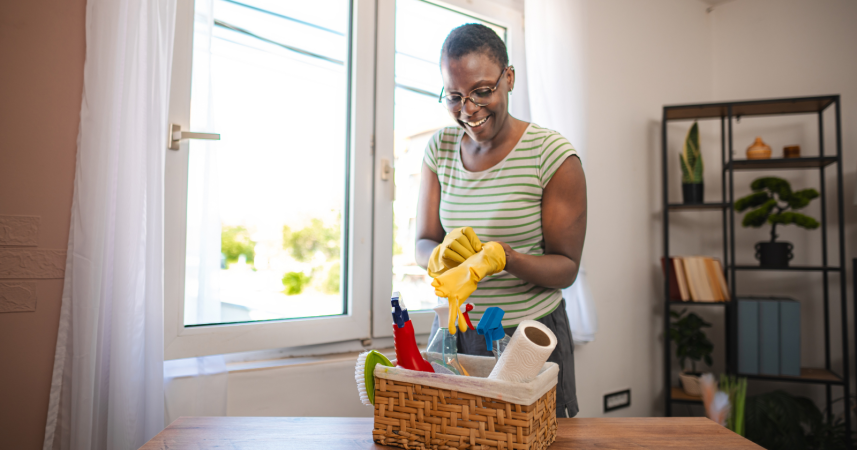
She scrubs the floors until they gleam before her granddaughter's ten-minute visit, then sits in the spotless silence for days afterward, wondering why she only feels real when someone's watching.
Last Tuesday, I watched my neighbor Martha through my kitchen window as she scrubbed her front steps for the third time that week.
Her granddaughter was coming for a twenty-minute visit. The day after, I saw her sitting alone on those same steps, staring at nothing in particular, her hands finally still.
It struck me then, this pattern I've been noticing everywhere among women of my generation and older. The frantic cleaning before company arrives, followed by days of quiet stillness. The exhausting performance of usefulness whenever someone might witness it, then the collapse into invisibility when no one's watching.
We've become so accustomed to proving our worth through our usefulness that we forgot we have worth simply by existing. Somewhere along the way, being needed and being seen merged into one desperate dance, and now we don't know how to stop performing even when the music has ended.
The invisible labor that became our identity
For decades, many of us measured our value by how spotless our homes were when the doorbell rang, how quickly we could produce a meal for unexpected guests, how seamlessly we could make everyone else's lives run. We became human infrastructure, essential but unnoticed until something went wrong.
I remember the years after my first marriage ended, when I was raising two toddlers alone. My worth felt entirely tied to how well I kept everything together. A clean house meant I was succeeding. A homemade birthday cake meant I was a good mother. Every visible act of caretaking was proof that I mattered, that I deserved to take up space in the world.
The problem wasn't the caretaking itself. The problem was that we never learned to separate our identity from our utility. When someone visited, we sprang into action because their presence gave us permission to matter. Their eyes on our clean countertops and fresh flowers validated our existence. Without witnesses, who were we?
The retirement trap nobody prepared us for
Then retirement comes, and suddenly the structure that held our identity together dissolves. The children have their own lives. The workplace no longer needs us. The calendar that was once packed with obligations stretches empty.
After winning Teacher of the Year twice during my career, I thought I understood my value. But those accolades were tied to what I did, not who I was. When I retired, I found myself polishing silver that no one would see, organizing closets that were already organized, preparing elaborate meals for a table of one.
The silence of an empty house can be deafening when you've spent forty years filling it with purpose. So we wait for visitors, for phone calls, for any excuse to spring back into our useful selves.
We clean before the plumber arrives. We bake for the mailman. We exhaust ourselves preparing for a grandchild's brief visit, then collapse into our chairs afterward, wondering why we feel so empty.
When being seen becomes the only time we feel real
There's a cruel irony in how invisible older women become in society while simultaneously feeling like they only exist when someone is watching. We've internalized this paradox so deeply that we perpetuate it ourselves.
During the six months after my second husband passed, I barely left my house. Not because I was grieving, though I was, but because I couldn't figure out who I was supposed to be without someone to be it for. The house stayed clean, though. Immaculate, actually. Just in case someone stopped by. Just in case I needed to prove I was still a functioning person.
Virginia Woolf wrote about the importance of women having rooms of their own. But what she didn't address was what happens when we finally get that room and don't know how to simply exist in it. We've been so conditioned to justify our presence through service that sitting still feels like theft.
Learning to exist without an audience
The shift begins when we realize that our worth isn't a performance. But how do you unlearn something that's been carved into your bones for decades?
I started small. I left dishes in the sink when my daughter called to say she was dropping by. The world didn't end. I stopped apologizing for the state of my house when it was already perfectly presentable. I began to notice how often I was exhausting myself for hypothetical judges who weren't even paying attention.
Slowly, I'm learning to be needed and be seen as two separate things. My value doesn't increase when I'm scrubbing countertops for visitors. It doesn't decrease when I'm reading a book in my pajamas at two in the afternoon. The radical act, it turns out, is simply existing without justification.
Reclaiming our right to rest
What would happen if we stopped treating our homes like stages and started treating them like sanctuaries? What if we saved our energy for things that bring us joy rather than things that prove our worth?
I've started experimenting with this revolutionary idea: being comfortable in my own space regardless of who might see it. My kitchen counter currently has a small pile of mail on it. There are books scattered across my coffee table. The bed is made, but only because I like how it feels to climb into a made bed, not because someone might judge me for it.
When friends visit now, they find me as I actually am, not as I think I should be. Sometimes that means they see the real evidence of a life being lived: the half-finished crossword, the coffee cup from this morning, the sweater draped over the chair.
And you know what? They seem to prefer it. It gives them permission to be human too.
Final thoughts
The saddest part of this story isn't that we've spent so many years performing our worth. It's that we've been performing for an audience that was never really watching that closely anyway. Our value was never in question except in our own minds.
If you recognize yourself in these words, know that it's not too late to stop the performance. Your worth isn't measured in clean countertops or perfect meals. You don't need to earn your right to take up space through exhausting yourself for others. You're allowed to rest in your own home, to exist without purpose, to be seen exactly as you are.
That's not laziness. That's freedom.