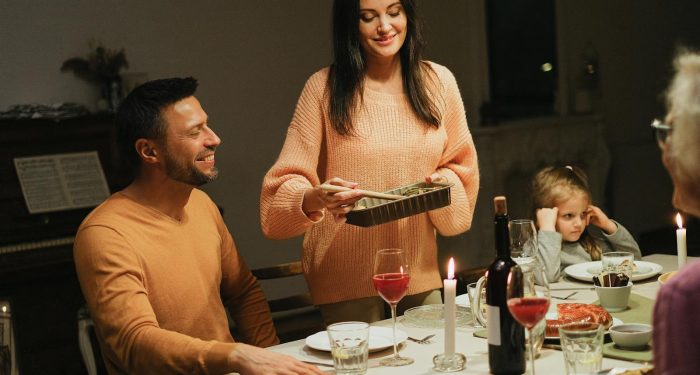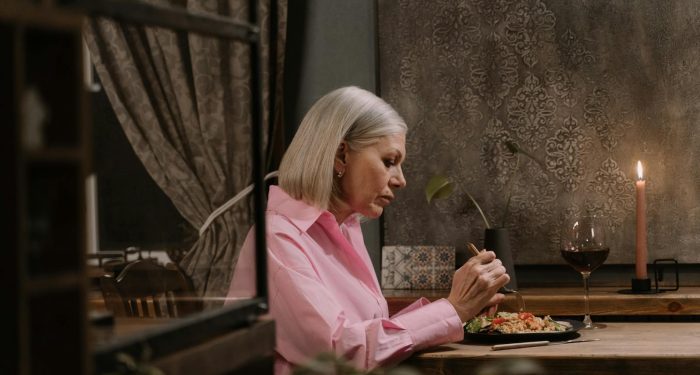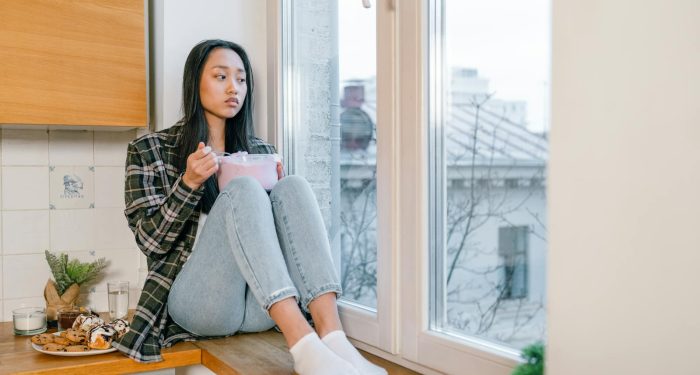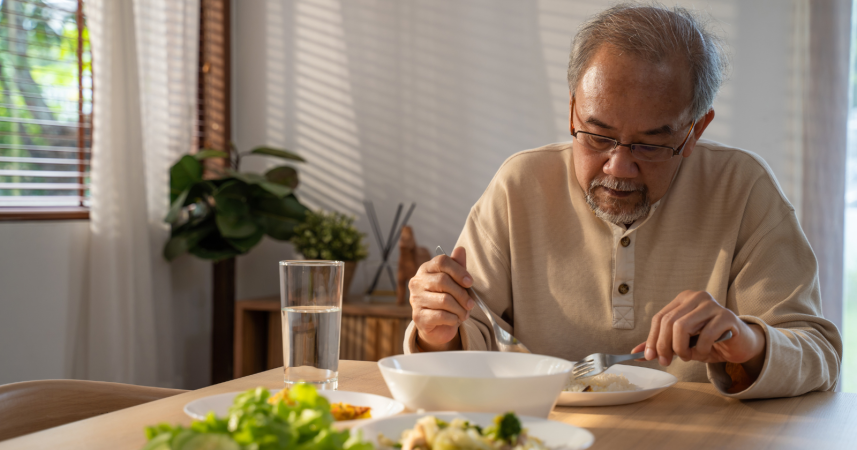
They taught us to be fortress walls protecting our children from storms, but nobody warned us that walls can't hug back, and by the time we realize our grown children learned to love us the same way we loved them—from a safe, efficient distance—it's usually over a plate of pasta set for one.

Add VegOut to your Google News feed. 
The kitchen timer beeps, and I turn off the heat under my single serving of pasta.
Through the window, I can see my neighbor's house lit up with the warm chaos of family dinner - voices overlapping, a child's laugh cutting through the evening air. I set my plate on the table, in the same spot I've eaten for three years now, and the silence feels heavier than the meal itself.
I've been thinking lately about a friend from my teaching days. She did everything the parenting books said. Consistent bedtimes, nutritious meals, college savings started before kindergarten.
She never missed a school play or parent conference. Her refrigerator was covered in achievement certificates and honor roll bumper stickers decorated her car. Yet last week, she told me her son calls twice a year, and those calls feel like he's checking off a box on his to-do list.
What the parenting books didn't tell us was that competence without vulnerability creates a peculiar kind of distance. We thought we were being strong for our children. We thought keeping our fears and failures hidden was protecting them. Instead, we were teaching them that love looks like efficiency, that care means never letting anyone see you stumble.
When perfect becomes the enemy of real
Have you ever noticed how the most organized households often feel the coldest?
There's something about a life too perfectly managed that makes people uncomfortable, like they're afraid to disturb the order. I remember keeping my house spotless when my children were young, thinking it showed I had everything under control. What it really showed was that I was terrified of anyone seeing the mess inside me.
After my breast cancer scare at 52, I sat in my car outside the doctor's office and realized I'd spent decades performing stability rather than living it. My children had never seen me cry over anything bigger than a movie.
They'd never heard me admit I was scared or lost or making it up as I went along. In trying to be their rock, I'd become more like a statue - solid, dependable, and impossible to embrace.
The truth is, children don't need parents who never falter. They need parents who show them how to be human. When we hide our struggles, we inadvertently teach our children that struggle itself is shameful. When we never ask for help, we teach them that needing others is weakness.
The armor we forgot to take off
Virginia Woolf once wrote about moments of being versus moments of non-being. I spent so many years in non-being mode - going through the motions, checking off responsibilities, maintaining the facade.
The armor I put on to survive the hard years of single parenting, of making ends meet, of pretending I knew what I was doing, eventually fused to my skin. I forgot it was supposed to be temporary.
This armor manifests in subtle ways. It's the automatic "I'm fine" when someone asks how you are. It's changing the subject when conversation veers toward feelings. It's the inability to receive help even when it's freely offered. We think we're being considerate, not burdening others. But what we're really doing is denying them the opportunity to love us in tangible ways.
I learned this the hard way when I finally started practicing meditation, something I discovered through a library audiobook of all things. Sitting still with myself for the first time in decades, I realized how much energy I'd spent maintaining walls nobody was trying to climb anymore.
Love that people can't feel
Can love exist if it's never expressed in a language the recipient understands? I loved my children fiercely, but I showed it through packed lunches and signed permission slips, through reliability and consistency. These things matter, absolutely. But they're not enough.
My daughter once told me she didn't know I was proud of her until she overheard me talking to a friend on the phone. Thirty years of pride, and I'd never thought to say it directly. I'd assumed she knew. I'd assumed my actions spoke loudly enough. But actions without words, without vulnerability, without the messy emotions that make us human - they're just tasks completed.
When I finally learned to apologize to my adult children for the ways survival mode made me less present than I wanted to be, something shifted. The conversation wasn't comfortable. My voice shook. But for the first time in years, my daughter hugged me like she meant it, not like she was supposed to.
The different shapes of reaching out
What surprised me most was learning that my children needed different things from me. My son needed space to figure himself out without my hovering presence. My daughter needed closeness, needed to know I was available for more than crisis management. For years, I'd treated them with the same efficient care, not recognizing that love itself needs to shape-shift to be received.
The irony is that in trying to be everything to everyone, we often end up being not quite enough to anyone. We spread ourselves thin in practical ways while remaining emotionally concentrated, locked away where no one can reach us.
I think about the parents I knew who seemed less capable on paper - houses messier, schedules less organized, college funds less robust. But their children come home for Sunday dinners. Their children call just to chat. Their children know their parents' favorite songs and biggest fears and what makes them laugh until they cry.
Final thoughts
If you're sitting alone tonight, wondering why the love you poured out for decades seems to have evaporated, know that it's not too late to learn a new language. Vulnerability at 72 or 82 or 92 is still vulnerability. It still counts. It still connects.
The grief of distance doesn't shrink - I've learned you just grow larger around it. But you can start small. Send the text that says you're thinking of them without adding a question that requires response. Share a memory that shows you weren't always sure, always strong, always right.
Let them see you as human, finally, fully. It might not bring them back to your dinner table tomorrow, but it might crack open a door that efficiency and competence accidentally sealed shut.
What’s Your Plant-Powered Archetype?
Ever wonder what your everyday habits say about your deeper purpose—and how they ripple out to impact the planet?
This 90-second quiz reveals the plant-powered role you’re here to play, and the tiny shift that makes it even more powerful.
12 fun questions. Instant results. Surprisingly accurate.