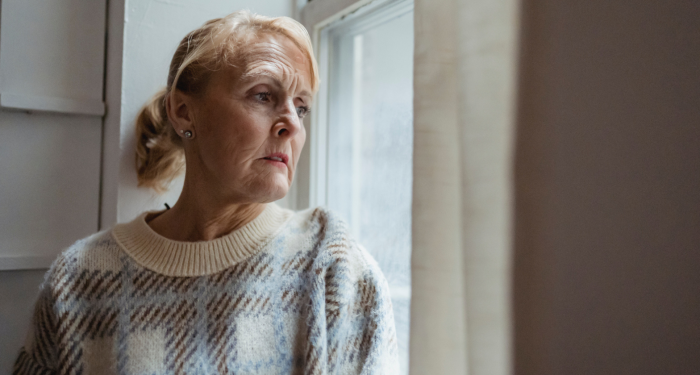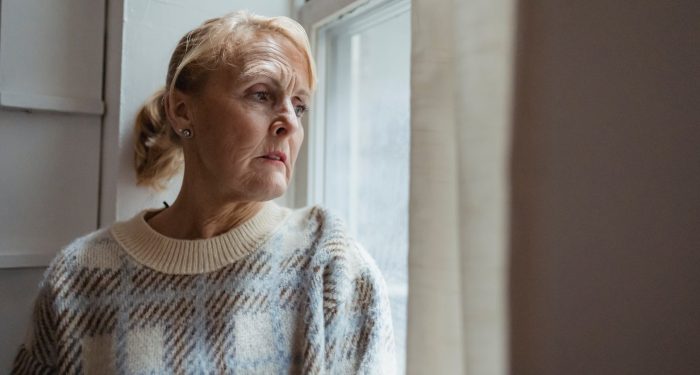
When I finally asked my 72-year-old father what he actually wanted for lunch after four decades of silent compliance, his answer revealed a heartbreaking truth about an entire generation of men who believed having preferences was a luxury they couldn't afford.

Add VegOut to your Google News feed. 
Every morning at 6:45 AM, my father would grab his black metal thermos and brown paper bag from the kitchen counter. Same spot. Same time. For forty years.
I watched this ritual thousands of times growing up, never once questioning it. Dad worked double shifts at the factory, came home exhausted, and repeated the cycle.
The thermos held black coffee. The bag held whatever my mother decided to pack that morning – usually a sandwich, an apple, maybe some cookies if we were lucky.
It wasn't until last Thanksgiving, sitting at my parents' kitchen table at 44 years old, that the truth hit me like a freight train. My mother was explaining to my partner how she still packs Dad's lunch every day, even though he's been retired for three years.
"What does he like in his sandwiches?" my partner asked innocently.
My mother paused, looked confused, then laughed. "You know, I've never actually asked him."
And that's when I understood something that had been invisible to me my entire life.
The invisible cage of masculine expectations
My father's generation of men lived by an unspoken contract. They provided. They protected. They endured. But they didn't choose – at least not the small, daily things that make up a life.
Think about it. When was the last time you heard a Boomer man express a preference for lavender soap over Irish Spring? Or admit he'd rather have turkey than ham? These weren't decisions they believed they were entitled to make.
The psychological research on this is fascinating.
Studies on traditional masculinity show that men born between 1946 and 1964 were socialized to view personal preferences as weakness. Wanting something specific – especially something as "trivial" as a particular lunch – was seen as being difficult, demanding, or worse, feminine.
My dad could make decisions about car repairs, home improvements, and financial investments. But asking for whole wheat instead of white bread? That was somehow crossing a line he didn't even know existed.
The weight of silent sacrifice
Here's what breaks my heart: my father probably had preferences. Maybe he hated tuna salad Tuesdays. Maybe he would have loved hummus and vegetables instead of bologna and cheese. We'll never know because he never felt he had permission to want anything different.
This wasn't unique to my family. I've been asking friends about their fathers lately, and the stories are eerily similar. One friend's dad ate cream cheese and jelly sandwiches every day for thirty years – turns out he was lactose intolerant the whole time but "didn't want to make a fuss."
Another friend discovered her father had been allergic to peanuts his entire adult life but kept eating the peanut butter cookies his wife packed because "that's what she liked to bake."
What kind of psychological programming makes a person willing to literally poison themselves rather than express a simple food preference?
I've mentioned this before, but when we look at decision fatigue research, we often focus on CEOs and presidents making hundreds of choices daily. But what about the opposite problem? What happens to people who never get to make choices at all?
Breaking the pattern (and why it's harder than you think)
At 44, I catch myself falling into similar patterns, and it terrifies me. Last week, my partner asked what I wanted for dinner, and I automatically said, "Whatever you want is fine."
But it wasn't fine. I wanted Thai food. I'd been craving pad see ew all day. Yet something in my programming made me default to having no preference.
Where does this come from?
For men of my generation, we're caught between two worlds. We watched our fathers demonstrate that real men don't have preferences, while simultaneously being told we should be more emotionally available and communicative. It's like being given a manual for a car while trying to fly a plane.
The behavioral science here is clear: we model what we see. My grandmother raised four kids on a teacher's salary and still volunteers at the food bank every Saturday at 82 years old. She never complained, never asked for help, never expressed what she wanted. My father learned from her, and I learned from him.
But learned behaviors can be unlearned, right?
The radical act of wanting things
Here's what I'm learning: expressing preferences isn't selfish. It's human.
When you never say what you want, you're not being noble or easy-going. You're erasing yourself, one small decision at a time. You're teaching the people who love you that your desires don't matter. Worse, you're teaching yourself the same thing.
I started small. "I'd like oat milk in my coffee, please." "Actually, I prefer the window seat." "Can we listen to something other than classic rock?"
Each tiny assertion felt like rebellion. The guilt was immediate and crushing. Who was I to have opinions about milk alternatives?
But here's what happened: the world didn't end. My relationships didn't crumble. If anything, they got stronger because people finally knew who they were actually dealing with.
What we're really talking about when we talk about lunch
This isn't really about sandwiches and thermoses. It's about the thousands of small ways we disappear ourselves to fit into roles we never auditioned for.
My father's untasted lunch preferences represent every unspoken desire, every swallowed opinion, every time he chose silence over authenticity. Multiply that by forty years, and you have a life lived for everyone except himself.
When I think about it from a generational trauma perspective, it makes sense. His parents lived through the Depression. His father fought in World War II. Against that backdrop, complaining about wanting rye bread instead of white seems almost obscene.
But we're not in the Depression. We're not at war (at least not that kind). And the cost of this inherited stoicism is steep. Studies show that men who can't express basic preferences and emotions have higher rates of depression, anxiety, and cardiovascular disease.
They literally die from not saying they'd prefer soup instead of sandwiches.
Wrapping up
Last week, I asked my father what he actually likes for lunch. The question hung in the air for so long I thought he hadn't heard me.
Finally, he said, "You know, I've always wondered what those wraps are like. The ones with the vegetables and that green stuff."
"Avocado?" I asked.
"Yeah, that."
He's 72 years old and just admitted he wants to try avocado.
We went to lunch together yesterday. He ordered for himself – a Mediterranean wrap with extra hummus. Watched him take that first bite was like watching someone discover color television after a lifetime of black and white.
The thing is, we all have our brown paper bags. Those areas where we've decided our preferences don't matter, where we've chosen invisibility over inconvenience. Maybe it's not lunch. Maybe it's your career, your relationships, your Saturday mornings.
But here's my challenge to you: What's one thing you've been accepting that you've never actually chosen? What would happen if you admitted, even just to yourself, what you actually want?
Because forty years is a long time to eat someone else's lunch.