A neighbor's simple observation about the silence in my life broke through three years of pretending to be fine, revealing how the people closest to us often can't see what strangers recognize immediately.

Add VegOut to your Google News feed. 
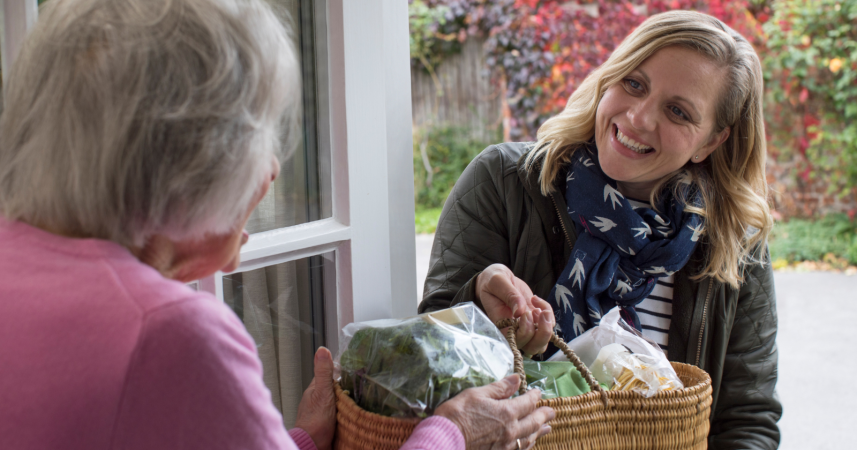
The soup was still warm when she handed it to me through my doorway, and I found myself crying before I could even thank her properly.
Not because of the soup itself, though the gesture was beautiful, but because of what she said when I finally managed to get the words out: "I know what quiet looks like from the outside."
After three years of learning to live alone again, someone had finally seen through the careful facade I'd been maintaining, the one that said everything was fine, I was managing, no need to worry about me.
When silence becomes too heavy to carry alone
There's a particular kind of quiet that settles into a house after loss. It's different from the peaceful silence of a morning with coffee and a good book, or the comfortable quiet of puttering around your garden.
This quiet has weight to it. It presses against the walls and fills up the spaces where conversation used to live. After losing my husband to Parkinson's three years ago, I became an expert at living inside this silence, convincing myself it was just part of adjusting to life alone at 70.
But here's what nobody tells you about that kind of quiet: it becomes a language all its own. You start having entire conversations with yourself. You rehearse what you might say if someone asked how you're doing, but you practice the version that doesn't burden anyone, the one that keeps things light and easy.
"Oh, I'm keeping busy!" becomes your refrain, even when busy means watching the same cooking show three times because you forgot you'd already seen it.
The art of asking without asking
Growing up, I learned that needing help was something to be ashamed of. Good people, strong people, capable people - they handled their own problems. They didn't burden others with their struggles.
This message was delivered in a thousand small ways: the tight smile when relatives offered assistance, the quick "We're fine, thank you" that shut down any possibility of support, the pride in never owing anyone anything.
Have you ever noticed how we've turned independence into a virtue so absolute that we'd rather suffer in silence than admit we're struggling? We perform elaborate dances around our needs, hoping someone will notice without us having to actually voice them. We drop hints like breadcrumbs, then feel disappointed when no one follows the trail.
My neighbor, bless her, didn't need breadcrumbs. She saw right through the freshly swept porch, the makeup I still put on every morning, the cheerful "Hello!" I offered whenever we crossed paths. She saw what my own children, calling dutifully once a month from their busy lives, seemed to miss: that maintaining the appearance of being okay was exhausting me more than the loneliness itself.
When strangers become family
Virginia Woolf once wrote, "Some people go to priests; others to poetry; I to my friends." But what happens when the friends you need most aren't the ones you expected? When the person who shows up with soup and understanding is the neighbor you've only known for a few years, while your own children remain loving but distant satellites, orbiting your life without quite entering it?
I don't blame my kids. They have their own lives, their own challenges. They check in, they visit on holidays, they send flowers on my birthday. But they don't see the daily reality of what it means to be 70 and alone, to have entire days stretch before you with no one to share them with.
They remember me as the strong mother who raised them, who managed everything, who never seemed to need anything from anyone.
The truth is, I trained them to see me this way. Even when I was a single mother after my first divorce, juggling work and parenting, I made sure they never saw me struggle. I thought I was protecting them, teaching them resilience. Maybe I was. But I was also teaching them that their mother was somehow above human need, that I existed outside the normal requirements for connection and care.
The gift of being seen
What my neighbor gave me that day wasn't just soup. It was permission to stop pretending. She didn't wait for me to find the right words to explain how the nights had gotten longer, how I sometimes went three days without speaking to another person, how I'd started leaving the TV on just for the sound of human voices. She simply saw it all and responded.
We've started having coffee together on Thursday mornings now. Not because I asked, but because she suggested it in a way that made it seem like she needed it as much as I did. "I could use the company," she said, though I suspect her life is full enough without me.
This is the kindness of people who understand that sometimes the greatest gift isn't solving someone's problems but simply acknowledging that they exist.
Last week, she mentioned that her own mother had gone through something similar after her father died. "She kept saying she was fine," my neighbor told me, stirring sugar into her coffee. "It took me too long to realize that 'fine' was just the word she used when she couldn't figure out how to ask for what she really needed."
Learning to speak our needs
The hardest part about accepting help at this age isn't pride, though that's certainly part of it. It's unlearning seventy years of conditioning that told us our needs were burdens, our struggles were ours alone to bear, and that asking for help was tantamount to failure. How do you suddenly start speaking a language you were never taught?
I'm trying, though. Small steps. When my neighbor asks if I need anything from the store, I sometimes say yes now instead of reflexively declining. When she invites me for dinner, I accept without offering three reasons why she shouldn't go to the trouble. These feel like radical acts, these small acknowledgments that I am human and humans need each other.
Final thoughts
That warm bowl of soup taught me something I wish I'd learned decades ago: sometimes the bravest thing we can do is let others see us as we really are. Not the polished version, not the "everything's fine" version, but the real, complicated, sometimes struggling human being underneath.
My neighbor's words, "I know what quiet looks like from the outside," weren't just an observation. They were an invitation to stop performing strength and start accepting connection. At 70, I'm finally learning that the grace we extend to others in their time of need is the same grace we deserve to receive in ours.
And sometimes, that grace comes from the most unexpected places, carried in a bowl of soup and a moment of pure understanding.
If You Were a Healing Herb, Which Would You Be?
Each herb holds a unique kind of magic — soothing, awakening, grounding, or clarifying.
This 9-question quiz reveals the healing plant that mirrors your energy right now and what it says about your natural rhythm.
✨ Instant results. Deeply insightful.
Marlene Martin
Marlene is a retired high school English teacher and longtime writer who draws on decades of lived experience to explore personal development, relationships, resilience, and finding purpose in life’s second act. When she’s not at her laptop, she’s usually in the garden at dawn, baking Sunday bread, taking watercolor classes, playing piano, or volunteering at a local women’s shelter teaching life skills.
More Articles by Marlene