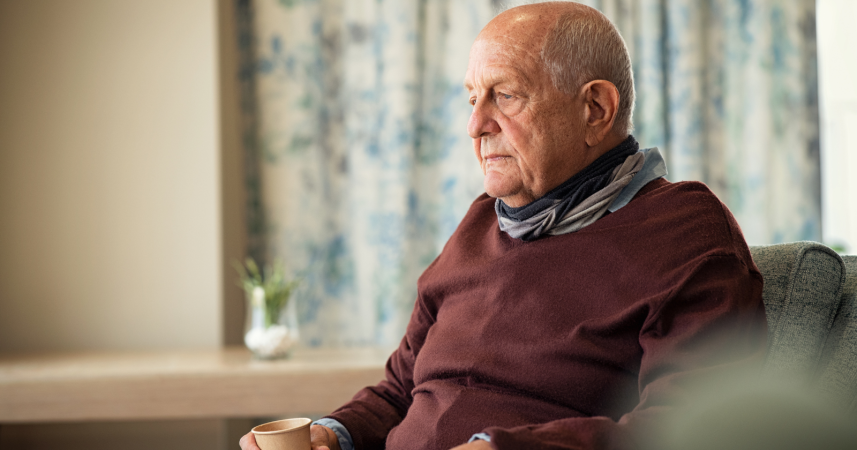
At our 50th reunion, watching the former king of our high school sit utterly alone with an untouched drink, I realized I was witnessing the exact moment a person discovers that everything they'd banked their entire life on had just become worthless.

Add VegOut to your Google News feed. 
The gymnasium smelled exactly the same as it did in 1974—floor wax mixed with that peculiar scent of old brick and teenage memories.
Crepe paper in our school colors draped from the rafters, and someone had managed to find a disco ball that cast tiny squares of light across faces I half-recognized. That's when I saw him. Brad, who once strutted these same halls like he owned them, sat alone at a corner table.
His bourbon remained untouched, creating a ring of condensation on the paper tablecloth. The confident jaw that used to jut forward when he laughed was now slack, and his eyes held the particular emptiness of someone who'd just realized they'd been speaking a dead language all their life.
I'd come to this reunion curious about everyone's stories, but Brad's solitude felt like the most important lesson in the room. Here was the boy who'd never eaten lunch alone, never walked to class without an entourage, never doubted his place at the center of everything. Now, at seventy, he looked like someone had pulled away the chair he'd been leaning back in for five decades.
The currencies we choose to spend
We all trade in different currencies throughout our lives.
Some of us invest in careers, others in family, still others in popularity or power. Brad had chosen social capital as his primary investment, and for years, it must have paid spectacular dividends. He was the guy everyone wanted at their parties, the one whose approval could make or break your high school experience.
I remember watching him work a room even as a teenager, dispensing attention like a medieval lord granting favors.
But here's what I've learned after teaching teenagers for over three decades: the currencies that matter most at seventeen rarely hold their value at seventy. I watched countless students who believed their worth was tied to their popularity, their athletic prowess, or their parents' money. The ones who struggled most as adults were often those who never learned to diversify their emotional portfolio.
That night at the reunion, I noticed something else. The quiet kids from our class, the ones Brad probably never noticed, were surrounded by grandchildren's photos and stories of meaningful work. They'd invested in currencies that appreciated over time: genuine relationships, personal growth, the ability to find joy in small moments.
One woman who'd been painfully shy in school was now leading community theater productions. The math nerd who ate alone had become a beloved pediatrician whose former patients sought him out just to say thank you.
When the music stops playing
Have you ever watched someone realize that the game they've been playing has different rules than they thought? That's what I saw in Brad's face. The social dynamics that had sustained him for so long had shifted without warning.
The people who once orbited around him had developed their own gravitational pulls. They had careers that fulfilled them, children who needed them, interests that engaged them beyond the simple geography of who sat where in the cafeteria.
After my divorce, I experienced my own version of this revelation. Couple friends who'd seemed so close suddenly didn't know how to include a single woman in their dinner parties.
The social currency I'd accumulated as part of a pair became worthless overnight. I remember sitting at home on a Saturday night, realizing that my identity had been so wrapped up in being someone's wife that I'd forgotten how to be myself. It was terrifying and liberating in equal measure.
But unlike Brad, I was forced to adapt earlier. I had to learn new currencies: self-reliance, authentic friendship without the scaffolding of couple-dome, the courage to show up alone. Teaching helped. Teenagers don't care about your social status; they care about whether you see them, whether you're real with them.
They taught me that the most valuable currency isn't popularity or even being needed. It's the ability to connect genuinely with another human being, even if just for the length of a conversation about Shakespeare or a struggle with algebra.
The grace of starting over at any age
Looking at Brad that night, I wanted to tell him something I'd written about in a previous post on resilience: it's never too late to learn a new currency. Yes, it's harder at seventy than at thirty.
The patterns are more entrenched, the ego more fragile. But I've seen people in their eighties discover painting, in their seventies find love again, in their sixties finally write the book that had been living in them for decades.
The question isn't whether Brad can change—it's whether he'll choose to. Will he recognize that the emptiness he feels is actually an invitation? Can he see that table for one not as exile but as freedom from a role that stopped fitting him years ago?
I think about the students I taught who struggled with similar realizations much younger. The star athlete who got injured and had to discover who he was without football. The valedictorian who got to college and realized she didn't actually know how to make friends. They all faced the same choice Brad faces now: mourn the old currency forever or learn to trade in something new.
Finding wealth in unexpected places
Before I left the reunion, I did something that surprised me. I walked over to Brad's table and sat down. Not out of pity, but out of recognition. We talked for an hour about real things: his fear of irrelevance, his estrangement from his children who only knew him as the life of the party, never as a full person. His voice broke when he admitted he didn't know how to be alone with himself.
"I keep waiting for the phone to ring," he said, "but I don't even know what I'm hoping to hear."
I told him about my own reckoning with invisibility, how being an older woman in our society often feels like slowly disappearing. But I also told him about the unexpected freedom that comes with it. When you stop trading in other people's validation, you can finally invest in your own growth. When you stop performing, you can finally be.
Final thoughts
That reunion taught me something I wish I'd understood at twenty, thirty, even sixty: the only currency that never loses value is our capacity to grow, to connect authentically, and to find meaning in each chapter of our lives. Brad's story isn't finished. None of ours are.
The invitation is always there, waiting at any age, to trade in our old, devalued currencies for something richer, truer, and infinitely more sustaining. The real question is: what are you willing to exchange, and what might you receive in return?