In the silence that followed my last sip of wine, I heard the truth nobody wanted to speak aloud: sobriety had transformed me from the life of the party into the ghost who haunted it.

Add VegOut to your Google News feed. 
The invitation came on a Thursday afternoon in March. My phone buzzed with a text from someone I'd once considered one of my closest friends: "Having a little get-together Saturday night. Hope you can make it!"
I stared at those words, knowing exactly what they meant. I was the backup plan, the person she texted after her first-choice friends couldn't come.
Twelve years ago, I would have been in the original group text, the one sent weeks in advance with excited emojis and planning details. But that was before 2011, before I put down the wine glass for the last time, before I became the friend who orders sparkling water with lime at dinner parties.
1. When the music stopped playing
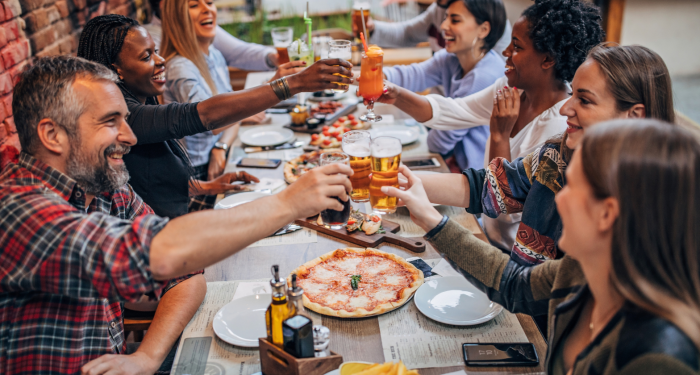
Have you ever noticed how alcohol is the invisible thread that weaves through most adult social gatherings? It's in the "Wine Wednesday" invitations, the "cocktails at 6" messages, the assumption that celebration equals champagne. I never noticed it either, not until I stopped participating in that particular dance.
The shift was subtle at first. Friends would still invite me to book clubs where the wine flowed as freely as the conversation, but there was a new awkwardness when I passed on the Pinot Grigio. "Are you sure?" they'd ask, holding the bottle hopefully. "Not even just one?"
The concern in their voices was real, but so was the confusion. Who was this woman who no longer loosened up after her second glass, who remembered every story told at dinner, who drove herself home at 9:30?
I remember one evening about six months into my sobriety, sitting at a restaurant with a group of women I'd known for years.
As they ordered their third round, the conversation turned to topics that seemed to require that special kind of liquid courage: marital frustrations, secret disappointments, the kind of raw truths that apparently needed wine as a chaperone.
I sat there with my cranberry juice, suddenly feeling like I was watching a play from the audience instead of being on stage with them.
2. The unspoken rules of friendship roulette
Nobody teaches you that adult friendships often operate on unwritten contracts. You show up, you participate in the prescribed activities, you maintain the status quo. Change the terms, and suddenly you're in breach of something nobody even knew existed.
After my divorce years earlier, I'd already experienced one version of this social reshuffling. Couples who had invited us to dinners and weekend gatherings suddenly didn't know where to seat a single woman at their carefully balanced tables.
But at least then, I still had wine as my admission ticket to the remaining social circles.
Without alcohol, I became something more unsettling: a mirror. My presence seemed to make people uncomfortably aware of their own drinking. "I really should cut back too," they'd say, pouring another glass.
Or worse, they'd moderate their drinking around me, creating a stilted atmosphere where everyone was performing sobriety for my benefit.
3. Finding grace in the smaller circle
Here's what they don't tell you about losing friends: sometimes it's not a loss at all, but a distillation. Like reducing a sauce on the stove, you boil away the excess until you're left with something richer, more concentrated, more true.
The friends who stayed, who called me first rather than last, were the ones who discovered that I was actually more myself without alcohol, not less. They were the ones who said, "Let's meet for coffee" or "Want to take a walk?" without mourning the absence of happy hour.
These were the friends who realized that vulnerability doesn't require liquid courage, that laughter doesn't need wine as a catalyst, that connection can happen over herbal tea just as easily as over cocktails.
My weekly supper club became my anchor. Five women who gather not for the wine pairing but for the soul pairing. We take turns cooking, and yes, some of them drink, but it's incidental to the real purpose: showing up for each other's lives, stone-cold sober or otherwise.
4. The gift of being second choice
Would you believe me if I told you that being the backup friend became a blessing? There's a freedom in no longer being everyone's first call.
The obligations decreased. The exhausting performance of being "fun" at every gathering ended. The pressure to maintain a social calendar that looked successful from the outside evaporated.
Instead, I found myself with time. Time to write in the mornings with a clear head. Time to remember conversations, to be fully present for my children when they called with their adult problems and joys. Time to discover who I was when I wasn't trying to be who everyone expected me to be.
The people who call me now, even if I'm their second choice, call because they want my company, not my participation in a ritual. They've thought about it, considered their options, and chosen to include me anyway. There's something honest about that, something stripped of pretense.
5. Rewriting the social contract
At 70, I've learned that every ending is also a beginning, though it rarely feels that way when you're standing in the middle of the loss. In 2011, when I felt that social world shrink around me like that sweater in hot water, I thought I was becoming smaller too.
But I was actually becoming more concentrated, more essentially myself.
I think about my years teaching high school, watching teenagers navigate their brutal social hierarchies, and I realize we never really stop being those kids, desperate to belong, terrified of being left out. The only difference is that as adults, we use alcohol instead of popularity to measure our social success.
Now, when that occasional text comes, asking if I'm free because someone else canceled, I sometimes say yes and sometimes say no, but I never take it personally. I understand that I'm not everyone's cup of tea, literally.
But for the people who've learned to appreciate the flavor of our friendship without additives, I'm exactly what they're thirsting for.
Final thoughts
That Thursday text? I declined politely. Not out of hurt or resentment, but because I had plans with my supper club that night.
We were making soup and talking about books and life and all the things that matter more as you age. No one was drinking to forget or to feel brave or to fill the silence. We were just there, together, first choice every time.
What’s Your Plant-Powered Archetype?
Ever wonder what your everyday habits say about your deeper purpose—and how they ripple out to impact the planet?
This 90-second quiz reveals the plant-powered role you’re here to play, and the tiny shift that makes it even more powerful.
12 fun questions. Instant results. Surprisingly accurate.