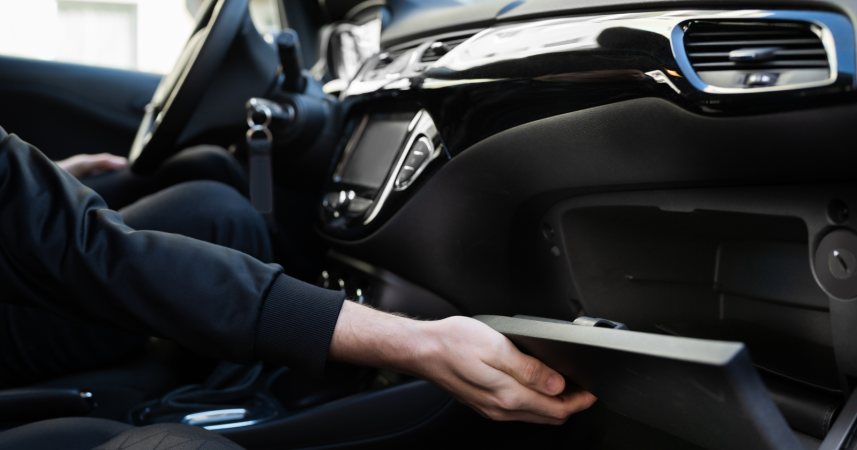
Your glove compartment chaos isn't just clutter—it's a psychological goldmine that reveals why you're simultaneously the most prepared and least prepared person in every room.

Add VegOut to your Google News feed. 
Remember that junk drawer in your kitchen? The one with batteries that may or may not work, takeout menus from restaurants that closed two years ago, and that mystery key nobody can identify?
Well, I recently discovered my car's glove compartment is basically that drawer on wheels.
Last week, while searching for my registration (naturally running late for an appointment), I excavated napkins from In-N-Out, Whataburger, and Chick-fil-A, a flashlight that's been dead since 2021, and yes, an ice scraper. I live in Austin, Texas, where we panic-buy bread when it hits 40 degrees.
This got me thinking. Our cars are like mobile psychology labs, revealing way more about us than we realize. That glove compartment chaos? It's not random. It actually points to some pretty specific personality traits.
After diving into some behavioral psychology research and having a few too many conversations about this at dinner parties, I've identified seven distinct traits that us glove-compartment-hoarders tend to share.
1) You're an optimistic preparer (with questionable follow-through)
That dead flashlight tells a story. At some point, you thought, "I should be prepared for emergencies!" You bought the flashlight, proudly stashed it in your glove compartment, and then completely forgot about it until the batteries leaked all over your owner's manual.
Sound familiar?
This combination of optimistic preparation and sporadic follow-through shows up everywhere in our lives. We buy gym memberships in January and ghost them by March. We stock up on vegetables with grand meal-prep plans, then order takeout while they wilt in the crisper drawer.
The psychology behind this is fascinating. Research shows that we're hardwired to overestimate our future motivation and underestimate the effort required to maintain new habits. We genuinely believe Future Us will check those flashlight batteries regularly. Spoiler alert: Future Us won't.
But here's the thing. This trait isn't entirely negative. That initial optimism and desire to be prepared? That's actually a strength. You just need systems to bridge the gap between good intentions and actual maintenance.
2) You treat your car as an extension of your living space
Those multiple fast-food napkins aren't just napkins. They're evidence that your car isn't just transportation; it's your mobile office, dining room, and sometimes even your thinking space.
I've written some of my best ideas in my car, scribbling on whatever paper I could find (usually those napkins). My small notebook lives in the center console, but when inspiration strikes at a red light, those Whataburger napkins become prime real estate for capturing thoughts.
People who blur the boundaries between their car and living space tend to be highly adaptable and creative. You're comfortable making any environment work for you. While others need perfect conditions to be productive, you can turn a parking lot into a conference room or a drive-through line into a meditation session.
This flexibility in how you use space often translates to flexibility in thinking and problem-solving. You don't need everything to be perfect to make progress.
3) You're a practical sentimentalist
Why do we keep that ice scraper in Texas? It's not purely practical. There's something deeper happening here.
Maybe you moved from somewhere colder and that scraper is a tiny monument to your past life. Or perhaps it was in the car when you bought it, and throwing it away feels somehow wrong. Either way, you're someone who assigns meaning to objects beyond their utility.
This trait reveals itself in other areas too. You probably have that one jacket you never wear but can't donate because you wore it on a great trip. Or coffee mugs from places you've visited taking up valuable cabinet space.
Behavioral psychologists call this "psychological ownership." We form emotional attachments to objects that represent experiences, memories, or versions of ourselves. It's not hoarding; it's storytelling through stuff.
4) You operate on "just in case" logic
Three different restaurant napkins? That's not disorganization. That's diversification.
You're the friend who always has Band-Aids, phone chargers, and yes, napkins when someone needs them. Your brain is constantly running scenarios: What if someone spills something? What if I need to write something down? What if there's no toilet paper in that sketchy gas station bathroom?
This "just in case" mentality indicates high conscientiousness mixed with a touch of anxiety. You've learned from experience that small preparations can prevent big problems. While others wing it, you've got backup plans for your backup plans.
The research on this is clear: people who engage in "defensive pessimism" often perform better because they've already mentally rehearsed potential problems and solutions.
5) You have selective organizational skills
Here's what's interesting: I bet other areas of your life are impeccably organized. Maybe your desk is spotless, or your digital files are perfectly labeled. But that glove compartment? Different story.
This selective organization is actually pretty common among high-functioning people. We allocate our organizational energy to areas that directly impact our daily productivity or public image. The glove compartment, being private and rarely accessed, falls into the "deal with it later" category that never quite arrives.
Psychologists recognize this as "cognitive load management." We can't optimize everything, so we unconsciously prioritize. Your messy glove compartment might actually be evidence of good mental energy allocation, not poor organizational skills.
6) You're comfortable with controlled chaos
That jumbled mix of napkins, dead flashlight, and ice scraper doesn't stress you out. In fact, you probably know exactly what's in there, even if it looks like chaos to others.
This comfort with controlled chaos often correlates with creative thinking and adaptability. Studies have shown that people who work well in moderately chaotic environments tend to be better at making unexpected connections and thinking outside conventional patterns.
You're probably the person who can find exactly what they need in a messy drawer while your ultra-organized friend struggles to locate things in their labeled containers. Your brain has created its own filing system that doesn't rely on traditional organization.
7) You're a pragmatic procrastinator
Finally, let's address the elephant in the glove compartment. You know that flashlight needs batteries. You know the ice scraper is useless in Austin. You know those napkins from 2019 should probably go.
But they're not hurting anything, right?
This is pragmatic procrastination at its finest. You're smart enough to recognize what truly needs immediate attention versus what can wait indefinitely. That glove compartment isn't affecting your daily life, so it stays on the perpetual back burner.
This trait often appears in highly productive people who've learned to ruthlessly prioritize. You get the important stuff done and let the small stuff slide. It's actually a form of efficiency, even if it doesn't look that way.
Final thoughts
After excavating my own glove compartment archaeology site, I've come to appreciate what it reveals.
That chaotic little space is a mirror of how we navigate life: optimistically prepared but realistically flawed, sentimental but practical, organized where it counts but comfortable with chaos where it doesn't.
So next time you open that glove compartment and face that familiar jumble, don't see it as a failure of organization. See it as evidence of a complex, adaptable human who's doing their best to prepare for an unpredictable world, even if that means carrying an ice scraper through Texas summers.
And maybe, just maybe, check those flashlight batteries. You know, just in case.
What’s Your Plant-Powered Archetype?
Ever wonder what your everyday habits say about your deeper purpose—and how they ripple out to impact the planet?
This 90-second quiz reveals the plant-powered role you’re here to play, and the tiny shift that makes it even more powerful.
12 fun questions. Instant results. Surprisingly accurate.