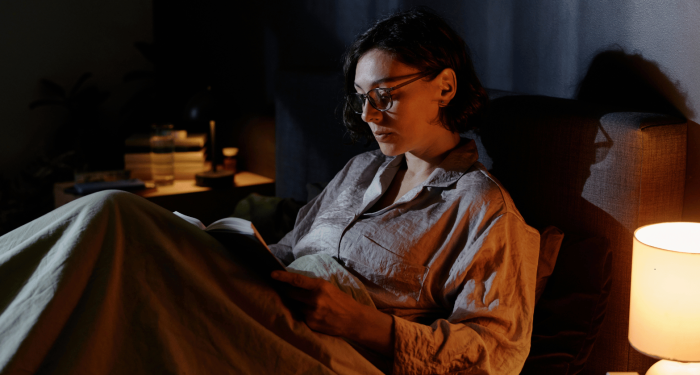
These “small” things in an 80s bedroom were early proof that your environment can support you.
If you grew up in the 80s, you probably remember a bedroom that felt like a weird mix of “kid zone” and “storage unit.”
Clothes on the floor, a poster peeling off the wall, or maybe a suspicious smell you could not identify but you definitely blamed on your brother.
But every now and then, you’d walk into a friend’s room and think, “Oh, so this is how the other half lives.”
More like in a “how do you have your own TV and snacks and a phone?” kind of way.
Here’s the funny part: A lot of those little upgrades weren’t just cool.
They were early versions of the things we all chase as adults, comfort, autonomy, entertainment, privacy, and a sense that life is not constantly happening to you.
So, let’s take a nostalgia trip.
If you had any of these seven things in your childhood bedroom in the 80s, you were living better than you realized.
1) A TV with cable and a VCR
Having a TV in your room was basically the 80s version of having your own streaming account today.
It meant you could control what you watched and when you watched it.
No fighting your parents for the living room, no getting kicked off the screen because your dad wanted the news, and n pretending you liked whatever your older sibling put on.
If you had cable, you were basically royalty with cartoon marathons, music videos, and movies you definitely were not old enough to see.
It was your own little entertainment empire, then there was the VCR.
The ability to record something and watch it later sounds normal now, but back then it felt like magic.
That little blinking “12:00” clock was annoying, sure, but it was also a symbol that you had options.
As an adult, I think of this as an early lesson in designing your environment.
If you want better habits, better moods, better days, you start with what is within arm’s reach.
2) A Nintendo or Atari within arm’s reach
Some people talk about video games like they were just brain rot.
I get it, if you spent eight hours trying to beat the same level and you still hear the music in your sleep, you might have a point.
But if you had a Nintendo, Atari, or Sega setup in your room, you also had something else: An early relationship with challenge.
Games were frustrating.
They were repetitive, made you fail a lot, and then made you try again anyway.
That’s not a bad training ground for adulthood, honestly.
Also, let’s be real.
If your console was in your room, you had a level of freedom and trust that not every kid got.
You weren’t negotiating screen time every day nor dragging the system back and forth from the living room like a traveling salesman.
You could just play, learn, and zone out.
Sometimes, zoning out is recovery.
3) A stereo system or boombox with a tape collection
Before playlists, there were mixtapes.
Before wireless earbuds, there was the Walkman, the boombox, or that stereo system with the two speakers that made you feel like a DJ.
If you had music in your room, you had a way to change your emotional state on demand.
Bad day at school? Put on a tape, lie on the carpet, and stare at the ceiling like you were in a movie montage.
Feeling hyped? Blast something loud enough that your parents yelled from down the hallway.
Music is still one of the fastest ways to shift your mood, and the 80s taught a lot of us that without the language for it.
These days, we call it nervous system regulation.
Back then, it was just pressing play.
Also, owning music meant curating your identity.
You could look at someone’s tape stack and instantly understand their vibe.
That’s not that different from seeing someone’s bookshelf or, yes, their fridge.
What you surround yourself with becomes who you are.
4) A real computer that was actually yours

If you had a computer in your room in the 80s, you were ahead of the curve in a way most people didn’t recognize at the time.
Maybe it was a Commodore 64, an Apple, or a chunky IBM that sounded like it was preparing for takeoff.
Either way, it was a tool.
You were learning how to problem-solve, tinker, fail, troubleshoot, and try again.
Moreover, you were getting comfortable with tech before tech became unavoidable.
I think that comfort with experimentation matters more than we admit.
In kitchens, you learn fast that perfection is rare.
You burn things, over-season, and mess up timing.
The people who get good are the ones who keep adjusting.
A computer in your room gave you a sandbox for that mindset.
5) A proper desk setup that made studying feel possible
Not everyone had a desk.
Plenty of kids did homework at the kitchen table, on the floor, or on a bed with a pencil that kept disappearing into the sheets.
So, if you had a real desk, a decent chair, a working lamp, and maybe even a little organizer with pens that were not chewed to death, that was a quiet form of privilege.
It meant someone expected you to learn.
Someone made space for it, and space is psychological.
When you have a dedicated spot to read, write, draw, or build, you’re more likely to do those things because the friction is lower.
I’ve read a lot of nonfiction that basically repeats this idea in different fonts.
Your environment shapes your behavior.
The easiest habit is the one that is already set up.
A desk in your room was the 80s version of a home office, a signal that your future mattered.
6) A snack stash that was just for you
Let’s talk about food, because this is where the “living better” part gets very real, very fast.
If you had a drawer, bin, or little shelf in your room with snacks, you had something rare: Access.
Maybe it was crackers, cereal, fruit snacks, peanut butter, instant noodles, or whatever your household considered “treat food,” or maybe you even had juice boxes or a stash of gum that you guarded like it was gold.
This was a form of autonomy.
As someone who spent years in luxury hospitality, I’m obsessed with the idea of being taken care of before you even ask.
That’s the whole game.
You anticipate needs.
A snack stash is childhood hospitality.
It says, “You’re allowed to be hungry and handle it.”
Of course, it could also backfire.
Unlimited sugar plus an unsupervised kid equals chaos, but the deeper lesson is that food security, even in small ways, changes how relaxed you feel in your own space.
If you grew up with that, you were probably calmer than you realized.
7) A phone in your room that gave you privacy
If you had your own phone line, or even just a landline extension in your bedroom, you had a level of social freedom that was pre-texting.
When the phone rang, it was an event.
Having that phone in your room meant your friendships could deepen without your parents hovering in the hallway pretending they were not listening.
It meant you could talk for hours, have secrets, and build social confidence in real time, with real voices, and real awkward pauses.
Finally, it also meant you had a boundary.
You had a small slice of life that was yours.
Boundaries, even tiny ones, are a big deal.
They teach you that you’re allowed to have space, preferences, and privacy.
Likewise, they taught you that you don’t need to perform every part of your life for other people.
That lesson pays off later, in relationships, in work, and in the way you handle your own stress.
The bottom line
A lot of us look back on childhood and remember what we lacked—the stuff we didn’t have and the ways our lives felt unfair—and, sure, some of that is valid but it’s also worth noticing what did work.
The little comforts that made life feel easier and the objects that gave you freedom, focus, entertainment, or a sense of being cared for.
Those “small” things in an 80s bedroom were early proof that your environment can support you.
So, here’s a question to sit with: What’s the adult version of that for you now?
Maybe it’s a kitchen stocked with food that actually makes you feel good, a workout routine you enjoy, or a quiet corner where you can read, journal, or think.
Whatever it is, build it on purpose.
You might be living better than you realize.
If You Were a Healing Herb, Which Would You Be?
Each herb holds a unique kind of magic — soothing, awakening, grounding, or clarifying.
This 9-question quiz reveals the healing plant that mirrors your energy right now and what it says about your natural rhythm.
✨ Instant results. Deeply insightful.