His weathered hands trembled slightly as he leaned in and whispered, "You know what nobody tells you about getting old? It's not the aches and pains that get you—it's becoming invisible."

Add VegOut to your Google News feed. 
The waiting room smelled like disinfectant and old magazines.
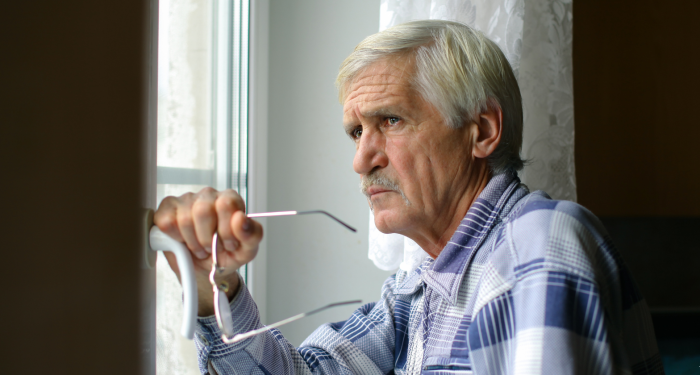
I'd just settled into one of those uncomfortable plastic chairs when the man next to me, silver-haired with hands that showed every one of his years, turned and said, "You know what nobody tells you about getting old? It's not the aches and pains that get you. It's becoming invisible."
I looked up from my phone, struck by the rawness in his voice. He wasn't complaining, exactly. More like stating a fact he'd only recently discovered himself.
"I used to run a construction company," he continued, adjusting his worn baseball cap. "Forty-two employees. People asked my opinion on everything. Now? The grocery store clerk talks over my head to the person behind me in line. My own grandkids look through me at family dinners, like I'm part of the furniture."
For the next twenty minutes, until his name was called, this stranger shared truths about aging that no financial advisor or retirement seminar had ever mentioned.
And sitting there, at 71 myself, having navigated my own journey through loss and reinvention, I recognized the profound loneliness he was describing. It reminded me of something my mother used to say before Alzheimer's took her words away: "Growing old is like watching yourself disappear, one piece at a time."
The crisis nobody names
What struck me most about our conversation wasn't his physical complaints, though he had plenty. It was the identity crisis he was describing. When you spend decades being someone - a boss, a provider, a problem-solver - what happens when society suddenly decides you're past your expiration date?
This man had built things with his hands, managed budgets, solved complex problems. Now he struggled to get anyone to take him seriously when his internet went down. "They assume I don't understand technology," he said, shaking his head. "I implemented the first computer system in my company back in 1987."
Have you ever noticed how we talk about retirement like it's purely a financial equation? We calculate savings, debate Medicare plans, worry about having enough. But nobody talks about having enough purpose, enough connection, enough reason to get up in the morning.
After spending over three decades in the classroom, I thought I was prepared for retirement. I had my pension sorted, my days planned. What I hadn't prepared for was the silence that would replace the constant chatter of teenagers, the sudden absence of being needed.
When your body becomes a stranger
"The worst part," he told me, lowering his voice, "is not recognizing yourself anymore. I look in the mirror and wonder who that old man is. Inside, I still feel 35. I still think I can lift heavy things, still reach for tools on high shelves. Then my body reminds me I'm not that person anymore."
This disconnect between our internal self and our aging body is something we rarely discuss honestly. We talk about "aging gracefully" as if it's a choice, a matter of good skincare and positive thinking.
But grace has nothing to do with the shock of realizing your own body has betrayed you, that the vessel you've lived in for decades has become unreliable.
I thought about my own struggles with this. Just last week, I'd tried to help my neighbor move a bookshelf, forgetting that my back now requires negotiation for such tasks. The spirit was willing, but the flesh had other plans. It's humbling in a way that no amount of self-help books can prepare you for.
The loneliness of outliving your world
Perhaps the most poignant moment came when he pulled out his phone to show me a photo. "This was my wife," he said, his voice catching slightly. "Gone three years now. Fifty-seven years together."
How do you rebuild a life after losing the person who knew all your stories, who remembered when you were young, who could finish your sentences? He described walking through his empty house, setting the table for two out of habit, reaching for the phone to share something funny before remembering there was no one to call.
"My kids try," he said. "They really do. But they have their own lives. And my friends? Well, let's just say my address book gets thinner every year."
This is the mathematics of aging that nobody teaches you: the steady subtraction of familiar faces, the narrowing of your world. When my husband passed, I understood this equation intimately. You don't just lose a person; you lose a future, a companion for all the small moments that make up a life.
Writing in my gratitude journal each evening, a practice I started after his death, helps me focus on what remains rather than what's gone. But some nights, the blank page stares back, waiting for gratitude I struggle to find.
Finding meaning when the world moves on
Before his name was called, he said something that has stayed with me: "I spent so many years planning for retirement, saving money, imagining all the free time. Nobody told me that free time without purpose would feel like prison."
This is the paradox of modern aging. We live longer than ever before, but society hasn't figured out what to do with us once we pass a certain date. We're encouraged to travel, take up hobbies, volunteer.
But these suggestions often feel like busy work, distractions from the real question: How do you maintain dignity and purpose when the world treats you like you're already gone?
In a previous post, I wrote about finding unexpected purpose after retirement. But sitting with this stranger, I realized how much deeper the challenge goes. It's not just about staying busy; it's about staying visible, staying relevant, staying human in a world that increasingly sees age as obsolescence.
Final thoughts
As the nurse called his name and he stood to leave, he turned back to me with a slight smile. "Thanks for listening," he said. "Most people don't."
Those four words carried the weight of everything we'd discussed. Most people don't listen. Most people don't see. Most people don't remember that inside every aging body is a person who once felt invincible, who built things, who loved deeply, who still has stories worth telling.
Driving home, I thought about all the retirement seminars that focus on investment portfolios and estate planning. Important things, certainly.
But they miss the deeper preparation needed for growing old in a society that worships youth. They don't tell you about the grief of becoming invisible, the challenge of maintaining purpose, the courage required to keep showing up when the world stops expecting you to.
That stranger in the waiting room gave me more honest insight into aging than years of planning ever could. He reminded me that growing old isn't just about managing decline; it's about fighting to remain seen, to matter, to belong in a world that's constantly moving past you.
And perhaps most importantly, he reminded me that sometimes the greatest gift we can give another person is simply to listen, to see them, to acknowledge that their stories still matter.