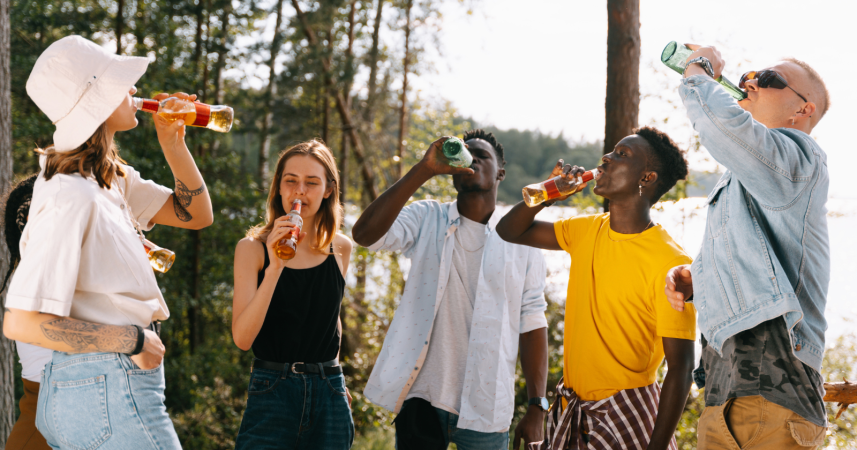
The moment I realized my family had never shared a genuine "I love you" without raising a glass first was the moment I understood why every attempt at connection felt like drowning in sparkling water while everyone else floated on wine.
When I hit day 100 of sobriety, I thought the hardest part was behind me. I'd white-knuckled through the physical withdrawals, deleted my wine delivery app, and even survived a wedding reception nursing club soda with lime.
But sitting at my parents' Thanksgiving table, watching my dad pour his traditional glass of red while my mom mixed her pre-dinner gin and tonic, something cracked inside me that had nothing to do with wanting a drink.
It was the silence. Not the comfortable kind we'd always shared as a family, but this new, awkward pause where the clink of ice in glasses used to live. My brother reached for his beer and caught my eye, then looked away. Nobody knew what to say to me anymore.
That's when it hit me: we'd never learned how to be a family without alcohol as social lubricant.
1. The invisible thread running through everything
Growing up, I never thought of my family as big drinkers. We weren't. My parents, both teachers, would split a bottle of wine over dinner and call it a night. But looking back with sober eyes, I started seeing the pattern everywhere.
Christmas morning started with mimosas. Dad's promotion meant champagne. Bad days called for "just one glass" while cooking dinner. Good days deserved a toast. Sunday lunches stretched into the afternoon over bottles of wine and stories that got funnier with each pour.
Even our smallest rituals were soaked in alcohol. Mom and I bonded over trying new cocktail recipes. Dad and I connected over craft beer tastings. My brother and I only really talked when we were three drinks deep at family gatherings.
Take away the drinks, and suddenly we were strangers staring at each other across the dinner table, desperately searching for something to say.
2. When happy hour becomes the only hour that matters
The restaurant industry taught me that alcohol was the ultimate social currency. Every shift ended at a bar. Every day off meant brunch with bottomless mimosas. Every milestone, every breakup, every random Tuesday was an excuse to gather around bottles and call it bonding.
When I quit, I lost more than a habit. I lost my entire social blueprint.
My closest friends from those hospitality days didn't know what to do with me. One actually said, "But what will we do together if we're not drinking?" As if twenty years of friendship boiled down to nothing more than shared hangovers.
The brutal truth? Maybe it did.
3. The guilt that nobody talks about
Here's what the sobriety success stories don't tell you: watching your family struggle with your decision feels worse than any craving.
My mom started apologizing every time she opened a bottle of wine at dinner, as if she was betraying me. My dad would defensively explain that his evening whiskey was "just for the taste." Family gatherings became minefields of guilty glances and half-hearted offers to "put everything away if it helps."
But hiding the alcohol wasn't the problem. The problem was that without it, we'd forgotten how to celebrate, commiserate, or even just coexist comfortably.
I felt like I'd pulled a thread that was unraveling the entire fabric of our family dynamics. And the worst part? Part of me wanted to start drinking again just to make everyone else feel better.
4. Learning to love without a buzz
Three months into sobriety, I had an epiphany at my nephew's birthday party. I was the only adult without a beer, watching everyone gradually loosen up as the afternoon wore on. That's when I noticed my five-year-old nephew tugging at my sleeve, wanting to show me his Lego creation.
Kids don't need alcohol to connect. They just... connect.
When did we lose that? When did we decide that authentic conversation required chemical assistance?
I started paying attention to the moments that didn't involve drinking. My dad actually loves talking about his students when he's not three whiskeys deep and repeating the same stories. My mom is hilarious when she's not wine-sleepy by 8 PM. My brother and I discovered we both love the same obscure documentary series.
These were small revelations, but they felt massive. We'd been living parallel lives, only intersecting when alcohol gave us permission to be vulnerable.
5. The conversations that changed everything
Eventually, I had to address the elephant in the room. Or rather, the empty wine glass in my hand.
I told my family the truth: I didn't quit drinking because I hit rock bottom. I quit because I realized I couldn't remember the last meaningful conversation I'd had without alcohol involved. I quit because I wanted to actually be present for my life, not just float through it in a pleasant buzz.
My dad was quiet for a long moment. Then he said something that broke my heart: "I don't think I've ever told you I'm proud of you without raising a glass."
That conversation opened floodgates. My mom admitted she'd been using wine to cope with retirement anxiety. My brother confessed he only felt comfortable expressing emotions when drinking. We were all using alcohol as emotional training wheels, never learning to balance on our own.
6. Building new traditions from scratch
Recovery isn't just about what you remove. It's about what you build in its place.
We started new traditions. Sunday coffee walks replaced Sunday wine lunches. We learned to play board games without drinking games attached. Family dinners became about the food and conversation, not the wine pairing.
It was awkward at first. Painfully awkward. We'd sit in silence, desperately wanting to fill it with something, anything. But slowly, we learned to be comfortable with discomfort. We learned to laugh without liquid courage. We learned to hug without the excuse of being tipsy.
Most importantly, we learned to show up for each other stone-cold sober and fully present.
Final thoughts
Nine months sober now, and family gatherings look different. There's still wine on the table, but it's not the centerpiece. There are still toasts, but I raise my sparkling water without shame. There are still celebrations, but the joy isn't manufactured.
The thing that almost broke my sobriety wasn't wanting a drink. It was the fear that without alcohol, I'd lose my family. What I discovered instead was that I'd been missing them all along, seeing them through a hazy filter that softened edges but also blurred the details that make them who they really are.
Sobriety didn't destroy our family traditions. It forced us to examine why we needed alcohol to express love in the first place. And while we're still figuring it out, still stumbling through sober emotions and authentic conversations, we're doing it together.
Turns out, we don't need alcohol to love each other. We just needed to remember how.